Search results for: photography tips solutions understanding basic lighting setups
About 9 filtered results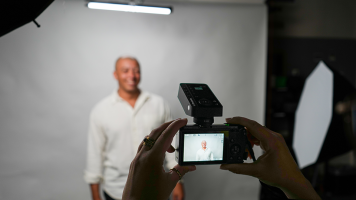
by Luke Rollins · Posted
At first glance, studio photography and the compact camera may seem strange bedfellows. The type of work associated with the studio—still life, product photography, portraiture, macro photography—usually wants cameras with larger sensors and interchangeable lenses, especially in professional applications. Compact, point-and-shoot cameras, for their part, have their natural home in everyday, travel, nightlife, and street applications, where their discretion and size become virtues.
It might seem almost cruel to introduce the compact to the

by Mathew Malwitz · Posted
As photographers, we are faced with a wide array of lighting conditions, ranging from bright sunlight to dimly lit interiors. Using ambient light as your main source is often preferable; however, in a situation such as an event or portrait where time is of the essence, you will need to know how to properly expose all these varying scenes using both natural and artificial light sources.
Being resourceful with your lighting setups lends greater efficiency, and having a lighting system you can easily move from one situation to the next quickly is

by Mathew Malwitz · Posted
What better place to spend a Saturday morning than the zoo. You can enjoy some time outside, all while seeing a variety of both local and exotic animals you'd otherwise never dream of encountering. Zoos also are great place to try your hand at photographing wildlife! In this guide, we're talking about taking our camera to the zoo to capture natural looking images of animals in their element! We'll be covering what you need as well as tips and tricks that'll help you capture stunning, natural looking images of animals.
Above photograph © Mathew

by Rachel Leathe · Posted
What makes a camera good for landscape photography? In this article, we’ll dive into factors such as megapixel count, sensor size, usability, weather readiness, and design—helping you develop your own personal metric for finding the ideal camera. We’ll help you wade through all the technical mumbo jumbo to figure out what specs really matter, whether you want to capture stunning mountain ranges or shoot star-strewn night skies.
Megapixels
It doesn't get much more basic than megapixels. They're like the atoms of photography. But just how many

by Stepan Andranikian · Posted
So you just finished watching a great white shark feeding video and thought, “Wouldn’t it be awesome to be in the water with a camera to film this feast?” I'm right there with you, which is why today we’ll be diving into the world of underwater video creation, from the gear you’d need, to tips for getting the perfect action shot.
Before we get into it, I’d like to leave a little disclaimer: while venturing out into the vast and expansive deep blue is a riveting adventure, please practice caution and, if you’re not experienced in underwater

by Tim Ireland · Posted
Photography is often described as painting with light, and understanding how to manipulate light effectively is a fundamental skill for any photographer. While natural light has its place, using strobes and lighting modifiers can give you greater control over your lighting conditions, especially for product photography. Having a solid understanding of basic lighting gear and lighting modifiers will introduce you to simple yet effective lighting techniques, helping you take your product photography to new dimensions.
Understanding Strobes

by Bjorn Petersen · Posted
Despite photography taking mainly a digital form nowadays, there is still immense value in the tactile side of photography, especially in regard to teaching photography. With education being based more in the home at the moment, it can be the perfect time to introduce someone to photography using the simplest and most basic tools. Pinholes are of the most primitive examples of photography but are also some of the most perfect tools with which to teach the basics of exposure without needing to complicate it using abstract modes, shutter speeds,

by Jill Waterman · Posted
Fashion photographer Lindsay Adler has just released the ultimate creative studio lighting guide in an e-book format, which also features a free 28-page downloadable preview.
Photographs © Lindsay Adler, from her book, Creative Studio Lighting: A Professional Guide to 30 Studio Setups for Creative Photography
Lindsay Adler’s new e-book features 135 pages of instruction, including a free download of


by Steven Gladstone · Posted
In the world of film production, a Digital Imaging Technician (DIT) can be many things. Depending on the scope of the production, the scope of their job is constantly evolving. Taking advantage of the wonders of email, I checked in with a few working DITs to get a better understanding of their complex and ever-changing job. What became apparent quickly was that although most people in the industry start off as beginners, taking on the role of DIT requires a healthy balance of experience, people skills, technical knowledge, and an almost