Search results for: photography tips techniques ai photography
About 8 filtered results
by Mathew Malwitz · Posted
There’s an old adage that claims in order to be a wildlife photographer, you need a lot of time and a lot of money. This is only partly true. Many great wildlife photo opportunities can occur in urban parks and even in your own backyard, as long as we know what we’re doing. In this article, we’re going to cover a number of essential tips that will help you become a better wildlife photographer.
If you’ve read our introduction

by Mathew Malwitz · Posted
If there’s one area of wildlife photography that challenges even some of the most consummate artists, it’s birds in flight. A dynamic flight shot shows action, and a bit of technical prowess. As you can imagine, capturing birds in flight is no easy feat.
To consistently capture these shots, one must be proficient with their gear and have a knowledge of animal behavior. We’d go as far as to say you need a bit of luck too, but what is luck if not preparedness meeting opportunity. In order to make the most of the opportunities that present

by Mathew Malwitz · Posted
The most engaging portraits seem to have direct eye contact between subject and viewer, as if the camera were simply a window through which we’re looking. But is it that simple? So much goes into making a good portrait, can success simply come down to eye contact between subject and camera and is it even necessary to concentrate on the eyes for a portrait? There are certainly wonderful portraits that do not focus exclusively on the eyes that illustrate character with other aspects of the body, from posture to hands, but as an introduction to

Posted
Photographers often react instinctively against artificial intelligence, typically focusing on controversial generative AI. Meanwhile, a different branch of AI technology—machine learning systems—has been making remarkable progress helping photographers manage overwhelming image workflows under tight deadlines.
Above Image © Sam Hurd
In today's show, we explore this trending topic in a discussion with Justin Benson and Sam Hurd, both accomplished wedding photographers and tech entrepreneurs.
Justin begins by clarifying the distinction between

by Gabby Bloch · Posted
Here at B&H, we’ve written countless articles on podcasting, including guides on editing, mixing, and mastering your podcast. But if you’re still having trouble getting the sound you want, we recommend simplifying your production process. Let’s discuss how to separate and streamline your production tasks to get a better final product with hopefully less effort.
Separate the Recording and Mixing Processes
Many people feel the

Posted
Jesús Ramirez (@photoshop training channel) demonstrates the functions of Photoshop's AI Generative Fill and Neural Filters, as well as discussing how to use them in unique and creative ways.
0:00 - About Ramirez
4:26 - Generative Fill for Removing Content
16:53 - Generative Fill for Adding Content
24:35 - Neural Filters (Colorize)
31:09 - Masking for Flyaway Hairs
Do you have any Photoshop tips to share? Let us know in the Comments section, below.

by Todd Vorenkamp · Posted
One of the first words I learned how to say was, “Moon.” All of my life, I have been fascinated by our natural satellite and I have been photographing it for as long as I have had a camera. My photos have gotten better over the years, but I still search for the perfect photo of the moon. Here are some tips and thoughts for your own lunar photography.
Above photograph: A waxing gibbous moon the day before the full moon. FUJIFILM X-T1; Leica APO-Televid 77 spotting scope @ 1000mm (1500mm, 35mm equivalent); f/13, 1/500-second, ISO 200
by John Harris · Posted
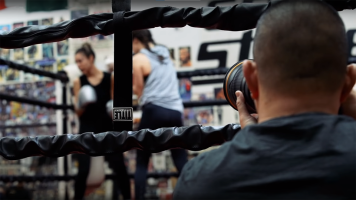
Great photos, in any discipline, can result from infinite techniques, but in sports photography—at least in sports photojournalism—there is little room for the aesthete who chooses a slow approach or the kind that eschews the available camera functions that will increase the proverbial “hit rate.” In other words, sports photographers need to use all measures to get that decisive, well-composed, and most important, in-focus photograph. Thank goodness, therefore, for continuous focus tracking, a blessing for sports photographers everywhere.