Search results for: photography tips solutions digital revolution photography
About 9 filtered results
by Luke Rollins · Posted
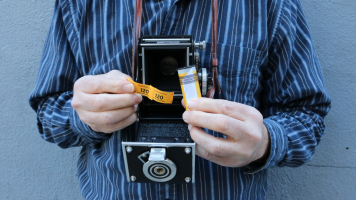
Color negative and color transparency films have distinctive ways of rendering specific colors, and may have a warm (reddish), cool (bluish), or neutral color balance, as well as different color contrast characteristics. Thanks to the resurgence in film’s popularity in recent years, analog shooters have an astonishing number of choices, from major manufacturers like Kodak, Ilford, and Fujifilm, to smaller suppliers like Foma, Rollei, Agfa, Lomography, Kentmere, and Arista.
Obviously, we can’t include comprehensive info and hands-on impressions

by Todd Vorenkamp · Posted
Astrophotography is awesome! But, is it difficult? No! Contrary to some opinions, you don’t have to own a ton of expensive gear, have perfectly dark skies, or have mad technical skills to pull it off. In this short four-part series, we will talk about how you can go out and shoot astrophotographs with basic photographic gear, and then digitally process the images with basic techniques. In the following stories, we’ll be talking stars, discussing gear, studying capture techniques, and learning some post-processing tips for optimizing your

by Jill Waterman · Posted
Ami Vitale has a remarkable affinity for life-changing events. A native of South Florida, Vitale was a self-described shy, gawky child who, like many young girls, possessed little confidence. The assessment of a grade school teacher, who told her she was not very good at English, stuck with her for years. “I just thought that I had no ability as a writer, or as a creative person,” she says. “I remember thinking I was going to become an engineer because I had almost perfect math scores on my SAT.”
Photographs © Ami Vitale

by Shawn C. Steiner · Posted
DSLRs and the video revolution resulted in a boom of people who previously shot photos exclusively to add video to their tool set and vice versa. Unfortunately, this meant that the previously split cinema lens and photo lens market didn't have the proper tools to appeal to both at once. What are you supposed to do if you want one lens that can work beautifully for stills and

by Todd Vorenkamp · Posted
In the old days, you needed a lot of film and a lot of luck to capture a photograph of a meteor streaking overhead. Today, thanks to the digital revolution in photography, we have a much better chance of getting great photos of shooting stars entering Earth’s atmosphere. Why? Because with digital cameras, you can take hundreds, or even thousands of cost-free photos per night of a meteor shower.
Here are some tips to get you geared up and prepared to get the shot!
Planning
Meteors can hit the upper atmosphere at any time, but there are some
by Daniel Wagner_1 · Posted



by Todd Vorenkamp · Posted
Since its arrival on the mirrorless scene a year ago, the Fujifilm X-T1, along with its contemporary mirrorless competition, has created quite a splash in the camera market. Mirrorless cameras are quickly catching up to the DSLR realm in terms of speed and performance. Today, the photographer entering the market is faced with a real dilemma when it comes to which interchangeable-lens path to follow—mirror or sans mirror.
In the Dark
I am, primarily, a night photographer. As a photographer, I find that daytime is decidedly less inspiring than

by Todd Vorenkamp · Posted
Aside from the fully automatic modes, DSLR and many point-and-shoot cameras feature Aperture Priority, Shutter Priority, and Manual shooting modes. I've met more than a few rookie DSLR users at photography workshops over the past several years who, while struggling with the complexities of their new cameras, claimed that "professional photographers" told them that they needed to start shooting in Manual mode—choosing shutter speed and aperture for each shot—and that they should never use the automatic modes. They were advised that they

by John Paul Capo… · Posted
Share Experience / Share Vision
John Paul Caponigro
It was December 2005. We had just made the long crossing of the Drake Passage to Antarctica. On the horizon were enormous icebergs. It was our first view of big ice. We all rushed to the deck and began to photograph. I found myself standing shoulder-to-shoulder with Seth Resnick. He was using a long 300mm lens. I was using a wide 28mm lens. We both looked at each other and then looked again. Our approach was so different we were astonished. "Let me see your camera!" we both said