Search results for: photography tips solutions laptop photo editing
About 16 filtered results
by Jennifer Hahn · Posted
Point-and-shoot cameras are a great value-add to your photography kit, social media sharing, or as a vacation companion for quick stills and capturing memories on the fly. And these days, the value is even greater with point-and-shoot video recording. The point-and-shoot design makes things simple to change to video mode and press record. Though after you’ve captured your video, it can become cumbersome to edit and share that footage.
Some cameras allow you to edit/trim your video footage (also called “Movies” in some cameras) in camera, which

by Mathew Malwitz · Posted
For macro photographers, having the right gear is essential. Magnification and lighting are key, but you don’t necessarily need the biggest, priciest macro lenses out there to get close-up shots. If you’re a macro photographer yourself or buying a gift for one, we have some excellent recommendations for every budget.
Gifts Under $50
1. Close-up macro filters (like this Macro Lens

by Mathew Malwitz · Posted
Weddings are among the most important events in a couple’s life. As a photographer, you’re tasked with capturing that day and immortalizing those memories with your camera and lens. However, the camera is only part of the equation. To make your images shine, you’ll need to add some additional tools to your arsenal. In this article, we’re going to explore the accessories that not only make your life as a photographer easier, but make your work stand out.
Lighting
Lighting is the most important element of wedding photography. You’re going to

by Zack Young · Posted
Once you’re familiar with the basic concepts behind high-volume photography, the next logical step is to figure out what gear you need to purchase. That’s when the panic might hit. Suddenly you’re flooded with decisions about cameras, lenses, strobes, backdrops, barcode scanners, and more, each category including tons of different options at every

by Jill Waterman · Posted
Jean Fruth is a diehard baseball fan. “Growing up in New York, with two great hometown teams, how could you not connect with the sport?” she asks. As a teen, she worked in a restaurant owned by serious Mets fans who had season tickets, “And they would take me to games,” she reminisces. “And my grandfather was a Mets fan, listening to games on the radio.”
Such formative influences foreshadow her ultimate path to becoming one of baseball’s preeminent photographers, yet it took many years of exploration for Fruth to put a plan into action. “My
by Shawn C. Steiner · Posted
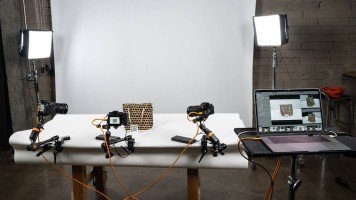
At its most basic, tethered shooting involves connecting your camera, wired or wirelessly, to your computer as you shoot. You’ve likely seen it in some behind-the-scenes video for a professional studio shoot, or you just have a friend who swears it’s the best thing since sliced bread. Tethering is a shooting technique that can benefit many a photographer’s workflow significantly, though upon first hearing of it, the idea of tethering can be something that first requires a bit of education. Hopefully, this introduction will help get you started

by Todd Vorenkamp · Posted
For a working professional photographer like renowned maritime photographer and Canon Explorer of Light Onne van der Wal, the most valuable part of his business is not the tens of thousands of dollars’ worth of cameras and lenses he carries, it is that which cannot be covered by insurance or easily replaced: data. Clients don’t care if your Canon camera was lost to Davy Jones’s Locker in the middle of the shoot or if a lens was ruined by a rogue saltwater wave—they just want the images. Van der Wal, based in Newport, Rhode Island, has compiled

by Jill Waterman · Posted
The photo community has a unique advantage over other art forms. As the most democratic of the arts, photographs, by their very nature, are among the most easily shared and viewed. This has given rise to an abundance of photographic portfolio reviews. In recent years, the portfolio review has become ubiquitous in the field of photography, providing a venue for photographers of all levels, from students to enthusiasts to accomplished professionals. Opportunities for critique, feedback, and professional connection are also available within a
by Dawn Wayand · Posted
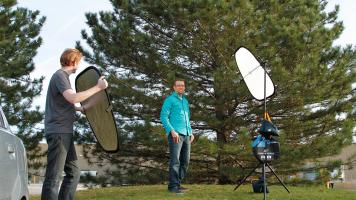
Generally, photographers are taught to shoot in the early morning hours, or around the “Golden Hour” (sunset/twilight hour) for the best light, because the light of midday afternoon is too harsh or too bright for making well-balanced exposures. However, if we were limited to just those nominal number of hours per day to capture a photo, we would miss many opportunities for great photos and decisive moments.


by Dawn Wayand · Posted
Many new photographers question how they can break into photography on a professional level when they have little to no experience with photo shoots. The best way to gain the knowledge and hands-on experience needed to conduct photo shoots of your own is to become a photographer’s assistant.
Above Image: On the shoot with a photography assistant Yann Bizeul
I have found my assistants to be invaluable help to me during my photo shoots, whether they are setting up my lights or sets, helping me remedy impromptu situations, capturing
by Shawn C. Steiner · Posted
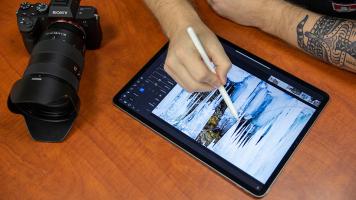
It’s not up to ten, or eleven—the iPad Pro (Late 2018) kicks things up to twelve in every way possible. Photographers, myself included, have long dreamed of an iPad or tablet that can serve as their portable edit station, and the new Pro is the best example of one yet—especially with a full-fledged version of Adobe Photoshop CC slated to come out later this year. Even today, there are many tools and apps available that make the iPad Pro a
by Dawn Wayand · Posted
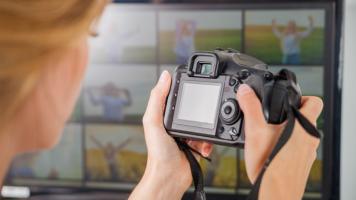
Having a workflow in place can save you a lot of time and frustration. After years without one, I ended up with 26,000 images that were only organized in folders by date. Imagine looking through 26,000 images to find a specific photo you once captured!
In addition to not having a workflow, I didn’t even back up my images! It was by luck that I never lost an image. From the very beginning of your photographic journey, it’s important to have a system in place for managing your images from capture to backup to distribution, because you may not

by Allan Weitz · Posted
As a working photographer, the center of the universe is your camera bag and its contents. Your cameras and lenses are the tools of your trade. As you may have noted, both are mentioned in plural because just as you wouldn’t jump out of an airplane without a backup parachute, you shouldn’t attempt to photograph an emotionally spiked, non-repeatable event armed with only one camera. The same applies to lenses, too. The many aspects that comprise shooting weddings—portraits, the ceremony, dimly lit environs, tight, crowded quarters and bright

by Blake Gordon · Posted
Bike touring is one of the most rewarding modes of travel. It puts you out there in the spaces between the tourist destination and guidebook recommendations. It’s raw and authentic where the miles are earned one pedal stroke at a time. The terrain and memories stack up slowly into a deeply satisfying narrative.
I’ve seen many places from a bike saddle, but the one trip that stands astride the top are the large slices of Central and South America I rode with Mike and John Logsdon on their tour of the Pan-American Highway, from Prudhoe Bay,

by John Harris · Posted
And I’m not a pioneer of any style: I am just taking the kind of photos I like to take, using the principles of composition embraced by Cartier-Bresson and the street photography style forwarded by Klein and Winogrand, and applying them to a wedding.”
Some may beg to differ—after all, the “Ascough style” is a phrase often thrown around, referring to his black-and-white documentary wedding photography, and he is often mentioned as being one of the best wedding photographers in world. He is one of the