Search results for: photography tips solutions studio lighting basics
About 29 filtered results
Posted
Photographer Chrystofer Davis teaches the basics of documentary photography and how to tell a story through your pictures. Build your technical skills by learning about composition, lighting, and editing.
0:00 - Intro
1:16 - Why we preserve photos
6:56 - Finding your purpose
23:18 - Best practices
28:43 - To hunt or fish?
34:51 - Portrait & candid techniques
39:56 - Documenting in studio
46:27 - Studio photo demo
56:14 - Closing thoughts
Sponsored by

by Luke Rollins · Posted
There comes a time in a photographer’s life—usually after some consistent success with an on-camera flash—when they say to themselves, "I’m ready to make my own light on demand." Thus begins a seemingly never-ending journey—first mastering the basics, then trying to put some feeling and expression into their photos.
Assuming you’re versed in

by Mathew Malwitz · Posted
Good lighting is essential to creating a strong, visually pleasing image. This is as true for naturally lit outdoor shots as it is for studio portraits. For individual or even couples portraits, many photographers make use of on-camera flash or compact, battery-powered strobes to supplement natural light and fill shadows, but how do we situate these in the scene? What light shaping tools should we use? Groups alone can be tricky for a plethora of reasons. Whether it be getting everyone to smile, getting kids to look at the camera, or the

by Mathew Malwitz · Posted
Photographing pets is something you likely do daily, whether it be with a phone or a dedicated camera. I don’t know about you, but I have thousands of pics of my pup filling up my photos app. After all, pets are part of the family, and we want to capture them in the best possible light. In this quick guide, we’re going to look at 10 ways you can improve your pet photography with practical creative tips and techniques as well as gear.
1. Get to your pet’s level. If there’s one trick to make your images more engaging, it’s to physically shoot

by Mathew Malwitz · Posted
One of the most effective ways to improve your portraiture is by controlling the light, and one of the most effective ways to control your light is to move it. Seems like a simple enough concept, but it can be daunting at first, especially if you're using a speedlight or an on-camera flash. Despite its misleading name, an on-camera flash can, very easily, be used off the camera. The "on-camera" part simply refers to its form factor

by Zack Young · Posted
Once you’re familiar with the basic concepts behind high-volume photography, the next logical step is to figure out what gear you need to purchase. That’s when the panic might hit. Suddenly you’re flooded with decisions about cameras, lenses, strobes, backdrops, barcode scanners, and more, each category including tons of different options at every

by Gabby Bloch · Posted
Here at B&H, we’ve written countless articles on podcasting, including guides on editing, mixing, and mastering your podcast. But if you’re still having trouble getting the sound you want, we recommend simplifying your production process. Let’s discuss how to separate and streamline your production tasks to get a better final product with hopefully less effort.
Separate the Recording and Mixing Processes
Many people feel the

by Zack Young · Posted
Any photographer worth their salt should be familiar with portrait photography, but they’re likely less familiar with high-volume photography, an offshoot of traditional portraiture that focuses on providing large quantities of professional-level headshots. The most common clients for this type of work include schools, sports teams, large corporations, government-run entities, and basically any other organization that needs a sizeable amount of quality headshots in a short amount of time. Because of the economies of scale, high-volume

by Mary Latvis · Posted
Welcome to Filmmaking 101, where we offer some tips on how to go about creating your movie masterpiece. Read on to discover suggestions for your pre-production, production, and post-production phases.
Pre-Production
Scriptwriting
You have your idea for an arthouse masterpiece or an action-based blockbuster; now how do you translate that into a script―the backbone of your production? You can use MS Word, Google Docs, or another document program. But using dedicated screenwriting software provides the standard formatting, outline tools,

by Tim Ireland · Posted
Photography is often described as painting with light, and understanding how to manipulate light effectively is a fundamental skill for any photographer. While natural light has its place, using strobes and lighting modifiers can give you greater control over your lighting conditions, especially for product photography. Having a solid understanding of basic lighting gear and lighting modifiers will introduce you to simple yet effective lighting techniques, helping you take your product photography to new dimensions.
Understanding Strobes

Posted
In Part 2 of this four-part series, Sony Artisan of Imagery Tony Gale teaches you the basics of creating portraits in a studio setting.
0:00 - Introduction
5:40 - Studios: What to Know About Studios
13:38 - Planning & Gear
21:14 - Lighting
27:28 - Controlling the Background
35:55 - Controlling the Light
45:54 - Studios that You Can Rent with Props and Sets
45:53 - Final Thoughts
Sponsored by
See more of this series here:
-

Posted
Join Jabari Holder in the studio as he breaks down a three-point lighting setup in less than five minutes. He explains why a basic lighting technique is perfect for interviews, talking-head shots, YouTube videos, portrait photography, and more. What is your go-to lighting setup?
0:00 - Introduction
0:21 - Initial Tips
0:55 - Key Light
2:12 - Fill Light
2:41 - Hair Light
2:58 - Additional Tips
3:12 - The Possibilities
3:49 - Final Thoughts
Shop the SmallRig RD350B/D & RC450B/D at B

Posted
Jena Carlin, a commercial food and lifestyle photographer, shows you how to capture campaign-worthy photographs of comestibles. Carlin shares the basics of manipulating artificial light, tethered shooting, and tips for photographing food―all in a beautiful tabletop setting.
0:00 - Introduction
2:01 - Studio setup and ProGrade cards
8:40 - Finding the focal point: Camera settings
14:50 - Using a color checker
16:24 - Photographing honey drizzle
27:30 - Dapple light modifier explained
29:05 - Honey drizzle photos
34:04 -Triggering on
by Todd Vorenkamp · Posted
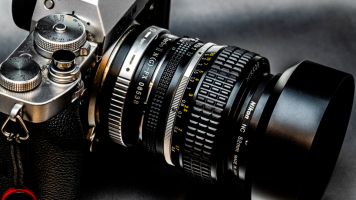
If you use an interchangeable-lens mirrorless digital camera, you know that one of the pleasures of mirrorless shooting is the ability to use lens-mount adapters to photograph with any number of vintage lenses (manual focus or autofocus), as well as some modern-day lenses from your favorite optical manufacturers. When using a crop sensor camera, you might have stumbled across adapters with the monikers

Posted
Sony Artisan of Imagery Tony Gale is back for another portrait-lighting session, this time with the versatile speedlight. Whether indoors or outdoors, in studio or on the go, this portable off-camera flash can be used in multiple ways to add creativity to your portraits. Consider this seminar your speedlight guide, since Gale will covers the basics, as well as various setups.
Write about your own experiences lighting portraits with speedlights, in the Comments section.
Sponsored by Sony