Search results for: photography tips solutions understanding three point lighting
About 16 filtered results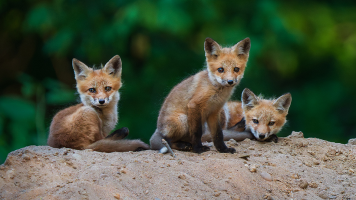
by Mathew Malwitz · Posted
Wildlife photography is one of the most therapeutic and rewarding genres of photography and it’s also one of the most popular. There’s just something so special about being able to witness the magic, and with new camera tech, wildlife photography is easier than ever. That said, the thrill of the shot can overshadow good decision-making, leading to unethical practices. But what are ethical practices?
Take nothing but photographs, leave nothing but footprints—an adage well-known by nature enthusiasts of all levels, but not all that practical.
by Luke Rollins · Posted
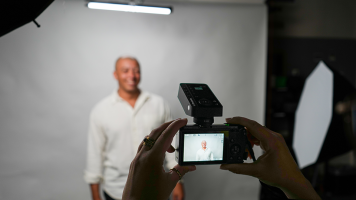
At first glance, studio photography and the compact camera may seem strange bedfellows. The type of work associated with the studio—still life, product photography, portraiture, macro photography—usually wants cameras with larger sensors and interchangeable lenses, especially in professional applications. Compact, point-and-shoot cameras, for their part, have their natural home in everyday, travel, nightlife, and street applications, where their discretion and size become virtues.
It might seem almost cruel to introduce the compact to the

by Luke Rollins · Posted
Achieving a standard of production value is an essential component of establishing a brand and growing a following. For part-time, burgeoning, and mid-level creators, it can feel like bridging that gap is less a matter of learned skill and more about the equipment you can afford.
In most cases, the problem isn’t budget at all. Acquiring the specific know-how can give your content professional sheen with little to no financial outlay.
Lighting design is arguably the most immediately visible production component—and the one most capable of

by Mathew Malwitz · Posted
Exposure can be challenging to master. There are many moving parts, and knowing which settings affect what aspect of our image takes time and practice. The goal might be to take full control and use manual exposure mode, but first, we need to learn the ropes using auto exposure modes.
These modes let us use our camera with a little help. As covered in our introduction to exposure article, photography consists of

by Steven Gladstone · Posted
When creating images for a film, you try to balance your shots so that you draw the audience into the movie, while at the same time they forget that they are watching a movie. Usually, the last thing you want is to break the illusion and have the audience snap out of their reverie.
As you read this article, you may want to pause and rewatch some classic films, or films that had a powerful effect on you. Examining the new and different techniques, lighting, and compositions used to create impact, mood, and feeling will help you grow as a

by Luke Rollins · Posted
The wealth of B&H is not measured in sales, but in the accumulated knowledge of its people. The breadth of such experience is impossible to quantify, let alone price, which is why we’re offering this batch of wedding photography advice completely free of charge.
Andrea Buritica, Sales Associate – Chat & Email
Burikitak Photography
One of the best parts about working at B&H is that I get to talk about gear all day. However, it’s doing wedding

by Mathew Malwitz · Posted
As photographers, we are faced with a wide array of lighting conditions, ranging from bright sunlight to dimly lit interiors. Using ambient light as your main source is often preferable; however, in a situation such as an event or portrait where time is of the essence, you will need to know how to properly expose all these varying scenes using both natural and artificial light sources.
Being resourceful with your lighting setups lends greater efficiency, and having a lighting system you can easily move from one situation to the next quickly is

by Mathew Malwitz · Posted
If you’ve been around photography for any length of time, you’ve probably heard of ISO. ISO is one of the three settings that determine our exposure in photography. These settings are collectively referred to as the exposure triangle. ISO is unique in this equation, and in this guide, we’re going to explore why.
ISO can be referred to in two ways. It’s most commonly spoken as an abbreviation, but it is also sometimes referred to as a word pronounced as eye-so. General consensus is that you call it whichever you like. After all, it’s not what

by Mathew Malwitz · Posted
As we learn about exposure, we need to talk about shutter speed. Your camera’s shutter controls the duration of an exposure and is one of the three settings that determine the exposure of an image. Together, these settings are known as the exposure triangle.
Where aperture controls the amount of light we allow to reach our imaging area, it is the duration of our exposure that will directly influence whether an image is sharp or blurred. This is what makes it such a significant piece of the exposure puzzle. Now, let’s take a closer look

by Todd Vorenkamp · Posted
The sun. Always on. Always overhead (of some part of the planet). Always free. Always a consideration for every photograph taken outside of a windowless studio or closet. The sun is nature’s free light source for photography and video. Regardless of whether you are making a landscape image, architectural photograph, portrait, macro shot, street photo, etc., sunlight, or the absence of sunlight, is a critical ingredient in the image.
Photographs © Todd Vorenkamp

by Bjorn Petersen · Posted
There is a lot of talk about lighting and photography, and specifically how learning to use light can make you a better photographer. This is true, of course, but is also a notion that’s more often applied to working with artificial lighting, such as for portraits or products, where you can work in a studio with a strobe or LED to fine-tune how your shot looks. When it comes to landscapes, on the other hand, most likely you won’t have the ability to or just won’t want to use artificial lighting for your scenic shots. This is part of the

by Jill Waterman · Posted
Starting and maintaining a career as a professional photographer is more competitive than ever, yet the ease with which pictures can be taken and shared has made the barriers to entry very low. In the face of such professional challenges, the Rocky Mountain School of Photography (RMSP) stands out as a trusted Mecca for intensive career training.
Above Photograph © Laura Werling
Based in the heart of Montana’s “Big Sky” country, RMSP's demanding

by Jill Waterman · Posted
Ami Vitale has a remarkable affinity for life-changing events. A native of South Florida, Vitale was a self-described shy, gawky child who, like many young girls, possessed little confidence. The assessment of a grade school teacher, who told her she was not very good at English, stuck with her for years. “I just thought that I had no ability as a writer, or as a creative person,” she says. “I remember thinking I was going to become an engineer because I had almost perfect math scores on my SAT.”
Photographs © Ami Vitale

by Jill Waterman · Posted
Fashion photographer Lindsay Adler has just released the ultimate creative studio lighting guide in an e-book format, which also features a free 28-page downloadable preview.
Photographs © Lindsay Adler, from her book, Creative Studio Lighting: A Professional Guide to 30 Studio Setups for Creative Photography
Lindsay Adler’s new e-book features 135 pages of instruction, including a free download of


by Allan Weitz · Posted
Sometimes, the phrases, acronyms and strings of numbers or number-letter combinations used to identify photographic hardware or techniques can be daunting to the uninitiated neophyte photographer.
We've prepared a list of the basic terms. Have we left any out that you think should be added? Please let us know!
0-9 | A | B | C | D | E | F | G | H | I |