Intro to Photography

For a generally creative outlet, photography has a lot of rules. Many of these so-called “rules” are simply techniques that can be implemented as needed. They are meant to help you create visually engaging images, and there are none so practical as the rule of thirds and golden ratio.
One of the oldest rules in art is the golden ratio, also known as the golden spiral. This ratio is an irrational number that is approximately equal to 1.618, better known as phi.

Exposure can be challenging to master. There are many moving parts, and knowing which settings affect what aspect of our image takes time and practice. The goal might be to take full control and use manual exposure mode, but first, we need to learn the ropes using auto exposure modes.
These modes let us use our camera with a little help. As covered in our introduction to exposure article, photography consists of

0 Views ·Posted
Over the first six parts of this introduction series, we have learned how to create better images and find our own personal voice as photographers. Derek goes over audience submitted photos, critiquing and having open discussions about the stories behind them.
0:00 Intro
4:53 Derek's image breakdown
9:15 Critiquing audience submission
1:45:21 Closing

0 Views ·Posted
It's easy to go out and take photos, what's not is making it your own. Derek goes over how to find your creative stye and different ways to get inspired.
0:00 - Intro
2:40 - Finding your creative style
6:38 - Inspiration vs. imitation
31:41 - What is vision in photography?
38:37 - Consistency
41:07 - Tips on strengthening your vision
45:27 - Image review exercise
50:57 - Personal projects
1:13:20 - Q&A

0 Views ·Posted
You went out and took photos, now it's time to edit. Derek goes over the different tools in Adobe Lightroom, discussing basic and advanced techniques.
0:00 - Intro
5:22 - Post processing philosophy
12:44 - The fun(damentals) of editing
16:14 - Color or Black & White?
35:15 - Basic edits
38:07 - Kelvin scale
40:25 - Editing demo - basic edits
1:05:54 - Beyond basic editing
1:10:56 - Second editing demo
1:14:11 - Basic edits
1:25:50 - Curves tool
1:37:11 - Histogram
1:42:10 - Presets
1:44:22 - Color grading
1:48:38 - Black & White
1:55
0 Views ·Posted
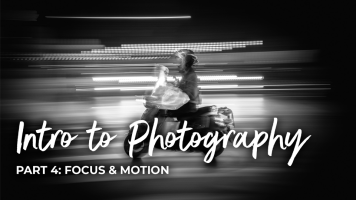
Let's "focus" for Part 4. Derek goes over how important focus is for telling a story from your image. Learn about your camera's different focus modes, and what to consider when capturing motion.
0:00 - Intro
3:00 - Focus modes
3:53 - Manual focus
13:56 - Single autofocus
21:32 - Continuous
29:16 - Focus tools on your camera
37:28 - Autofocus miscellaneous
47:17 - Motion
49:26 - The reciprocal rule
1:05:01 - Focus for effects
1:18:07 - Photographing motion
1:44:27 - Storytelling through focus and motion

0 Views ·Posted
Photography is the process of capturing light to create an image. So, you guessed it, Part 3 is all about lighting. Derek covers natural vs. artificial light, how to use shadows and highlights creatively, and how to properly expose your camera.
0:00 - Intro
1:05 - Hard light vs. Soft light
16:07 - Light direction
40:13 - Light quantity
43:39 - Light exposure
1:04:01 - Image breakdown—camera settings
1:34:07 - TLDR
1:38:11 - Audience guesses the camera settings
1:58:16 - Closing

0 Views ·Posted
Now that you understand your camera from Part 1, the next step is understanding what makes a good photograph. Derek goes over some of the core elements of photo theory, composition, perfective, and storytelling.
0:00 - Intro
5:05 - Review of what makes an effective photograph
5:47 - Composition
12:54 - Rule of thirds
18:37 - Golden/Fibonacci spiral
23:47 - Leading lines
32:59 - Negative space
38:29 - Asymmetry
41:52 - Frame within a frame
43:10 - Patterns/Repetition
44:34 - Perspective
55:01 - Storytelling - Photo breakdown
1:15:29 - Photo

0 Views ·Posted
Whether you’re a first-time shooter or you’re looking to take your work to the next level, we’ve got you! In Part 1 of our new photography series, photographer Derek Fahsbender walks you through the basics, from camera settings to photo theory, setting you on a path to creating images you love.
0:00 - Intro
1:56 - About Derek & B&H Event Space
6:22 - What makes an effective photograph?
20:58 - Different types of cameras
42:10 - Understanding lenses
1:03:58 - Sensor sizes
1:21:25 - Camera modes
1:27:10 - Exposure triangle -

Subject and style may vary, but consistency is a quality shared by all successful photo studios. When working indoors, that begins with lighting. Strobes remain the bread and butter of many still photography studios. Unlike natural light, which can be finicky and unpredictable; on-camera flashes, which are not typically designed for studio use; or continuous lights, which can become costly as output increases; strobes are built to withstand the rigors of studio life while providing flexible and powerful light. But with so many options on the

0 Views ·Posted
In Part 3 of this four-part Introduction to Photography series, Sony Artisan of Imagery Tony Gale breaks down the principles of composition.
0:00 - Introduction
3:12 - Composition: Why and How to Frame a Photo
7:24 - What Are You Trying to Say in Your Photos?
9:06 - What's in the Frame?
15:41 - Composing In-Camera
19:24 - Balance, Symmetry, Reflection, and Repetition
20:21 - Edges of the Frame/The Form of Elements in the Frame
27:35 - Lens Choice
31:24 - Finding the Angle
27:26 - Rule of Thirds, Leading Lines, and Framing
41:15 - Camera Tools

0 Views ·Posted
In Part 2 of this four-part Intro to Photography series, Sony Artisan of Imagery Tony Gale breaks down basic camera settings, such as exposure, white balance, auto vs. manual focusing, and RAW vs. JPEG. Read Part 1 of this series here.
0:00 - Introduction
5:12 - Types of Settings
11:10 - Exposure
17:35 - ISO
21:01 - Aperture
26:33 - Shutter Speed
39:29 - White Balance
44:01 - Focusing
47:07 - JPEG and Raw Files
51:12 - Q

0 Views ·Posted
Welcome to our four-part Introduction to Photography series. In this first video, Sony Artisan of Imagery Tony Gale discusses the first thing you need to know about photography: the various types of cameras and lenses. By the end of this video, you'll know how to choose a camera that is right for you.
0:00 - Introduction
4:30 - Different Cameras for Different Needs
7:11 - Camera Types
20:46 - Checking out the Specs and Deciding What Kind of Photos to Take
26:19 - Sensor Types and Sizes
28:16 - Resolution
30:48 - Lens Types
38:23 - APS-C vs.

Back in the good old days, during the infancy of autofocus, you had two options when it came to autofocus: On or Off. Now, with advancements in technology, many cameras, even simple point-and-shoot cameras, have a dizzying array of high-tech autofocus modes to choose from. Honestly, they can be intimidating to even to the most experienced shooters.
Before we dive in, be forewarned: almost every manufacturer has proprietary autofocus technology, nomenclature, and features. Even more confusing, the interface to access these modes can often