Search results for: rule of thirds guide
About 14 filtered results
by Mathew Malwitz · Posted
These days, everyone has a camera right in their pocket. Smartphones have long been the go-to camera for quick photos of our friends, family, pets, and of course, ourselves. With features like portrait mode, users can simulate blurry backgrounds and isolate their subject for more eye-catching images. What else could you ever need? What if I told you that with the

by Rachel Leathe · Posted
Did you know that the first photograph ever taken was of a landscape?
“View from the Window at Le Gras” was captured by Nicéphore Niépce, in 1827. It features a very abstract view from Niépce’s window. Then, in 1839, Louis-Jacques-Mandé Daguerre made history with his image of

by Todd Vorenkamp · Posted
When the moon passes directly between Earth and the sun, those on Earth are treated to one of nature’s greatest spectacles—a total solar eclipse. It is a phenomenon that almost every observer would like to capture in a photograph.
Due to the rarity of the event, the short duration in which to capture it, and the dynamic nature of the subject, it is one of those photographic opportunities that requires the proper gear, setup, planning, and practice.
Eclipse and solar

by Todd Vorenkamp · Posted
Since the invention of the zoom lens, there has been a demand for the perfect lens that would allow photographers to ditch lens-heavy camera bags and head out into the field or out onto holidays and vacations with only a single lens—one that handled every photographic demand thrown at it; from wide-angle landscapes, to beautiful portraits, to group photos, to macro shots, to telephoto framing of distant subjects. Enter the all-in-one zoom lens for SLR, DSLR, and

by M. Brett Smith · Posted
Portrait photography, or portraiture, remains one of the most popular genres of photography today—and for good reason. Portraits are compelling; they are evocative. Portraits tell a story; they elicit an emotion. Shot correctly, a portrait can reveal the true essence of a person, who they are and what they feel. According to Godard, portraiture is tantamount to capturing the soul. About what other medium or form of expression could you say such a thing?
As with most genres of photography, portraiture is not beholden to any one specific
by Linda LeNoir · Posted
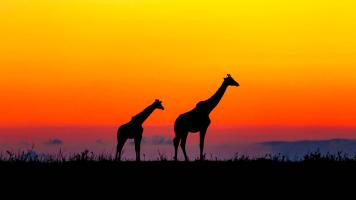
Are you ready for some photographic tips for your upcoming African safari? In Part 1 of this series, we discussed the things you need to do to prepare for your trip. Part 2 delves into photo gear [every B&H Explora reader’s favorite subject]. And here, in Part 3, we share some essential tips for getting great photos once you have embarked on your safari.
Above photograph: Mother and Child. Giraffes walking in the Masai Mara at Sunrise; Masai Mara National Reserve, KenyaCanon EOS 5D Mark III; EF 400 f/4 DO IS USM lens; manual exposure, 1

by Bjorn Petersen · Posted
Even though macro photography is one of the more dynamic genres of photography, physically it’s also one of the most static. It’s also usually performed in controlled situations, with the option to work from a tripod at whichever working distance is available. For these reasons, and out of convention, most macro lenses available feature normal to short telephoto focal lengths. The focal length of a macro lens typically isn’t one of the special attributes of these lenses, at least compared to their close-focusing, high-magnification

by Todd Vorenkamp · Posted
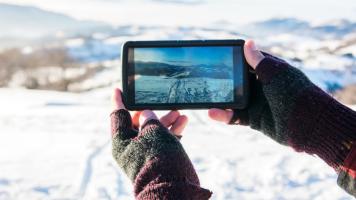
The iPhone camera is a simple point-and-shoot photographic tool, right? Yes, it is, but, even using the basic iPhone camera app, the photographer has many different options for capturing the best possible image. Here we will give you a quick-and-dirty guide to getting intimate with your iPhone’s camera.
1. There are many ways to activate the iPhone camera.
The most basic: Click on the Camera icon.
Extra fun. Press-and-hold on the Camera icon and you will get a shortcut menu to Take Selfie, Record Video, Record Slo-mo, or Take Photo.
by Shawn C. Steiner · Posted
Even among the most serious professional photographers, there is recognition that the smartphone is an extraordinarily capable and convenient tool. They have it easy, though, with years of experience that make taking a photo with their mobile devices intuitive, and then follow it up with stellar editing that really makes the subject pop. If you have always wanted to make your smartphone photos shine like the pros, you have come to the right place, because this

by Peter Ward_1 · Posted
Things aren’t as simple as the days when most video cameras (broadcast and ENG cameras aside) just came with a built-in lens and that was that. Now, between DSLRs, mirrorless cameras being used for video, and cinema cameras that have still-camera lens mounts, one is stuck with the daunting task of picking out a set of lenses.
If I can only choose one lens, what is the best?
First, I would like to dispel any notion that there is one “best” lens. There isn’t. Lenses come in different focal lengths because different shots work best (or at all)

by Allan Weitz · Posted
Sometimes, the phrases, acronyms and strings of numbers or number-letter combinations used to identify photographic hardware or techniques can be daunting to the uninitiated neophyte photographer.
We've prepared a list of the basic terms. Have we left any out that you think should be added? Please let us know!
0-9 | A | B | C | D | E | F | G | H | I |

by Jill Waterman · Posted
The act of isolating our kinetic, changeable world as a two-dimensional, static rectangle (or square) is a very subjective practice. Most photographers are familiar with the technical rules—such as exposure and focus—that influence successful results. Compositional rules, however, have a less defined effect over the success of an image. In fact, when it comes to composition, there is a healthy debate over whether the term “rule” should be used at all. This adds fuel to the fire in arguments about one of the fundamental principles of

by Elizabeth Groeschen · Posted
Guaranteed to be the one camera that is always on you, your mobile phone’s camera may or may not be your camera of choice, but it’s better than none! Here are a few tips to help you use what you have, or whip your budding mobile photography hobby into better shape.
If you’re anything like me, throughout the day, your phone is constantly being juggled; it’s stuffed in a pocket on the way outside to walk the dog, held with a wallet upon entering the subway, slipped into a bag during your commute, and often misplaced at least once during your

by Lawrence Cohen_3 · Posted
Sharks: underwater photographers have tremendous respect for these fabulous, mysterious fish, and travel at great expense and distance to capture their beauty. Australia, South Africa, Guadalupe, and Fiji are well known for shark dives. But there are many places closer to home where divers can observe and photograph sharks. Here we suggest a number of locations where we have experienced exciting shark action—and you won’t have to fly to Fiji! By no means is this a complete list.