
Sony Global
RAID Hard Drive Arrays

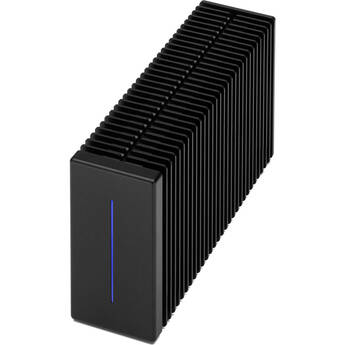
OWC ThunderBlade X12 96TB 12-Bay Thunderbolt 5 RAID Array (12 x 8TB)
- 12 x 8TB NVMe PCIe 4.0 M.2 SSDs
- 12 x NVMe PCIe 4.0 M.2 2280 Drive Bays
- 2 x Thunderbolt 5 (USB-C) Ports
- RAID 0, 1, 4, 5, 10, and JBOD
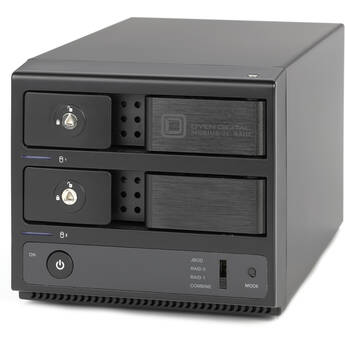
Oyen Digital Mobius 2C 2-Bay USB 3.2 Gen 2 RAID Enclosure
- 2 x 3.5" SATA III Drive Bays
- 10 Gb/s USB-C 3.2 Gen 2 Interface
- 10 Gb/s USB-C Hub Port with 15W of Power
- RAID 0, 1, JBOD, and SPAN
TerraMaster D4-320 4-Bay USB 3.2 Gen 2 Enclosure
- 4 x 3.5/2.5" SATA Drive Bays
- 1 x USB-C 3.2 Gen 2 Port
- Read Speeds of up to 1016 MB/s
- Write Speeds of up to 960 MB/s
OWC Mercury Elite Pro Dual 2-Bay USB 3.2 Gen 2 RAID Enclosure with 3-Port Hub
- 2 x 2.5"/3.5" SATA III Drive Bays
- USB 3.2 Gen 2 Type-C Interface
- RAID 0, 1, SPAN, and JBOD
- Hardware RAID Controller
OWC miniStack STX & Thunderbolt Hub Xpansion (Enclosure Only, Matte Silver)
- 1 x PCIe 3.0 x1 M.2 2280 SSD Slot
- 1 x 3.5/2.5" SATA III Drive Bay
- 1 x Thunderbolt 4 Port with 96W PD
- 3 x Thunderbolt 4 Ports with 15W
CineRAID CR-H218 480GB 2-Bay USB 3.1 Gen 2 Type-C Raid Array (2 x 240GB SSD)
- 2 x 240GB SSDs
- 2 x 2.5" SATA III Drive Bays
- USB 3.1 Type-C Interface
- RAID 0, 1, JBOD, and Normal
Rocstor Rocpro U33 2-Bay USB 3.2 Gen 2 Type-C RAID Enclosure
- 36TB Max Capacity
- 2 x 2.5/3.5" Drive Bays
- USB 3.2 Gen 2 Type-C Interface
- RAID 0, 1, 10, JBOD
TerraMaster D6-320 6-Bay USB 3.2 Gen 2 Enclosure
- 6 x 3.5/2.5" SATA Drive Bays
- 1 x USB-C 3.2 Gen 2 Port
- Read Speeds of up to 1016 MB/s
- Write Speeds of up to 986 MB/s
Buffalo 4TB DriveStation Duo
- 4TB Storage Capacity
- Includes 2 x 2TB Hard Drives
- SATA II Internal Drive Interfaces
- 1 x USB 3.0 Interface
iStarUSA Compact Stylish 3x 3.5" Hotswap Trayless mini-ITX Tower (Silver HDD Handles)
iStarUSA Compact Stylish 3x 3.5" Hotswap Trayless mini-ITX Tower (Red HDD Handles)
iStarUSA Compact Stylish 3x 3.5" Hotswap Trayless mini-ITX Tower (Black HDD Handles)
OWC 2TB miniStack STX & Thunderbolt Hub Xpansion (2TB HDD, Matte Silver)
- 2TB Storage Capacity
- 2TB 7200 rpm SATA 3.5" HDD
- 3.5/2.5" Drive Bay | NVMe PCIe M.2 Slot
- 1 x Thunderbolt 4 Port with 96W PD
Rocstor Rocpro U35 4-Bay USB-C 3.2 Gen 1 RAID Enclosure
- Four 3.5" Drive Bays
- USB-C 3.2 Gen 1 Interface
- Supports RAID 0, 5, JBOD
- 24W Power Delivery
OWC Express 4M2 Ultra Four-Slot Thunderbolt 5 External Storage Enclosure
- 4 x NVMe PCIe 4.0 x1 SSD Slots
- Supports M.2 2242 and 2280 Form Factors
- Dual 80 Gb/s Thunderbolt 5 Ports
- RAID 0, 1, 4, 5, 10, and JBOD
OWC Mercury Elite Pro Quad 4-Bay USB 3.1 Gen 2 Type-C RAID Enclosure (RAID 0, 1, 0+1, 4 and 5)
- 4 x 3.5"/2.5" SATA III Drive Bays
- USB 3.1 Gen 2 Type-C Interface
- Supports RAID 0, 1, 0+1, 4, 5, and JBOD
- Software RAID Controller
iStarUSA Compact Stylish 4x 3.5" Hotswap Trayless mini-ITX Tower (Red HDD Handles)
iStarUSA Compact Stylish 4x 3.5" Hotswap Trayless mini-ITX Tower (Blue HDD Handles)
iStarUSA Compact Stylish 4x 3.5" Hotswap Trayless mini-ITX Tower (Black HDD Handles)
iStarUSA Compact Stylish 4x 3.5" Hotswap Trayless mini-ITX Tower (Wood Look HDD Handles)
TerraMaster F4 SSD 4-Bay NAS Enclosure
- 2 x M.2 2280 PCIe 3.0 x2 Slots
- 2 x M.2 2280 PCIe 3.0 x1 Slots
- 3.4 GHz Intel N95 4-Core CPU
- 8GB DDR5 RAM
iStarUSA S-35-B5SA Compact Stylish 5x 3.5" Hotswap mini-ITX Tower (Silver HDD Handles)
iStarUSA S-35-B5SA Compact Stylish 5x 3.5" Hotswap mini-ITX Tower (Red HDD Handles)
iStarUSA S-35-B5SA Compact Stylish 5x 3.5" Hotswap mini-ITX Tower (Blue HDD Handles)
OWC 4TB miniStack STX & Thunderbolt Hub Xpansion (4TB HDD, Matte Silver)
- 4TB Storage Capacity
- 4TB 7200 rpm SATA 3.5" HDD
- 3.5/2.5" Drive Bay | NVMe PCIe M.2 Slot
- 1 x Thunderbolt 4 Port with 96W PD
iStarUSA Compact Stylish 5x 3.5" Hotswap Trayless mini-ITX Tower (Silver HDD Handles)
iStarUSA Compact Stylish 5x 3.5" Hotswap Trayless mini-ITX Tower (Red HDD Handles)
iStarUSA Compact Stylish 3x 3.5" Hotswap mini-ITX Tower (Silver HDD Handles)
Everything You Need to Know about RAID Hard Drives (RAID Arrays)
Faster performance, data protection, and duplication of drives are the primary benefits of RAID arrays. They help protect individuals and companies from losing important data in the event of operating-system or hard-drive malfunction. A number of hard drive array accessories further guard against damage to your system. Popular accessories include hard drive enclosures and docks and storage cases for transportation.
What Is a RAID Array?
RAID stands for redundant array of independent disks, but not every RAID array level provides redundancy. Three forms of RAIDs protect hard drive contents:
- Hardware-based RAID: A physical controller manages the array; the array may or may not be part of the motherboard.
- Software-based RAID: Hardware system resources operate the controllers.
- Firmware or driver-based RAID: The firmware controller chip is part of the motherboard, and the CPU manages the functions.
Use internal hard drive cages to protect hard drives from jostling and from damage due to overheating during failure.
How Does a RAID Array Work?
RAID arrays distribute data across multiple disks, allowing processes or operations to evenly overlap. Using multiple disks increases mean time between failure, thereby increasing fault tolerance. Hard drive arrays trick an operating system into believing it's operating on one logical hard disk. Arrays can perform disk striping, mirroring, or a combination of both depending on the level of RAID hard drives being implemented.
Different Types of RAID Arrays
Some RAID systems are more useful than others because of their specific benefits and features. The five main levels of arrays commonly used in business are:
- RAID 0: Minimum two disks, striping, no redundancy, not for critical systems
- RAID 1: Minimum two disks, mirroring, redundancy
- RAID 5: Minimum three disks, redundancy, for read-oriented databases
- RAID 6: All functions of RAID 5, can operate with two failed discs, difficult to set up RAID controller
- RAID 10: Minimum four disks, striping and mirroring, best performance and redundancy, most expensive
Most types are available for both hardware and software, and finding a RAID system for Mac is just as easy as finding for one for a PC.
How to Choose a RAID Array
To choose a RAID array for personal or business use, keep the following information in mind. If critical drive recovery is important to your level of data, RAID 0 or 1 isn't going to provide required functions. If you have a read-oriented database and need a distributed parity, RAID 5 is best. RAID 6 and 10 are more suitable options for large businesses because they each work well for critical drives.
Find a wide range of RAID arrays at B&H Photo and Video and use them alongside wireless storage devices to extend company options for data protection and recovery after critical failures.