Mirrorless Lenses

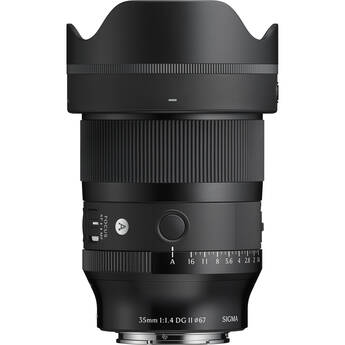
Sigma 35mm f/1.4 DG II Art Lens (Sony E)
- Full-Frame | f/1.4 to f/16
- 14% Smaller, 20% Lighter + Improved IQ
- Dual HLA-Driven High-Speed AF Motor
- Floating Focus System
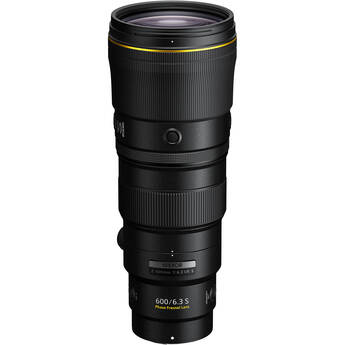
Nikon NIKKOR Z 600mm f/6.3 VR S Lens (Nikon Z)
- Full-Frame | f/6.3 to f/32
- Handheld Super-Telephoto Prime
- Multi-Focus System
- 5.5-Stop VR Image Stabilization
Sigma 16-300mm f/3.5-6.7 DC OS Contemporary Lens (Sony E)
- APS-C | f/3.5-6.7 to f/22-45
- 24-450mm (35mm Equivalent)
- Versatile All-In-One Zoom Lens
- HLA-Driven High-Speed AF Motor
Sony FE 24-50mm f/2.8 G Lens (Sony E)
- Full-Frame | f/2.8
- Fast, Lightweight Mid-Range Zoom
- Aperture De-Click and Lock Switches
- Aspherical and ED Elements
Panasonic LUMIX G X Vario PZ 45-175mm f/4-5.6 ASPH. POWER O.I.S. Lens
- Micro Four Thirds System
- 90-350mm (35mm Equivalent)
- Aperture Range: f/4 to f/22
- Two Aspherical Elements, Two ED Elements
Sony FE 70-200mm f/4 Macro G OSS II Lens (Sony E)
- Full Frame | f/4 to f/22
- G Series Telephoto Zoom
- .5x Magnification Across Full Zoom Range
- Internal Focus, Floating Elements Design
Nikon NIKKOR Z 70-200mm f/2.8 VR S Lens
- Z-Mount Lens/FX Format
- Aperture Range: f/2.8 to f/22
- ED, SR, and Fluorite Elements
- ARNEO and Nano Crystal Coatings
Sony 24-70mm f/2.8 GM II Lens with 82mm Filter Kit
- Full-Frame | f/2.8 to f/22
- Fast Standard Zoom
- 22% Lighter, 18% Smaller than Previous
- Four XD Linear AF Motors, Floating Focus
Olympus M.Zuiko Digital 14-42mm f/3.5-5.6 II R Lens (Black)
- Micro Four Thirds System
- 28-84mm (35mm Equivalent)
- Aperture Range: f/3.5 to f/22
- Three Aspherical Lens Elements
OM SYSTEM M.Zuiko Digital ED 60mm f/2.8 Macro Lens (Micro Four Thirds)
- Micro Four Thirds | f/2.8 to f/22
- 120mm (35mm Equivalent)
- 1:1 Magnification, 7.5" Minimum Focus
- Movie & Still Compatible AF System
Sony FE 24-105mm f/4 G OSS Lens
- E-Mount Lens/Full-Frame Format
- Aperture Range: f/4 to f/22
- 4 Aspherical Elements, 3 ED Elements
- Nano AR and Fluorine Coatings
Canon RF-S 18-150mm f/3.5-6.3 IS STM Lens
- RF-S-Mount Lens/APS-C Format
- 29-240mm (35mm Equivalent)
- Aperture Range: f/3.5-6.3 to f/40
- One UD Element & Two Aspherical Elements
Canon RF 24mm f/1.8 Macro IS STM Lens
- RF-Mount Lens/Full-Frame Format
- Aperture Range: f/1.8 to f/22
- One UD Element, One Aspherical Element
- Super Spectra Coating
Tamron 25-200mm f/2.8-5.6 Di III VXD G2 Lens (Sony E)
- Full-Frame | f/2.8-5.6 to f/16-32
- Compact & Advanced All-in-One Zoom
- VXD Autofocus System
- 1:1.9 Maximum Magnification
Sony FE 24-70mm f/2.8 GM Lens
- E-Mount Lens/Full-Frame Format
- Aperture Range: f/2.8 to f/22
- One XA Element & Two Aspherical Elements
- One ED Element & One Super ED Element
Thypoch Voyager 24-50mm f/2.8 Lens (Sony E)
- Full-Frame | f/2.8 to f/22
- Minimum Focusing Distance: 11.8"
- 16 Elements in 13 Groups
- 2 ASPH, 2 ED & 3 HRI Elements
Tamron 70-180mm f/2.8 Di III VC VXD G2 Lens (Nikon Z)
- Full-Frame | f/2.8 to f/22
- Fast, Compact Short Telephoto Zoom
- VXD Linear AF Motor
- Vibration Compensation
OM SYSTEM M.Zuiko Digital ED 12-100mm f/4 IS PRO Lens
- Micro Four Thirds System
- 24-200mm (35mm Equivalent)
- Aperture Range: f/4 to f/22
- IP53-Rated Weather Protection
OM SYSTEM M.Zuiko Digital ED 40-150mm f/2.8 PRO Lens
- Micro Four Thirds System | f/2.8 to f/22
- 80-300mm (35mm Equivalent)
- Dual VCM AF System, Manual Focus Clutch
- Programmable L-Fn Function Button
Canon RF 75-300mm f/4-5.6 Lens (Canon RF)
- Full-Frame | f/4-5.6 to f/32-45
- Lightweight Telephoto Zoom
- DC Autofocus Motor
- Super Spectra Coating
TTArtisan 25mm f/2 Lens for FUJIFILM X
- X-Mount Lens/APS-C Format
- 37.5mm (35mm Equivalent)
- Aperture Range: f/2 to f/16
- Manual Focus Design
Viltrox 35mm f/1.8 II EVO Lens (Nikon Z)
- Full-Frame | f/1.8 to f/16
- Fast Wide-Angle Prime
- Quiet STM Stepper Motor
- 13.4" Minimum Focusing Distance
Sigma 56mm f/1.4 DC DN Contemporary Lens (Sony E)
- APS-C | f/1.4 to f/16
- 84mm (Full-Frame Equivalent)
- Rounded 9-Blade Diaphragm
- Stepping Motor AF System
Tamron 18-300mm f/3.5-6.3 Di III-A VC VXD Lens (Sony E)
- APS-C | f/3.5-6.3 to f/22-40
- 27-450mm (Full-Frame Equivalent)
- All-in-One, Wide-to-Tele Zoom
- VXD Linear AF Motor
Viltrox AF 14mm f/4 Air FE Lens (Sony E)
- Full-Frame | f/4 to f/16
- Ultrawide Angle of View
- Fast STM Autofocus Motor
- 4 ED, 2 HR & 2 Aspherical Elements
Panasonic LUMIX G X Vario PZ 14-42mm f/3.5-5.6 Power O.I.S. Lens (Black)
- Super Compact 3x 14-42mm Power Zoom Lens
- 28-84mm Equivalent in 35mm Format
- Nano Coating Reduces Ghosting and Flare
- Power O.I.S. Optical Image Stabilization
Viltrox AF 85mm f/2 EVO FE Lens (Sony E)
- Full-Frame | f/2 to f/16
- Fast Portrait-Length Lens
- Nano Coating and Resistance Coating
- Two ED & Two HR Lens Elements
Nikon NIKKOR Z 85mm f/1.8 S Lens
- Z-Mount Lens/FX Format
- Aperture Range: f/1.8 to f/16
- Two Extra-Low Dispersion Elements
- Nano Crystal & Super Integrated Coatings
Learning About Mirrorless Camera Lenses
Mirrorless camera lenses are interchangeable units for mirrorless cameras. Photographers with these cameras can easily upgrade their kit lenses and switch between lenses with different capabilities. Besides compatibility and type, the key factors to consider when shopping for interchangeable lenses are focal length and aperture range (f-stop number).
Types of Mirrorless Lenses
Mirrorless cameras use zoom and prime lenses. A zoom lens has a range of focal lengths. Sony's versatile G OSS lens series falls into this category. Prime lenses have fixed focal lengths and wider apertures. A zoom or prime lens can also be a standard, macro, wide-angle, telephoto, or fisheye lens.
A standard mirrorless lens captures images just as the eyes see them. A macro lens takes extreme close-up shots, and is suitable for taking photos of flowers, insects, and small items. Wide-angle lenses capture panoramic views. They're ideal for landscape photography and taking group pictures. Fisheye lenses produce extreme panoramic shots with curved edges. Telephotos lenses have long zoom capabilities.
Manufacturers offer camera lenses with varying capabilities and at multiple price points. Sigma, for example, has an Art series for high-end units and a Sport series with telephoto capabilities.
What Are Specialty Lenses?
These units are suitable for less common mirrorless cameras, or those that distort images in creative ways. In this category, you'll find rangefinder lenses. Rangefinder cameras are retro mirrorless systems that predate SLRs and DSLRs. Their standout feature is a rotating focusing ring for bringing objects into sharp focus. Lenses for these cameras have designs that accommodate this range-finding mechanism.
To add some creative touches to your shots, consider getting special effects lenses. The most popular examples are tilt-shift styles. They add optical distortion to shots to make images look symmetrical and pleasing to the eyes. Others let you adjust focus to add bokeh effects.
Can I Use Any Mirrorless Camera Lens with My Mirrorless Camera?
First, you need to match lens and camera sensor sizes. Compatible lenses are bigger or the same size as image sensors. Use full-frame lenses with full-frame cameras. Full-frame and APS-C lenses are compatible with APS-C sensors. Medium and large format lenses are larger than these are, but usable on mirrorless cameras.
Also consider lens mount. Manufacturers make lenses that are compatible with specific mounts. For example, E-mount and A-mount Sony mirrorless lenses are specifically for Sony cameras. Third-party lens makers may offer products that support OEM lens mounts. For example, you can find a Tamron lens for Sony E-mount mirrorless cameras. Some camera manufacturers produce lenses that are compatible with mounts found on other camera brands. Sigma's HSM Art lens series is a good example. Its lenses work with Sony, Sigma, Canon, and Nikon cameras.
Browse the wide selection of interchangeable camera lenses, zoom lenses, and accessories at B&H Photo and Video to expand your collection.