Search results for: audio basics gain staging
About 19 filtered results
by Freddy Gerngross · Posted
Recording drums is an esoteric practice; even with consistent techniques, it can be difficult to get consistent results, and with so many microphones on the market, it's tough to know what gear will bring out the most life from your performance. Luckily, you don't need expensive mics to achieve a brilliant recording (but it doesn't hurt)—if you're someone who wants to know more about recording drums and which mics are best suited for the job, this article is for you!
How Do I Record a Drum Kit? Basics Before Micing
While this article is a

by Mathew Malwitz · Posted
Content creation can be as simple as we make it, but if you truly want to make your content stand out, you’ll need the right tools to do it. Visually pleasing lighting and quality audio can go a long way to legitimizing your work and giving it a pro level feel. In this guide, we’ve put together a few kits ranging from budget friendly to higher end and everything in between.
Best Budget Kit
It’s said that the best camera is the one you have available. Odds are, you likely have a smartphone, so that’s our budget camera. Most modern smartphones
Posted
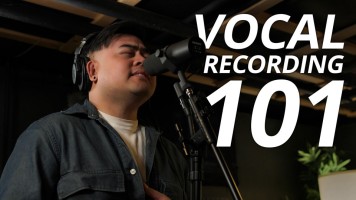
Kevin breaks down various setups you can use when recording vocals at home, from entry-level to high-end. The first step: understanding basic room acoustics. You'll also learn how microphones work, how to gain stage properly, and much more. Thank you to @mattrelevo for joining us!
0:00 - What We're Covering
0:44 - Treating The Room
1:36 - Audio Interface
2:54 - Dynamic vs Condenser Mic
4:01 - Basic, Bare-Bones Setup
12:30 - Home Studio Setup
17:10 - High-End, Professional Setup

by Freddy Gerngross · Posted
Now that we’ve discussed the basic gear you need to put on a live show, lets look at the specific kind of gear and knowledge you’d need to set up a professional event at a large venue, stadium, or arena. Whether you want to gain more knowledge in pro live sound or you’re just curious, you’re in the right place!
If you’re a beginner or want more context for this article, go ahead and check out the

by Freddy Gerngross · Posted
When it comes to putting on a live show, knowing the specific gear to get and how to use it can be a daunting prospect. There are tons of different microphones, speaker systems, monitoring setups, and mixer environments, all of which are suited for different types of performance settings. And that's not even including power distribution, cabling, and other miscellaneous equipment you'll need to put on a proper event. But fear not reader. In this guide, we'll go over all the gear you'll want to consider and why, whether you're putting on

by Freddy Gerngross · Posted
Like anything worth creating, solidifying the process of a project is key to success. Often, the ambitious work of aspiring music producers can get bogged down from a lack of organization. Projects can bloat into dozens of unnamed tracks processed with reckless abandon, and audio and MIDI clips get chopped and sliced into a charcuturie board of chaotic (un)organization.
For the fever-pitched producer in a flow state, this chaos can be managed during the session (to an extent). But what if they were to step away from the project and come back

by Freddy Gerngross · Posted
Since its founding in 1992, DPA Microphones has gained a prestigious reputation in the audio industry for their mics' exceptional quality, crystalline transparency, and rugged and reliable build quality. And while DPA's microphones have found their way onto the stage with Beyonce, onto the sets of Game of Thrones, and into the concert halls of the world's greatest orchestras, what's perhaps most impactful to our world is the contributions they've made to the scientific community: DPA's microphones have enabled advancements in medicine,

by Freddy Gerngross · Posted
Mixing audio is not an exact science—there are many ways to achieve similar results, and what works for one project may not for another. In my ten-plus years of mixing, I’ve had the privilege and opportunity to learn both common and lesser-known techniques from some of the best engineers in the world, as well as the time and practice to discover my own tricks and techniques through experimentation and a few happy accidents. We don’t gatekeep at B&H—here are ten helpful techniques you can use to bring the best out of your mix.
1. Use

by Freddy Gerngross · Posted
One of the most common aspects of podcasting that gets in the way of a newcomer’s success is setting and adjusting proper levels. Too quiet and your podcast won’t grab the listeners’ attention, too loud and it will be fatiguing to listen to—and if it’s too quiet and too loud, the listener will be adjusting the volume for the entire podcast!
Proper leveling and loudness are key for audience retention and the success of any podcast. In this short guide, we will go over the basics of leveling out the audio for your podcast.
Getting the Right

by Freddy Gerngross · Posted
Equalizers are the most powerful tool any audio engineer or musician has in their arsenal. Like many tools in the world of pro audio, while its concept and function are simple to understand, the different philosophies of a given EQ’s design and application can result in numerable sonic outcomes. Understanding how an EQ works is extremely helpful in deciding when and where to use a certain type and will work wonders for live setups, mixing, mastering, and perfecting tone.
In this tutorial guide, we’ll begin with the basics of equalization and

by Gabby Bloch · Posted
Producing a podcast is not an easy challenge. And for beginner and intermediate podcasters who are tasked with handling post-production, there are always new things to learn and fresh ways to approach the editing and mixing process. So, I sat down with B&H’s own podcast producer of the B&H Photography Podcast, Mike Weinstein, to glean into some of his editing and mixing methods.
So, let’s start from the beginning. What kind

by Gabby Bloch · Posted
If you’ve been looking at RODE wireless microphone systems and are confused as to which model is right for you, you’ve come to the right place. We’ll briefly break down the main differences between the Wireless ME, the Wireless GO II, and the Wireless PRO to help you find the most suitable system for your needs and budget.
RODE Wireless ME
We’ll start with the Wireless ME because it’s the simplest and most budget-friendly

by Gabby Bloch · Posted
Here at B&H, we’ve written countless articles on podcasting, including guides on editing, mixing, and mastering your podcast. But if you’re still having trouble getting the sound you want, we recommend simplifying your production process. Let’s discuss how to separate and streamline your production tasks to get a better final product with hopefully less effort.
Separate the Recording and Mixing Processes
Many people feel the

by Gabby Bloch · Posted
If you’re new to podcasting and wondering what kind of recording equipment you will need, you’ll likely be facing the choice between a straightforward audio interface and dedicated podcast recorder or workstation. We’ll break down the differences between these two options to help get you started.
Audio Interfaces
If you own a

by Gabby Bloch · Posted
If you’re a guitarist, bass player or keyboardist, you’ve probably heard the term “DI Box” thrown around. You might be wondering whether you need one for a home studio setup or you’re new to stage performance and looking to buy a DI Box to get started. Regardless of your specific application, let’s break down what exactly a DI Box is and whether you need one.
What is a DI Box?
In the most basic terms, a DI Box (Direct box) is a device that converts unbalanced, high-impedance signals from instruments like electric guitars, or basses into