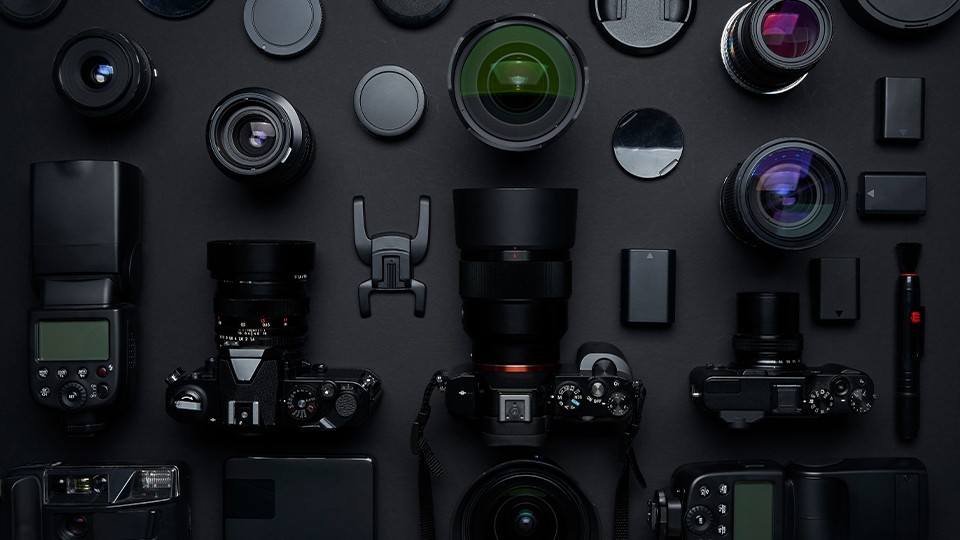
Whether you’re interested in photography or a semi-experienced beginner looking to upgrade your gear, this is a guide to the essentials you need to build a complete camera kit for any budget. But what do we need in a basic kit? Of course, you can’t take photos without a camera and lens, but we’re looking to help you take your photography to the next level. To do this, we’ll need other staples like a tripod, flash, and select filters to enhance our image taking abilities.
The Basics
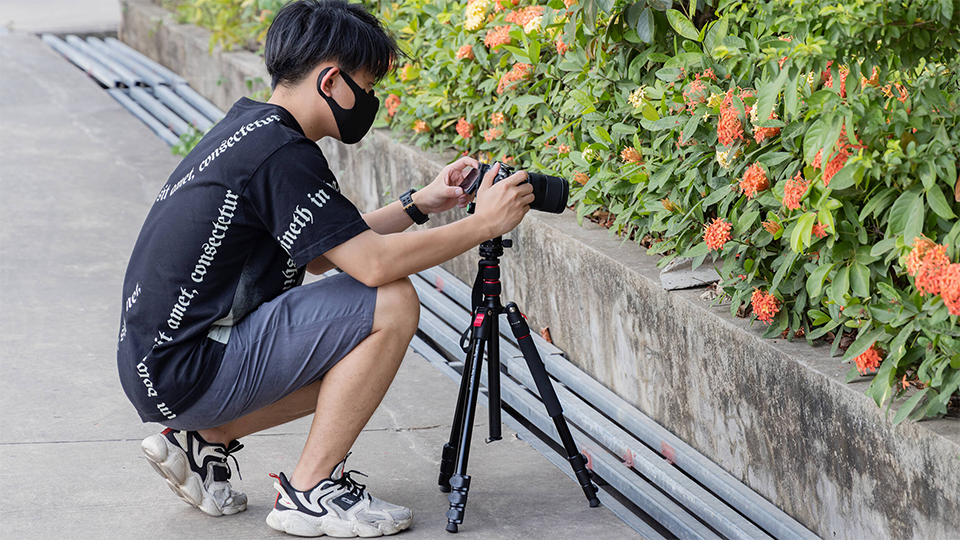
When building a kit, there’s more to consider than just the camera and lens. The camera itself will come with a battery, method of charging, and a strap but there are additional tools required or recommended that will enhance your abilities as a photographer. Of course, you can’t take a picture without a memory card unless you have built in storage, and that’s a feature found exclusively in some higher end cameras.
Additionally, a tripod can help you get sharper images in low-light scenarios or keep your camera stable while you record. Even in good light, a tripod can be used to help stabilize longer lenses. You can even use one for a more relaxed day shooting. If you’re staking out a scenic view or waiting for a bird to fly into a specific perch, a tripod allows you to keep your camera raised and ready for action while you relax with your hands free.
Is your image still too dark? You may need an external light source to brighten your shot and get the results you want. Whether it be an on-camera speedlight or a large LED constant light for video applications, there’s a solution for almost every need. In this guide, we’re going to focus on speedlights, as they are most applicable to photography, but we may sneak a constant light or two in there.
Even the lens has accessories that can drastically change your images or simply protect the front element from scratches and other forms of damage. The most common filters used by photographers include UV or protection filters. As their name suggests, these serve as a defensive barrier on the front element of the lens. They have no effect on the final image. A circular polarizing filter on the other hand. can eliminate bright reflections and make blue skies look even richer in color.
Under $1,500
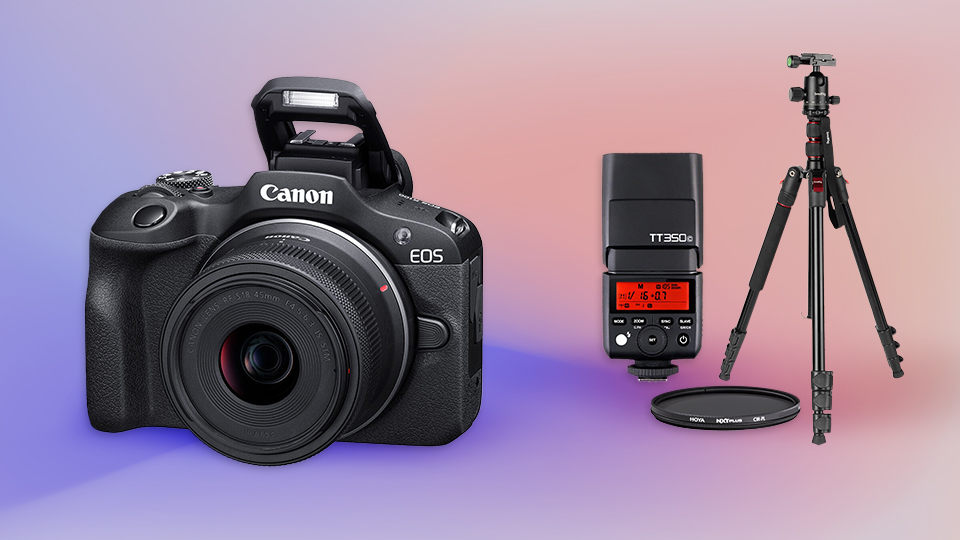
Many manufacturers have shifted focus onto enthusiast level cameras and lenses, meaning the days of the $500 camera kit are numbered. Canon bucks the trend with the entry level EOS R100 kit featuring the RF 18-45mm lens. To protect the lens, a UV or protective filter is a must. Hoya’s NXT Plus filters are a great, inexpensive solution that have no impact on image brightness or clarity. The Hoya NXT line will be suitable for most bundles in this guide. An often-overlooked tool is the circular polarizing filter, or CPL. While it is not necessary for all photographers, anyone interested in landscape photography should seriously consider picking up a CPL.
If you’re considering picking up a tripod, either the Sirui ET-1004 Aluminim Tripod with E-10 Ball Head or the SmallRig CT-20 Aluminum Tripod with Ball Head are lightweight and relatively inexpensive options. Both feature an Arca-Type ball head, making them compatible with all Arca-Swiss style plates.
The EOS R100 does feature a pop-up flash, but to take better control of our light, we’re going to want a dedicated flash unit. The Godox TT350C Mini Thinklite TTL Flash is a great option for this camera. It’s a stronger flash than built-in unit and features 270° of rotation and tiltable head for greater control. compliments the small, portable form factor of the camera perfectly.
Under $2,500
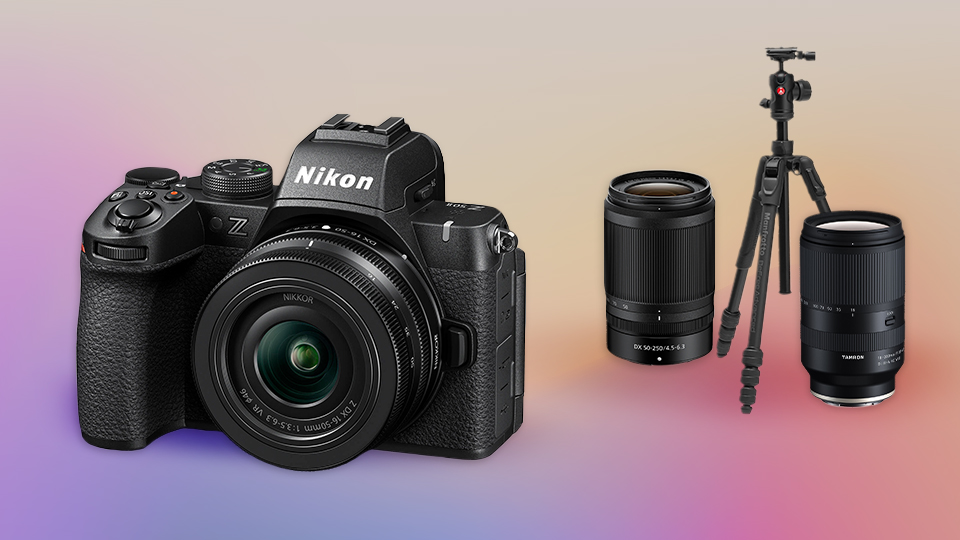
At the next price point we jump to the pro-sumer/enthusiast level mirrorless cameras like the Nikon Z50 II. We’re specifically at the two-lens kit featuring the Z 16-50mm and 50-250mm lenses. The new Tamron 18-300mm f/3.5-6.3 Di III-A VC VXD will make for an enticing alternative as it covers the range of both lenses and then some.
With a larger lens, you’ll need a more substantial tripod. Our pick for this category is the Manfrotto BeFree Advanced AS Aluminum Travel Tripod with 494 Center Ball Head. This tripod is also available in carbon fiber, but the weight savings are not as substantial at this size. As we get into larger tripods, we’ll make the jump to the lighter material.
While a more compact flash fits a camera like the EOS R100 well, it doesn’t perform quite as well as full-size flash units like the Godox TT685N II. This speedlight will deliver a powerful pulse of flight when needed and have a longer battery life than smaller options.
Under $5,000
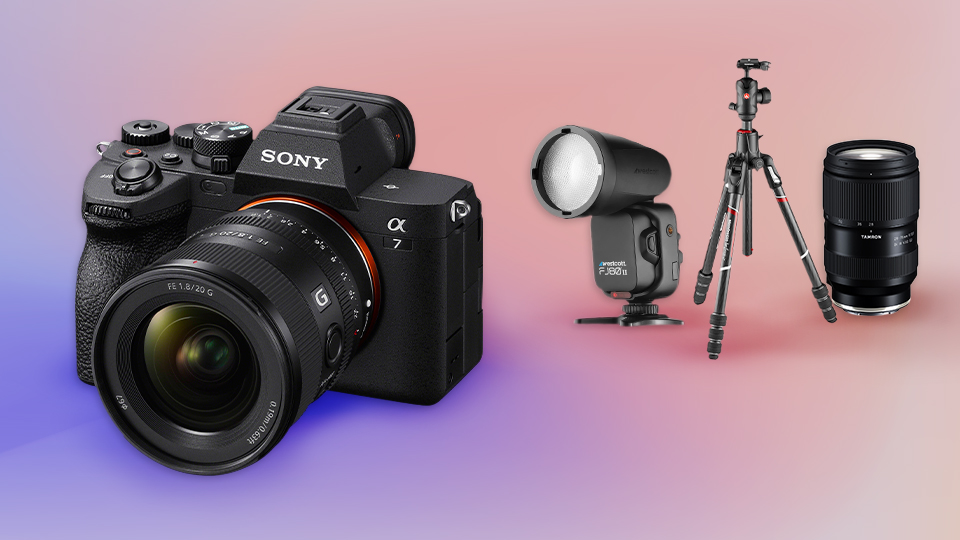
Our choice for this tier is the Sony A7 IV Mirrorless Camera as it adds a bit more resolution at 33-megapixels while having access to a vast array of lightweight lenses. Of these lenses, both the Sony FE 20-70mm f/4 G or the Tamron 28-75mm f/2.8 Di III VXD G2 are a logical upgrades to the kit lens. The 20-70mm adds an extra few millimeters of focal length on the wide end, making it an ideal choice for landscape shooters, while the faster f/2.8 aperture found in the Tamron is better suited for low-light shooting or individual portraits.
No matter what lens you choose, it should be protected as any lens in this guide should be. Hoya’s NXT lines are a suitable option, but the B+W UV-Haze #010 MRC Master Filter pairs well with the improved glass found in these full-frame lenses. B+W employs anti-reflection and droplet repellent coatings on their filters that closely match those found on the front elements of many lenses. B+W also offers a polarizing filter in this series. The real benefits to larger filters like the B+W is the stronger brass ring. These are more easily removed in the event of a break.
For a heavier, full-frame kit, you’re going to need a sturdy base to support the added weight. The Manfrotto Befree GT XPRO Carbon Fiber Travel Tripod with 496 Center Ball Head is a great option. Plus, this tripod features a built-in 90° column mechanism so you can shoot from directly over your subject.
Faster recycle times and an incredible array of modifiers are at your fingertips with the Westcott FJ80 II-M Speedlight. You can also use the built-in modeling light to aid in focusing or to illuminate your subject softly in place of a small LED.
Under $10,000
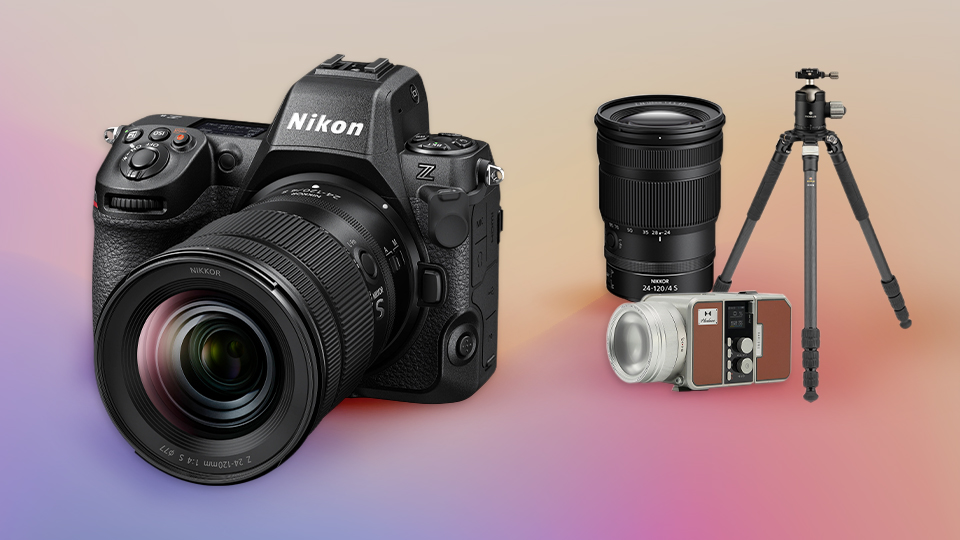
High-resolution, full-frame camera bundles like Nikon Z8 Mirrorless Camera with 24-120mm f/4 lens or Canon EOS R5 Mark II with RF 24-105mm f/4L USM are among the most popular image making tools used by pro photographers. They provide superb image quality, blazingly fast autofocus speeds, and superior build quality and weather sealing. These cameras are right at home from family photos to the sidelines of major sporting events.
You can swap out the Z 24-120mm f/4 S lens to a faster Tamron 28-75mm f/2.8 Di III VXD G2, which is currently only available in Nikon Z and Sony E Mounts. The sacrifice to focal range is well worth the added light gathering ability at f/2.8. While Canon has yet to fully open up the RF mount to third-party lens manufacturers, they’ve released a number of comparable lenses such as the RF 28-70mm f/2.8 IS STM lens.
At this point, we can really start experimenting with more creative lighting outfits. We’re sticking with the Westcott FJ80-II speedlight here, but as most pros know, you’ll need at least two. One to use and a backup. For a more powerful light source, a dedicated off camera strobe like the Westcott FJ400 II can illuminate larger groups or can be doubled up to light up an entire ballroom. You can also use flash in conjuncture with constant lighting in some scenarios. Product and portrait photographers alike may use an LED moonlight like the Harlowe Avant Max Bi-Color LED as what you see is what you get. There’s no guess work as to how powerful your flash will be. Flash is more powerful, but there’s benefits to both systems and plenty of opportunity to use them in tandem.
With any off-camera lighting set-up, you’ll need a sturdy stand to hold the lights. The Manfrotto Master Air-Cushioned Stand is our choice, as it’s 12’ max height makes the stand a versatile choice. With any stands, it’s recommended that you use sand/weight bags to stabilize your equipment. This is also true for tripods. A sturdy tripod is often quite stable on its own, but any job that sees you walking away from a tripod while clients or guests are around risks catastrophe. A tripod like the Robus RC-5570 Vantage Series 3 Carbon Fiber Tripod with Triple Action Ball Head has a wide base and stocky legs, making it a very reliable option. The carbon fiber construction makes this tripod significantly lighter than an aluminum counterpart. Additionally, this tripod ditches the center column to cut excess weight while allowing the user to lower the head to ground level for engaging compositions.
Under $15,000
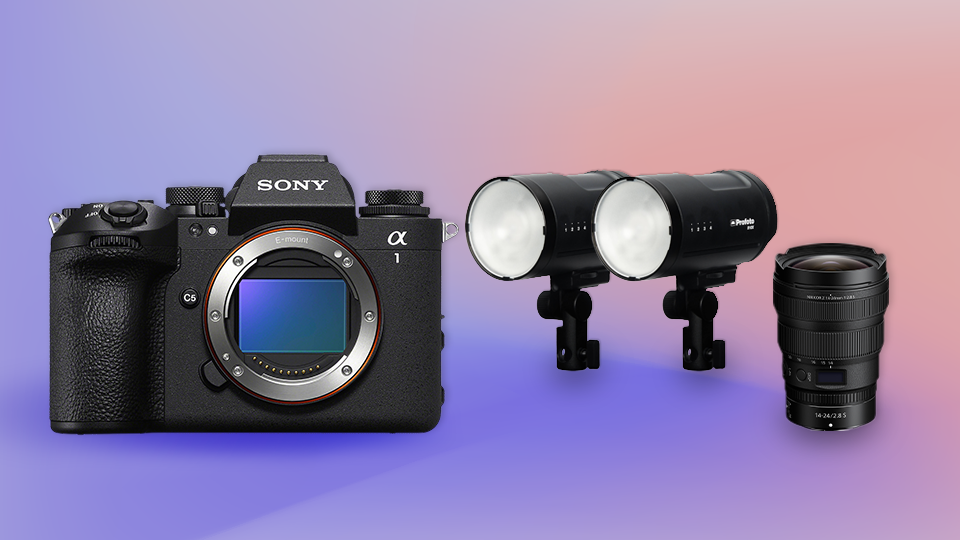
Most of the same tools in the previous category can carry over to this price point. Could you substitute cameras like the Nikon Z8 and Sony A7 RV for their flagship bigger siblings? Yes, but the benefits of the higher end cameras are lost in most scenarios. If you’re exclusively photographing sports, wildlife, or any other fast action in outdoor conditions rain or shine, the flagship models like the Nikon Z9 or the Sony A1 II are very practical options. That being said, for most uses, the smaller alternatives are perfectly suited for most other uses.
The same can be said about lighting, stands and tripods. The Westcott and Godox systems deliver fantastic results in relatively small packages. That being said, this price point opens up the opportunity to use even stronger lights like the Profoto B10X OCF Flash. This strobe comes in a variety of bundles, including the Duo Backpack Kit, which includes two lights, two stand adapters, and two chargers, as well as full-location kits that provide stands and lighting shaping tools. If the 250 watt light still doesn’t deliver the power you’re after, there’s always the 500w B30 OCF Flash.
The real benefit here is the ability to obtain multiple lenses. The most complete professional kits include a variety of lens that cover a vast array of focal lengths. You may be familiar with the phrase “holy trinity of lenses.” The holy trinity refers to a set of three zooms: a wide-angle, standard, and telephoto zoom. The most common lenses in each category are the 16-35mm, 24-70mm, and 70-200mm zoom lenses. Note that Nikon offers a Z 14-24mm f/2.8 S lens in lieu of the more common 16-35mm focal length offered by Canon, Sony, and Leica. (Yes, the Canon lens is 15mm at the wide end, but that’s close enough to 16mm.)
Tripods are another accessory you can splurge on if you wish. Gitzo and Really Right Stuff both make tripods equivalent to the third-generation Toyota 4Runner. The Gitzo Systematic series is especially known for its smooth joints and exceptional overall build quality. There are Gitzo tripods from the 1970s still in action and many more sitting in the basements and garages of pros. It’s not that they don’t work anymore. In fact, it’s quite the opposite. The problem is they weigh about as much as three current generation models.
Conclusion
Of course, the exact kit you build will depend on your subject matter and approach to shooting. You may substitute a prime lens for an aforementioned zoom or a longer telephoto zoom for sports or wildlife shooting. The genre you choose to pursue may have no need for lighting, so you can focus your efforts on lenses. There are so many ways you can mix and match gear to create a stable, well-lit kit for your specific needs and we hope this guide has been helpful as you make your decision.
