
Recording is much more of an art than a science, and every recording engineer has their preferences and techniques to achieve the sound they’re aiming for. With the current accessibility of recording technology, people have created incredible, high-fidelity productions despite limited budgets and unlikely recording environments—all they needed was some knowledge, a good idea, and the passion to experiment and explore different methods. In this guide, we will explore different established recording techniques that will give you solid knowledge and a starting point to start recording a rock outfit, along with the different tools to do it.
Guitars – Cab Micing Techniques and Combos
Guitar players know that every good amplifier adds its own character and personality to the tone of the guitar, so naturally, we’d want to mic a guitar via the amp. You can simply use a mono mic directly against the speaker grille, but most engineers will use a variety of dual-mic combinations with different placements to take advantage of the physical nature of the amplifier and create a more complex and complete tone.
Dual-Mic Close Micing
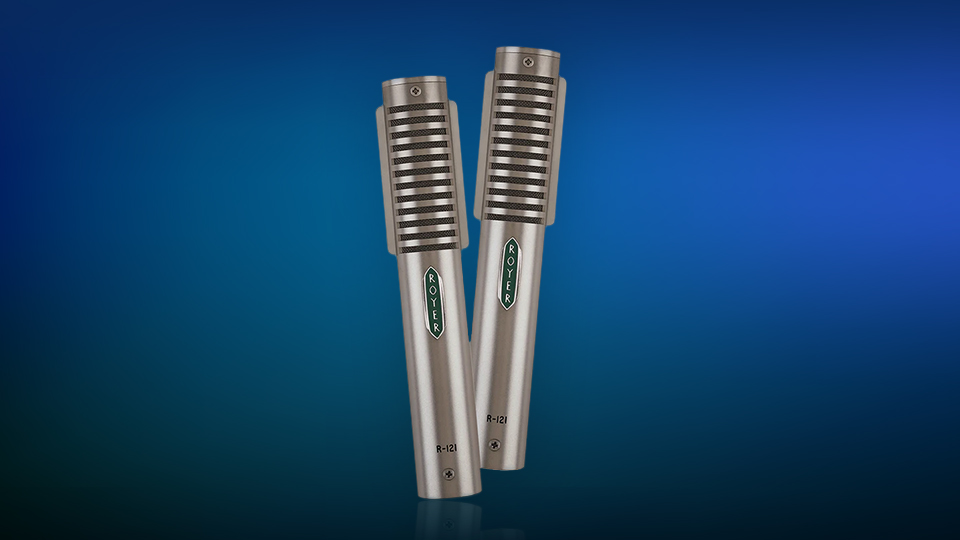
At times you’ll be faced with the choice between two microphones, one might have the low-end thickness you love, but the other might have better mid and high bite which is needed for presence. So, why not just use both? One of the most common established dual-micing techniques is pairing a dynamic mic like the Shure SM57 and a ribbon mic, most popularly the Royer R-121, but it can be any dynamic mic or any ribbon mic with high SPL handling. Beware: It’s possible to irrevocably damage the mic’s ribbon with this technique if it’s not designed for high volumes! The ribbon mic delivers clarity and fullness in the low and mid-range with its natural high-end roll-off, while the dynamic mic fills in the high-mids with presence and punch.
A similar technique but one with far greater variance is using a large diaphragm condenser in cardioid or hyper-cardioid pattern, such as a Neumann TLM103 or U87 or (or U67 if you’re lucky enough to own one) along with a dynamic mic like the SM57. Because there are many more options for large diaphragm condenser mics with multiple polar pattern options, the results of this technique are not as consistent, but it will offer you more options. With either of these techniques, you can send both signals into a single track for a naturally unified mono signal, or record them into two separate tracks to mix, blend, and pan them later.

Something to consider when close micing guitar cabinets is how mic placement will affect the phase relationship of the two signals. Because two microphones can’t be in the same physical space, sound waves will travel to their diaphragms at slightly different times, causing destructive phase cancellation—a natural comb filter. Because amplified and distorted guitars aren’t a “natural” sound, this may not be a problem, especially if the sources are collapsed into mono or if they’re statically panned and processed, but if you’re changing the panning or balance of the two signals throughout the song, the results will become unpredictable.
The Fredman Technique and Alternative Methods
The Fredman technique was originally developed by Swedish death metal producers making use of two SM57s, one on-axis pointed directly at the center of the speaker cone, and one placed as close as possible to the other’s capsule at a 55° angle, resulting in a “bright” and a “dark” mic, both of which can be blended to your liking. This often results in a thicker and smoother sound than using just one SM57.
Another way to get a thick, deep tone for hard rock and metal is by micing inside the back of an open-back guitar cabinet. It might sound eccentric, but the resonance inside of the cabinet can enhance the mids of top-heavy guitars, and with no right or wrong placement, this technique offers a lot of room for experimentation—just be sure to reverse the polarity of the rear mic, as the back of the speaker is pushing air the opposite direction.
Because people do not (and should not) listen to a guitar with their ear pinned to the speaker cabinet, many engineers believe the mic should be placed around where a guitar player would stand, essentially a placement-dependent room mic. With a well-treated room, this results in more room ambience and a more distant sound. Use this in conjunction with close micing techniques to create more atmosphere while maintaining clarity and punch, but keep in mind you must delay the close mics proportionate to the distance from the speaker cabinet if you want to prevent phase cancellation.
Vocals
Decisions made around micing vocals are heavily dependent on the type of vocalist you’re recording, and how experienced they are using a microphone in the studio. These days, people who are involved in creating music must wear many hats, and producers are commonly doubling as the engineer and vice versa—mic choice and placement are just as important as properly preparing and coaching the vocalist to bring out their best performance.
Dynamic or Condenser?
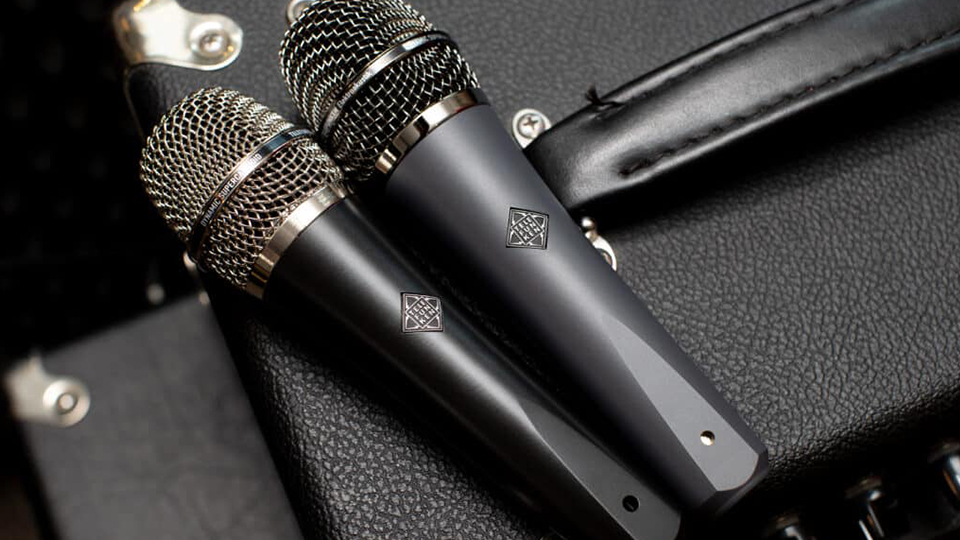
For the engineer, choice of microphone comes down to what you think best brings out the vocal characteristics you want to highlight. Dynamic microphones like the SM58 and Telefunken M80 are great live mics and less commonly used for studio vocals, unlike the studio-centric Shure SM7B, but they can be great for recording rock music depending on your vocalist’s style. Their high sound pressure level (SPL) handling is useful for loud and aggressive vocal styles, preventing distortion and harsh sibilance. It often gives more of a “live” feel while needing less post-production treatment. The SM7B (now a common podcast mic) was famously used to record Michael Jackson’s vocals on Thriller and is known for its wide frequency response and flat, smooth vocal sound.
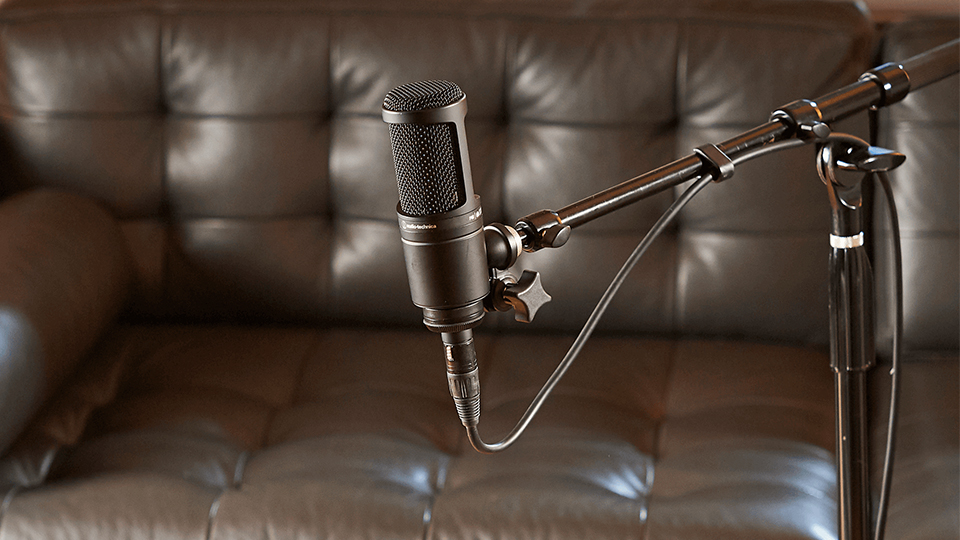
Condenser microphones are more commonly used for vocals in studios because they deliver more nuance and character of a performance than dynamic mics can typically accomplish. Condenser microphones like the Neumann U87 and TLM103 are iconic and classic vocal microphones known for their superior clarity and transparency, but there are more affordable options such as the Audio-Technica AT2020 and AT2035, the former used by Billie Eilish to record Ocean Eyes—her intimate vocal expression is a key component to the composition and could only be captured with a condenser mic.
Polar Patterns
Most of the time, vocals will be captured using the cardioid polar pattern because of its side and back rejection, minimizing bleed and room noise from the recording. Singers can also take advantage of the proximity effect cardioid mics possess, where low frequencies are boosted as the singer gets closer to the mic. Supercardioid and hypercardioid polar patterns are less common but can be useful for maximum off-axis rejection in loud environments (sometimes used in live settings). However, there are times when considering a different polar pattern could be appropriate.
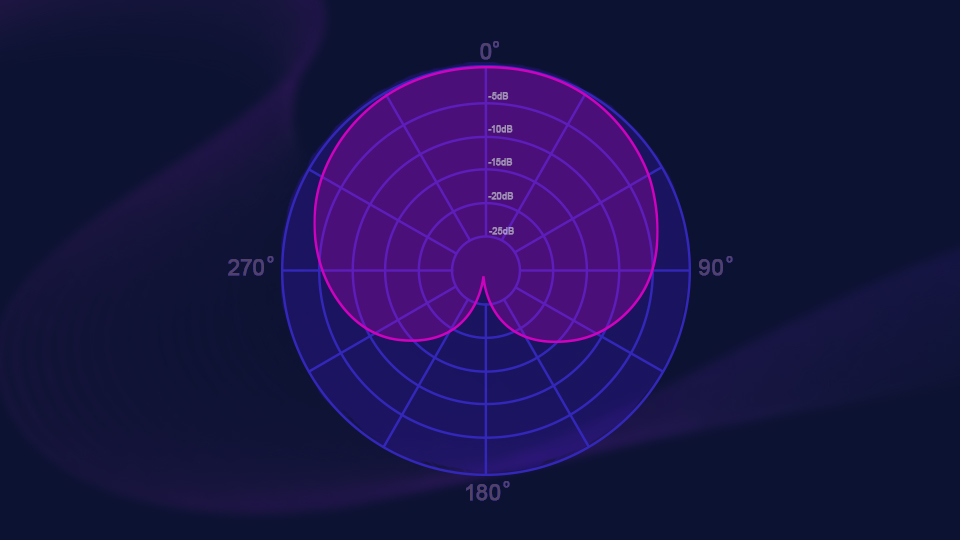
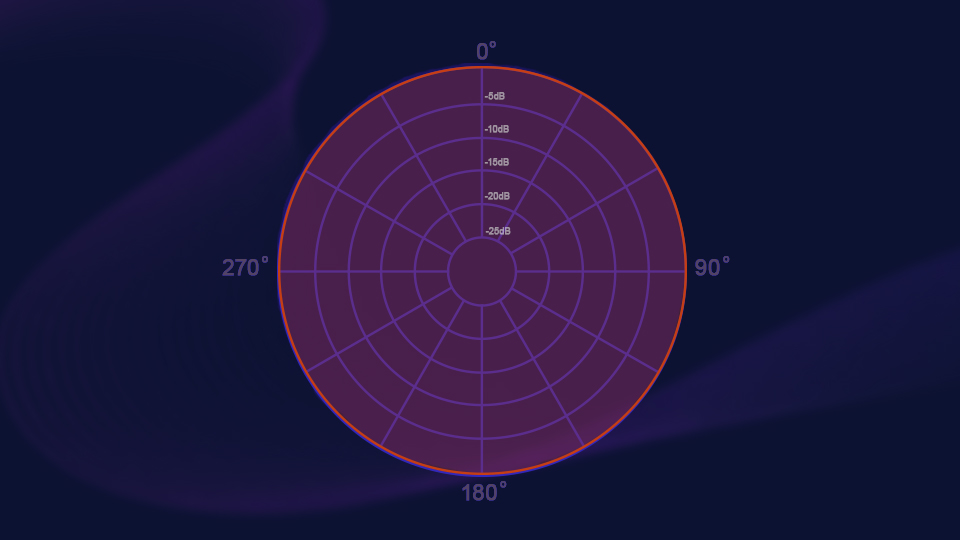
Because omnidirectional microphones pick up sound equally from all directions, they are suitable for well-treated or acoustically rich rooms and will add natural reverb and dimension to vocals. They are also great for gang vocals or vocalists that like to move a lot while they sing, as there is little to no off-axis rejection. Omni mics do not possess the proximity effect—while the recorded sound will be louder when the singer is closer to the mic, the frequency response of the microphone will remain consistent.
Bidirectional and shotgun mics are typically not recommended for vocal recording by themselves except to capture ambience or if you’re doing something extremely creative and/or weird, although there could be a fringe use case for bidirectional mics in duet performances. The single microphone would render an extremely cohesive sound for two vocalists, but the output would be in mono.

Vocal Coaching, Proximity, and Setups
The most important part of recording vocals is making sure the vocalist performs their part correctly and consistently. It’s common practice to set a consistent distance between the vocalist and the microphone and to make sure the vocalist stays within one or two inches of that distance. Depending on the style of vocalist, how loud they intend to sing, and the type of microphone, this can be as close as 1" to 3" or as much as 6" to 9" or more.
However, there are times when the vocalist should “work the mic.” For example, throughout Nine Inch Nails’ The Downward Spiral, Trent Reznor often quickly switches between extremely intimate, whisper-quiet vocals to loud belting and screaming into the mic. Whether or not he did this “live” in the studio, he used the proximity effect to his advantage, singing close into the mic for quiet parts, taking advantage of the low-end boost, and retreating as far as a foot back when he belts, delivering clear and transparent vocals while naturally rolling off the low-end. Taking advantage of the proximity effect to enhance your musical composition will add cohesion to your recording—and looks as cool as it sounds.
One must also consider whether to use a pop-filter. While using a pop-filter is usually a non-issue, it can sometimes result in high frequency loss or strange resonances. Pop-filters are fantastic when recording vocalists who want to sing close into the mic or are taking advantage of the proximity effect, preventing plosives and unwanted mouth sounds from appearing in the recording.
The vocalist should always use closed-back headphones to monitor their performance so the sound of their backing track won’t bleed into the microphone, and its usually best practice to keep the vocal chain dry with no effects during tracking (although there are times where you may want to add reverb or delay). It’s important to remember that it won’t matter if you have the perfect setup with the greatest gear ever produced if the vocalist isn’t performing properly—the quality of recorded vocals heavily depends on the performance of the vocalist.
Bass
As a bass player, I’ve always found it hilarious how simple recording electric bass is compared to literally any other instrument. Often in the studio, the engineer will give the I/O sheet with three mics on the guitar, seven on the drums, two for the vocalist, and I get nothing but a DI (direct injection or direct interface) box with a 1/4” TRS cable. But this is often best practice as the sonic quality of bass guitars go through a lot of post processing and EQ treatment, and in practice, the juice usually isn’t worth the squeeze when it comes to micing a bass cabinet.
While micing a bass cab is like micing a guitar cab, a dual-mic setup can be problematic—phase cancellation is a far bigger issue when it comes to bass. You’re free to do it but be very deliberate with your mic placement—you can flip phase in one mic and send a test tone through the amp and monitor with flat frequency response closed-back headphones, moving the mic around to different positions until you find the point of greatest phase cancellation. Once you flip it back, you should have a good sound. Or you could just use a single SM57 (for a more mid-range sound) or RE20 (for more low end) pointed at the center or edge of the speaker cone—that usually sounds great.
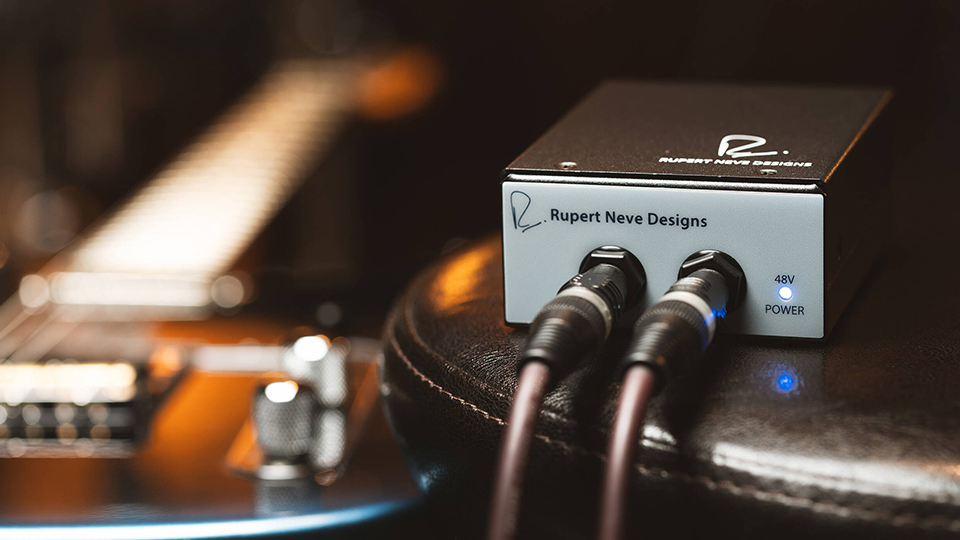
Choosing a DI box is simple, but important. You can choose an active or a passive DI. Active is best for basses with passive pickups (or other low-output sources) and contains a built-in preamp or buffer, meaning it needs to be powered—a great example is the Rupert Neve Designs RNDI-M Active Transformer Direct Interface. Active DIs have large headroom but can be more prone to clipping than passives, and are designed to be extremely transparent, often adding little to no sonic characteristics. Passive DIs like the Radial Engineering Pro D2 are good for those with active pickups, do not require a power source, often add a bit of sonic character, and are less prone to clipping and distortion. You can use whatever DI for whatever type of bass you have, just beware of low output with passive/passive pairs and increased likelihood of clipping and distortion with active/active pairs.
Drums
Consistently achieving positive results while recording drums is notoriously obtuse and time consuming—it can be dead simple or incredibly nuanced—it has no rules, only guidelines and traditions—and every choice you make matters down the centimeter. This guide should help you get started with some known techniques and practices that will allow you to experiment with confidence and understanding of your decisions.
Optimizing Sound
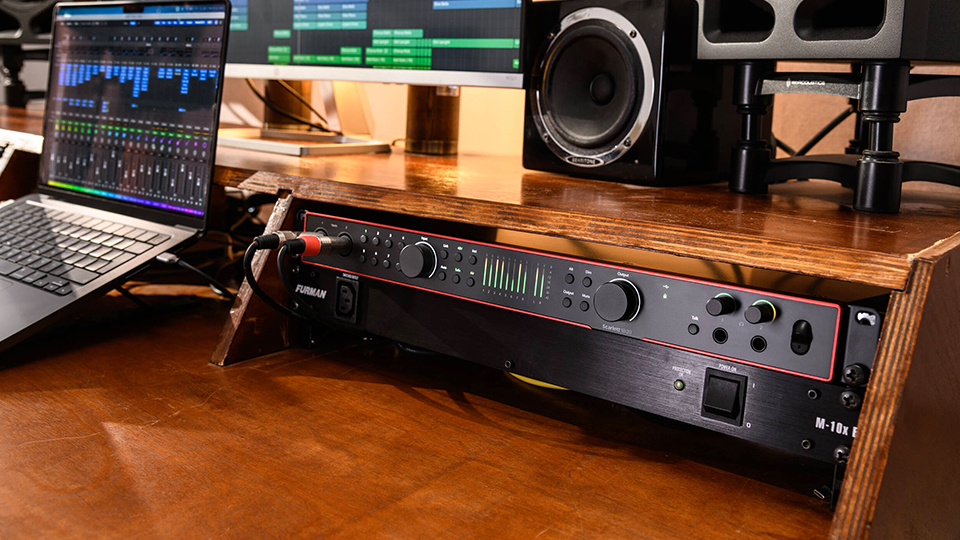
Before you do anything, make sure you have a plan—recording engineers use I/O sheets to track and manage the routing of all audio signals from source to destination. Ensure you have an audio interface or mixer with enough inputs to receive the number of microphones you plan to use—interfaces like the Focusrite Scarlett 18i20 or the Antelope Discrete 8 Pro Synergy Core are appropriate interfaces for most drum recording applications with eight or more powered inputs and outputs.
Depending on your space and budget, consider placing the drumkit on a riser, as low frequencies from the toms and kick can bleed out as thuds through the floor into other parts of the studio—oftentimes a drum mat or soft rug will suffice. You may also consider the environment you’re recording in—recording in a well-treated iso booth requires little extra setup, but the band may want to record live (playing at the same time as opposed to overdubbing) in the same room, or perhaps you have a large room with great acoustics that you want to take advantage of. If you have them, consider placing isolation panels (obscurely called “gobos”) around the drum set in the instance of a live recording but be sure that the drummer can still communicate and make eye contact with the rest of the band—sets of gobos will often include some with plexiglass window panels.
Tune each drum to the desired pitch while ensuring consistent tension by hitting the head around various points around the edge near the rim—once completed, hit each drum as you would in your session to make sure there are no buzzes, rattles, or ringing resonances. You can manage this by using dampeners, be it cloth, a wallet, duct tape, or any method you find appropriate. Disengage any built-in dampeners as they often apply tension unevenly on the drumhead (fine for live performances and rehearsals, not so much in recording sessions).
It is common practice to remove the front drumhead of the kick and put a blanket, pillow, or other dampening material inside the shell (often against the back drumhead) to deaden the kick. Experiment with different materials and placements until you achieve your desired sound, making sure to listen back to the monitor source. Other drums can be recorded with or without their bottom heads. Toms will often have the bottom heads removed because of harmonic interaction—keeping the bottom head will result in a more resonant sound but will be more difficult and time consuming to tune as the heads’ tensions will interact—one hack I’ve used in the past is to play a sine wave test tone at the same frequency you want to tune the tom at a fairly loud volume in the control room—if the drum is tuned correctly, when you strike the drumhead the drum will resonate with the test tone; a practical application of constructive resonance. At this point, you are ready to place mics into position.
Micing the Kit
Each mic’s frequency response, polar pattern, transient response, and proximity effect should be considered when pairing with each part of the kit. As drums are likely to be the loudest sound source in the band, consider the dynamic range of the microphones you’re using—you ideally want to capture not only the power, but the finesse and subtlety of the drummer’s performance.
Dynamic microphones are well suited for close micing drumheads due to their high maximum sound pressure level (SPL) whereas condensers, with their higher sensitivity and lower max SPL, are best placed further away from the kit, for drum overheads and room mics—but keep an open mind, as modern condensers are much better at handling high SPL than vintage ones, and even they can be strategically close miked to capture a fuller frequency spectrum—just be mindful that a condenser mic’s safety is not guaranteed when placed in too loud of an environment.
Refer to your microphone’s included spec sheet or user manual to help determine which mics are best for what job by referencing their frequency response curves, their SPL max, polar pattern response, and whether or not they will need 48V phantom power (or find a PDF of the spec sheet, B&H also lists specs on our storefront page).
Kick
Choosing the Right Mic
The kick drum produces a lot of low-frequency energy at a high SPL, making it necessary to choose a mic that can handle a ton of input signal with accurate reproduction—the usual choice is a large diaphragm dynamic microphone.
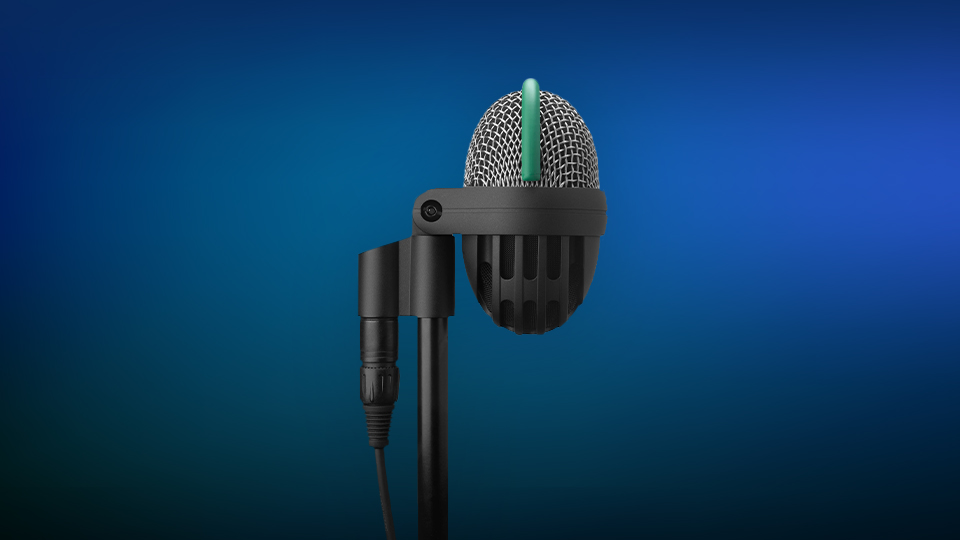
One of the most iconic microphones used for the kick drum is the AKG D112: with its ability to handle SPLs of more than 160 dB, a frequency response with a narrow band presence boost at 4 kHz, and cardioid pattern proximity-effect capability, the D112 is never a bad choice. The Behringer C112 is an affordable clone, maintaining the similar form factor while compromising the frequency response which is flatter in the low-end and cuts off at 14kHz. It can handle 150 dB SPL, which is plenty. Other popular choices include the Shure Beta 52A for its super-cardioid polar pattern, the flexible Sennheiser MD 421 with five stage bass roll-off, and the Electro-Voice RE20 with consistent and flat low-frequency response and its patented Variable D design, which eliminates the proximity effect (it’s also a great vocal mic!).
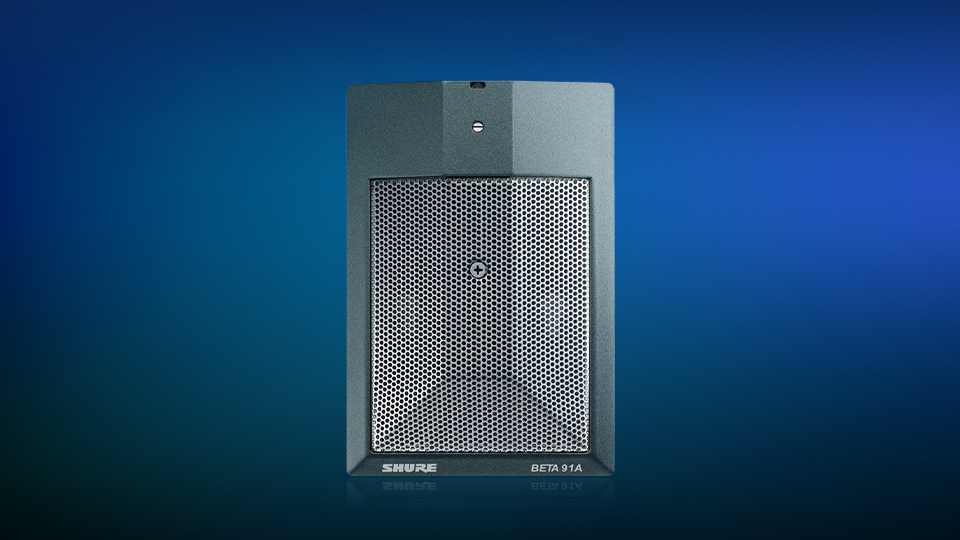
A curious mic I’ve seen many drummers have in their arsenal—and one that I’ve personally found success with—is a boundary microphone, the Shure Beta 91A. This funky electret-condenser microphone has a high max SPL of 155 dB and was designed primarily for kick drums, meant to be placed on a pillow or cushion inside of the drum shell. It features an uncommon half-cardioid polar pattern that only picks up sound in a 60° cone above the microphone, delivering accurate low frequency reproduction with great attack and punch—it’s often used in conjunction with a second, more traditional dynamic mic.
Placement and Techniques
Due to its size, the harmonics of a kick drum vary wildly throughout the interior of the shell—and since directional microphones experience the proximity effect when placed close to a sound source, even a minor adjustment of its placement inside of the kick can profoundly affect the overall sound (a lack of proximity effect avoids this issue and is one reason engineers like the RE-20 on the kick).
When placed close to the head, you’ll get a warm and full sound with lots of punch—good for if you want to “feel” the kick in the mix more than hear it—while moving further away emphasizes higher frequencies—good for if you want presence and click. Placement near the beater emphasizes mid-frequency punch and thud, where off-center placement will capture more of the drum’s sonic characteristics. Scooping 300 - 600 Hz can remove dullness and give bass some more room, where boosting mid-highs (2 - 5 kHz) will add definition and presence, giving the kick some cut.
Many engineers will use a mic on the outside of the kick as well, but sometimes you don’t want to add any room noise, or you’re recording a live session and you don’t want any bleed. An eccentric but useful technique for outside-of-drum micing is building a blanket fort or drum tunnel out from the kick drum.
This is often achieved by using kick drum shells with both heads removed or using a long box with sound dampening material. This technique adds controlled ambience while maintaining isolation and allows engineers to blend the close and far mics to add harmonic richness and unique character to the kick. This results in resonant “woofs” and “booms” that give the kick more depth and punch, notably used by producer Butch Vig for Dave Ghrol’s drumming on Nirvana’s Nevermind.
Snare
Choosing the Right Mic
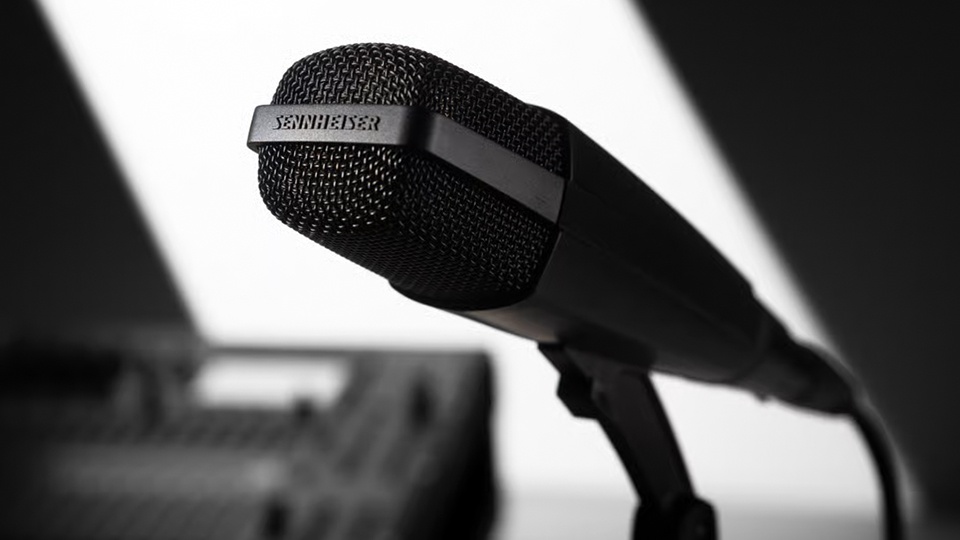
Like the kick, snare drums need a directional mic with high max SPL, making dynamic microphones the most common choice for most sessions. The ever-versatile Shure SM57 has been the go-to solution to snare micing for over fifty years, with low-end thickness and a present mid/high “thwack” sound. The Audix i5 is a common alternative with comparatively scooped mids, giving it crispier highs and more present lows. Another versatile workhorse commonly used on snares is the Sennheiser MD 421, and delivers a more “expensive” sound with full-mids and hefty punch, including the five-stage bass roll-off for flexibility.
Placement and Techniques
Position the snare mic just inside of the top rim of the snare drum at about 1” above the head—use the cardioid polar pattern of the mic to angle it in such a way that there is as much rejection from the cymbals and other drums as possible, especially closer pieces of the kit like hi-hats and the rack tom. Bidirectional and super-cardioid microphones are less commonly used but may give you tighter pickup angle and better rejection—use your best judgment.
It is not uncommon for engineers to place a second mic below the snare near the snare wires to blend with the top snare mic to add bright crispness and cut to the mix—and they do not necessarily have to be the same mic. Consider that when the top drumhead moves inward, the bottom moves outward—since the bottom snare mic is 180° out of phase with the top, reverse the polarity of the bottom mic’s phase.
Toms
Micing toms have become less common as overhead micing techniques capture them quite nicely, and an overabundance of microphones on a drum kit can lead to overcomplication of drum bussing and a headache in the control room. However, genres that feature virtuosic drumming such as progressive metal and historically black gospel will usually mic the toms to accentuate mastery of the kit.
You can mic both the rack and the floor tom separately or use a single mic between the two. When placed close to the head (1” above and 1” - 2” from the outer rim), you’ll achieve a tighter sound with less resonance, where further away will give a live sound with room acoustics and more interaction between the drums. A go-to mic for toms is the ever-versatile Sennheiser 421 MD, a classic workhorse.
Overheads
Choosing the Right Mic
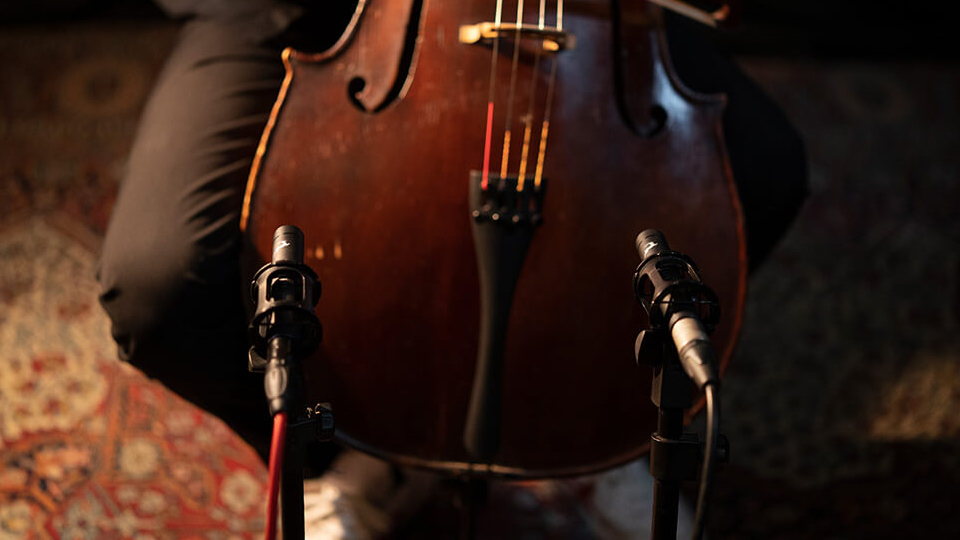
A pair of overhead microphones are used to pick up the high-frequency transients of the cymbals and give the entire drumkit a stereo soundstage—this helps provide a top-level blend of the kit and adds detail and width to the recording. Because overheads are capturing a broader range of frequencies and are placed further away from the kit, small-diaphragm condenser mics are the go-to choice for overhead recording (but large diaphragm condensers, ribbons mics, and/or a single mono overhead mic are not uncommon).
Many of the most well-known small diaphragm condenser microphones can be quite pricey, but overheads are where the quality of the microphones make the biggest difference. The Neumann KM184s come in a stereo set and are the standard overheads for professional studio recording—their consistent frequency response with a boost at around 9kHz gives them a natural and transparent sound while giving cymbals and other high frequency content sparkle and zest.

A well-known but less conventional option is the Beyerdynamic M 160, a unique hyper-cardioid ribbon microphone with a double ribbon design that helps deal with high SPLs (once again, make sure when using ribbons in loud recording environments that they have a high SPL rating, or else you’ll be left with a $1,000 paper weight). The M 160 has more present midrange and a faster transient response than the KM184s, giving them a warmer and punchier character. Keep in mind that ribbon mics have natural high frequency roll-off, so use them when you want the overheads to emphasize the drums and tame the cymbals. A pair of M 160s was notably used as overheads in Led Zepplin’s When the Levee Breaks.
An interesting and more affordable alternative is the Antelope Edge Note Modeling Microphone which aims to emulate thirteen different classic small diaphragm condenser microphones including the KM184—this is done through a proprietary interface or though a DAW, so analog purists beware. Affordable analog options like the Shure PGA81 can deliver great results, but they sacrifice ultra-high frequency response and lack the ribbon’s creamy mids, losing brilliance and sonic consistency compared to the more expensive alternatives. But when it comes down to it, any two identical ribbon or condenser microphones can be used for overhead recording (and you can use dynamics in a pinch), so don’t sweat spending thousands of dollars unless you’re extremely serious about drum recording.
Guidelines and Advice
Overhead micing techniques are more of a personal choice than standard practice, and there is no right way to do it. Don’t be fooled, however—there are definitely wrong ways. When micing a stereo pair, there are some soft guidelines and practices that should be considered before you press record:
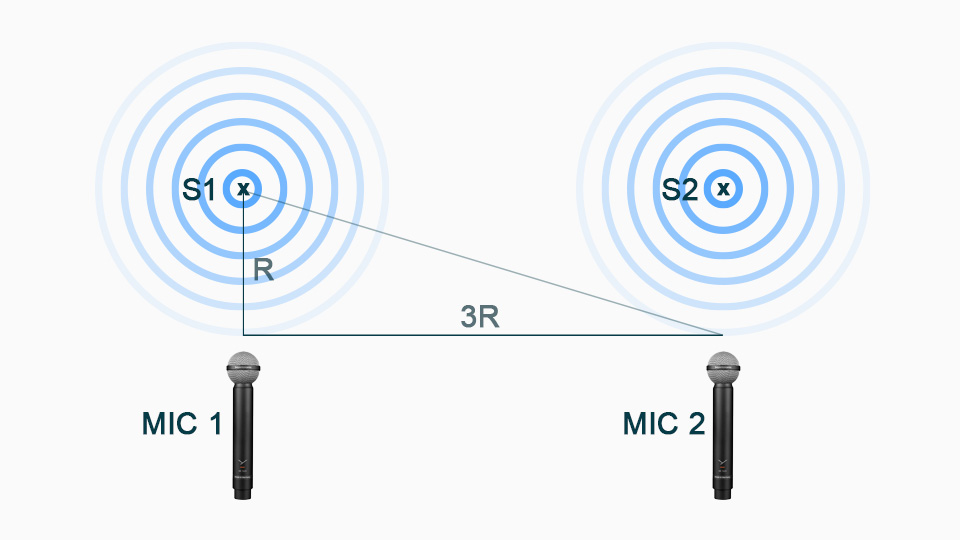
The 3-to-1 rule: When using the spaced pair stereo technique, the not-so-strict rule is that the distance between microphones should be at least three times the distance from each microphone to its sound source—not doing so can result in phase cancellation and a wobbly stereo image. The idea is that sound waves will arrive at each microphone at different times, so the distance between the microphones should be far enough away from each other that any destructive interference is rendered inaudible.
Match Microphone Types: While you can experiment with different models of microphones as a pair, it is generally unadvisable to use two different types of microphones: e.g., a condenser and a dynamic. The uneven sensitivity and frequency responses can wreak havoc on your stereo image and sonic balance.
Proper Measurement when using Stereo Micing Techniques: When using a coincident or near-coincident stereo pair (XY, ORTF), make sure you abide by the guidelines set for the technique (see below for some examples). Setting the angle too wide or too narrow can collapse the stereo image or introduce phase cancellation. You can use a protractor, or there are some mic stands and clips that will have the measurements lathed into the metal for convenience.
Placement and Technique: Different Types of Stereo Pairs
A/B Spaced Pair: Probably the least definable technique, an A/B spaced pair is a pair of omnidirectional or cardioid microphones with no definable distance or angle—just set up two microphones and point them at the snare to center the image, and try to abide by the 3-to-1 rule. This results in a wide and unique image with spacious room acoustics but offers poor mono collapsibility—phase issues can occur when placed indiscriminately.
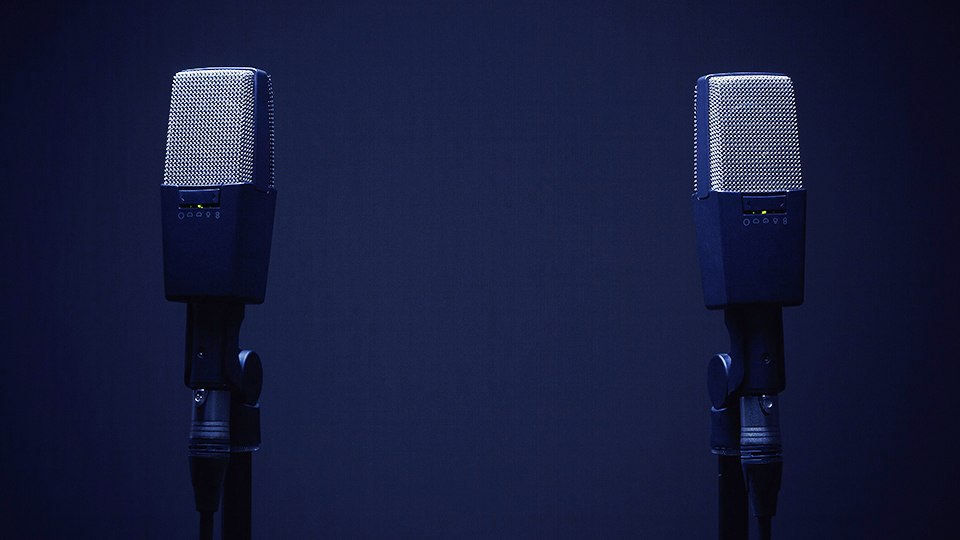
X/Y Coincident Pair: Pioneered by Alan Blumlien, an X/Y pair uses two cardioid microphones whose front-address capsules are placed as close together as possible at a 90° angle, centered on the snare at 45°. This results in a natural and somewhat narrow stereo field, has great mono collapsibility, and avoids phase issues.

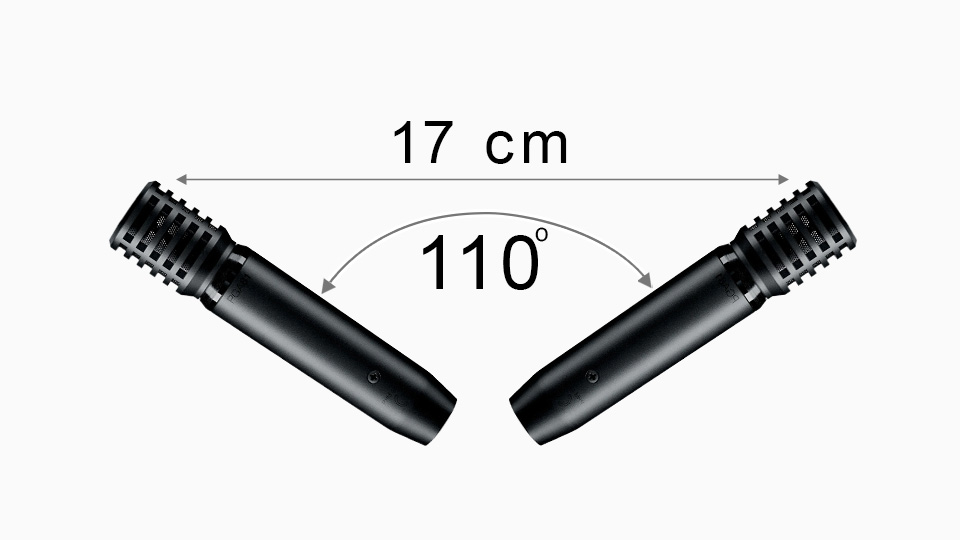
ORTF and NOS Near-Coincident Pairs: The French national broadcasting organization developed the ORTF technique sometime in the 1960s. Two cardioid microphones are spaced seventeen (17) centimeters apart to mimic the distance between human ears. The mics face outward from the center at a 110° angle and are pointed at the snare at the 55° centerline. This results in a natural stereo image wider than X/Y and has decent but not perfect mono collapsibility.
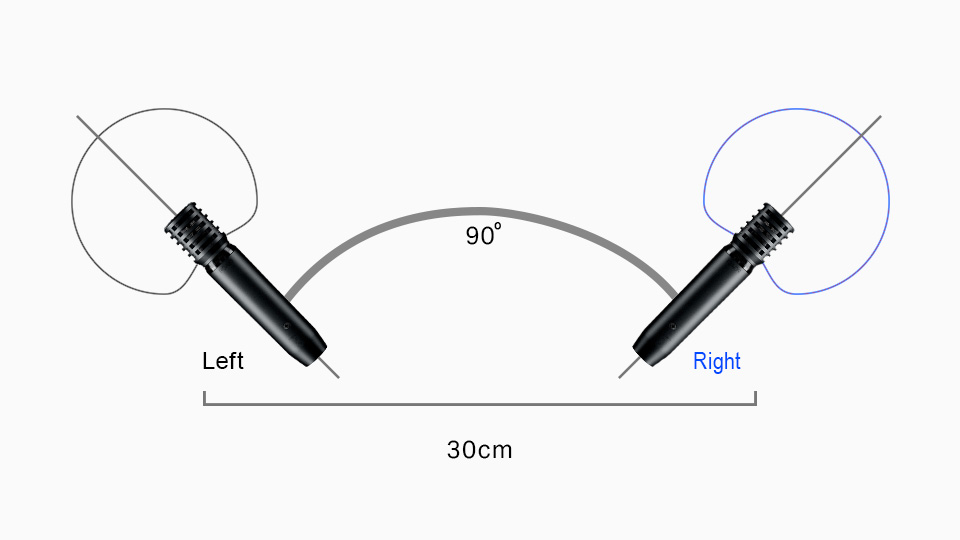
Dutch broadcasters developed the NOS method. Two cardioid microphones are spaced thirty (30) centimeters apart and face outward from the center at a 90° angle pointed at the snare at the 45° centerline. This creates an extremely wide stereo image with good collapsibility. It loses much of the center image, but that can be advantageous when used deliberately.
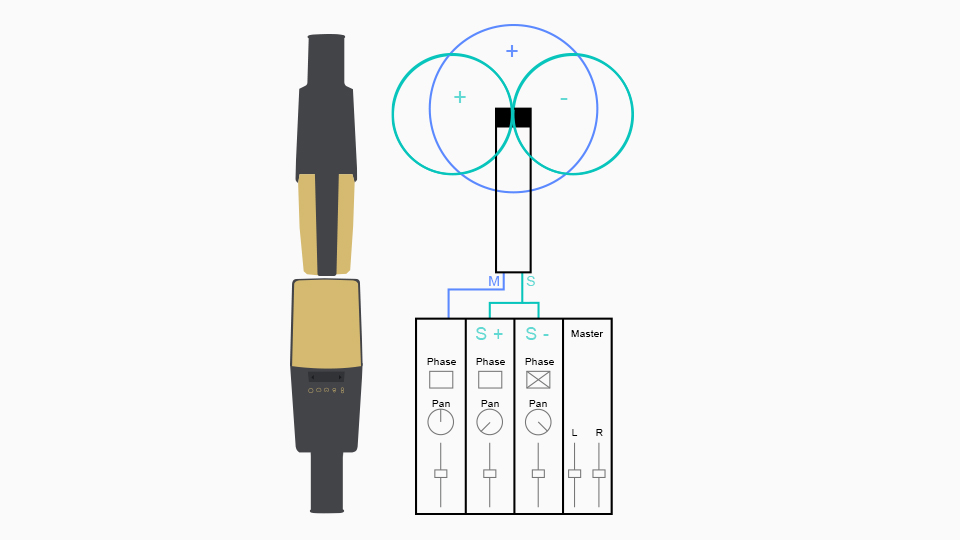
Mid-Side: This one is a bit of a doozy. M/S micing is more complicated than standard stereo micing but gives incredible flexibility in post-production, allowing you to widen or narrow the stereo field at your discretion while remaining phase-cohesive and mono collapsible. Here’s how it’s done:
The mid microphone is a cardioid microphone facing directly towards the snare (usually from directly above). The side microphone is a bidirectional figure-8 pattern microphone placed as close as possible to the mid mic’s capsule and placed perpendicularly at a 90° angle (a pair of AKG c414s are perfect for this). Make sure you know which side of the kit the positive lobe is pointed towards (for sake of convenience, let’s point it to the left).
In your mixer or DAW, record the cardioid mid mic and bidirectional side mic into two different mono tracks, and then duplicate the S mic track to a third mono track. Hard-pan the original S track to the left and the duplicated S track to the right, then flip the phase of the duplicated track. Keep the mid track center panned.
If you did this correctly, the stereo width can now be controlled by adjusting the volume of the mid track.
Other Techniques and Considerations
Glyn Johns Technique
Glyn Johns developed his legendary and minimalist drum recording technique sometime in the 1960s and was famously used to record John Bonham on Led Zepplin’s titular debut album, among countless other early rock recordings in the 60s, 70s, and 80s. It creates a natural, vintage style sound, and can still be credibly used in modern recordings.
The Glyn Johns method uses two mics for sound staging: one overhead large-diaphragm condenser about 40”- 60” above the snare pointed straight down, and one side mic: another large-diaphragm condenser 6” above the rim of the floor tom pointed across the kit towards the snare and hi-hat. Pan the overhead snare to one side and the side mic to the other side, depending on the handedness of the drummer. You can now put a mic on the snare and/or on the kick in whatever fashion you prefer. This super simple method can deliver excellent results, especially for those on a budget or with little time to set up.
Recorderman Technique
This two-microphone recording technique is like the Glyn Johns method but offers a tighter, more modern sound and is perfect for recording scratch drums or practice sessions and can sound great on slap-dash rock recordings.
Position a mic directly above the snare drum about 30”- 40” away, and a second over the drummer’s right shoulder (left for left-handed drummers), ensuring its distance is the same as the overhead mic. Hard-pan these mics left and right according to the handedness of the drummer. You can now add a kick and snare mic if you’d like. This creates a tighter stereo image and a punchier sound compared to the Glyn Johns method and does a better job isolating room noise.
Mono Room Mic and Room Mic Crushing
It is a common and effective practice to place a room mic about 3’ to 10’ away from the kit during a drum session for use to blend into a drum mix. This recording can be used unprocessed to add room noise and depth, but it can also be maximally compressed (1176 British Mode’d!) to add edge to a recording. This hyper-processed aggressive and raw sound can add punch and character to rock and metal tracks and can bring out the intensity of a session.
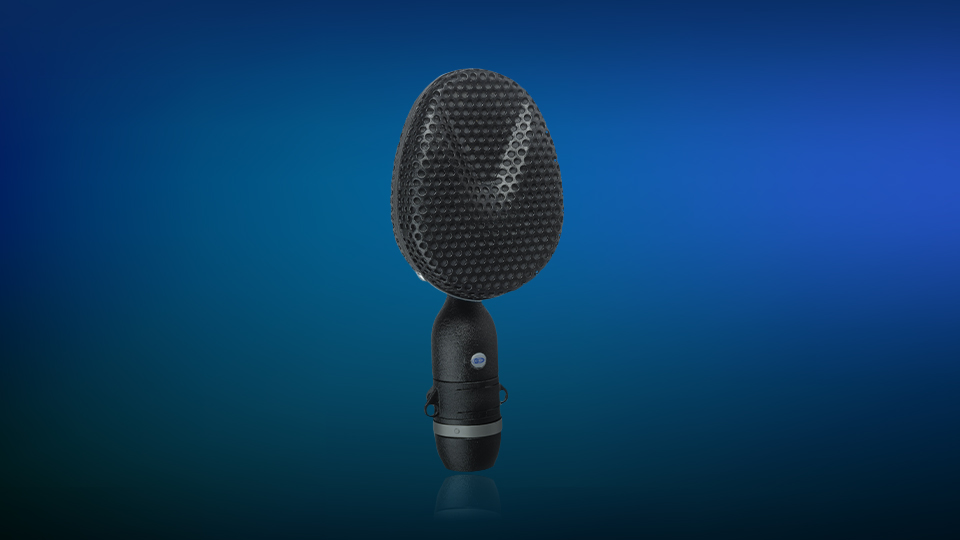
You can use many different types of mics to achieve this. Dynamic mics are most used due to their high SPL maximums and can bring out punch and thickness. Condensers are great for capturing high frequency content and can add air to the mix—the AKG c414 is great for this, and you can experiment with different polar patterns. Ribbon mics like the Coles 4038 are great for a lighter application of this technique, as it has natural and full mids with high end roll-off, giving the drums thickness and an expensive coating of sheen.
Mixing It All Together
There is no one method of recording that rules above all others—every choice you make in the recording process will dictate the next decision, their combined inertia snowballing into what hopefully culminates in a worthy final product. Mistakes will be made, sometimes happy accidents, and sometimes trainwrecks, but recording is a learning experience, and perfection shouldn’t be your goal. And if you paid attention to the recommendations, you’ll see one mic that was good for just about everything. All you really need to record a rock band is a mixer, a Shure SM58, and about seven Shure SM57s—no need to spend thousands on boutique microphones—the Shure SM57 is truly one of the greatest recording tools of all time. Hopefully this guide will help you make informed decisions and avoid rookie mistakes—but don’t be afraid to buck trends and try something new!
