Search results for: photography behind scenes understanding depth field
About 11 filtered results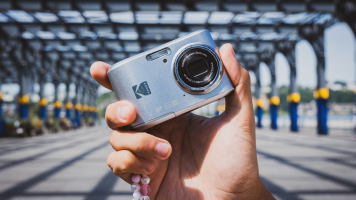
by Luke Rollins · Posted
What is it about the 2000s look that is so compelling right now? One could chalk it up to the eternal recurrence of 20-year nostalgia cycles, of which the retro digicam revival would be yet another instance. But this kind of historicism elides the character of what is missed, and why its retrieval is attempted in the first place.
Smartphone bad; we know this. Rejecting the smartphone, however, does not immediately lead one to retro digicams. One could just as easily move toward the nostalgia of film as toward the competent excellence of today
by Luke Rollins · Posted
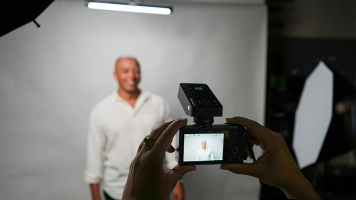
At first glance, studio photography and the compact camera may seem strange bedfellows. The type of work associated with the studio—still life, product photography, portraiture, macro photography—usually wants cameras with larger sensors and interchangeable lenses, especially in professional applications. Compact, point-and-shoot cameras, for their part, have their natural home in everyday, travel, nightlife, and street applications, where their discretion and size become virtues.
It might seem almost cruel to introduce the compact to the

by Luke Rollins · Posted
Achieving a standard of production value is an essential component of establishing a brand and growing a following. For part-time, burgeoning, and mid-level creators, it can feel like bridging that gap is less a matter of learned skill and more about the equipment you can afford.
In most cases, the problem isn’t budget at all. Acquiring the specific know-how can give your content professional sheen with little to no financial outlay.
Lighting design is arguably the most immediately visible production component—and the one most capable of

by Mathew Malwitz · Posted
There’s an old adage that claims in order to be a wildlife photographer, you need a lot of time and a lot of money. This is only partly true. Many great wildlife photo opportunities can occur in urban parks and even in your own backyard, as long as we know what we’re doing. In this article, we’re going to cover a number of essential tips that will help you become a better wildlife photographer.
If you’ve read our introduction

by Todd Vorenkamp · Posted
Taking a look at any modern mirrorless or DSLR camera, you’ll notice a slew of controls, buttons, and dials. Atop nearly all cameras sits a large dial labeled with many letters and icons. This is our mode dial. It is how we control the level of power we give to our camera or take for ourselves.
One of the wonderful things that modern electronic digital and film cameras give you is many high-tech options for your image making. One of the horrible things that modern electronic digital and film cameras give you is many high-tech options for your

by Mathew Malwitz · Posted
When you first head out to take photos of wildlife, what’s the first thing you think of? If it’s not lighting, we’ve got news for you. Photography is, by definition, the capture of light on a light-sensitive surface. The word “photograph” is derived from Greek roots that translate to “drawing with light.”
We can have the most expensive camera and lens combo, but without good light, we’ll never get the most out of it. Understanding our primary light source and its many qualities is essential to improving as a wildlife photographer, and in this

by Mathew Malwitz · Posted
Anyone who has dabbled in pet photography knows that it can be a rewarding yet challenging experience. While pets are considered to be part of the family, they’re still animals who walk to the beat of their own drum and do things at their own pace. Even the best listeners can be easily distracted or have trouble sitting still for more than two seconds. If you’re considering trying your hand at photographing our fuzzy friends, we’ve put together this helpful guide for you. In this guide, we’re going to cover the essentials for those with a

by Todd Vorenkamp · Posted
A lens’s hyperfocal distance—a mathematical combination of lens focal length, aperture or f-stop, and focus distance—is a tool that photographers can use to maximize their depth of field for capturing nearby foregrounds and distant backgrounds in acceptable sharpness.
While you can always dial up your lens’s sharpest aperture (sweet spot), many landscape photographers want as

by Jill Waterman · Posted
A thirst for discovery and lust for adventure is the fuel behind automotive and adventure lifestyle photographer Shelby Knick. After sampling the rarefied world of high fashion merchandising, Knick reinvented herself by chasing down pictures on the racetrack, and her career has skyrocketed from there. Among the many accolades from her global trek to capture elegant living and all things fast, Knick is one of the first Hasselblad Heroines, leading us to celebrate her many accomplishments in honor of

by Jill Waterman · Posted
Ami Vitale has a remarkable affinity for life-changing events. A native of South Florida, Vitale was a self-described shy, gawky child who, like many young girls, possessed little confidence. The assessment of a grade school teacher, who told her she was not very good at English, stuck with her for years. “I just thought that I had no ability as a writer, or as a creative person,” she says. “I remember thinking I was going to become an engineer because I had almost perfect math scores on my SAT.”
Photographs © Ami Vitale

by Jill Waterman · Posted
Here’s a hot tip: In addition to photo, video, and audio gear, as well as other tech products, B&H carries thousands of books and tutorials covering the fields of photography, video, audio and computers, plus inspirational titles to get your creative juices flowing. For all you bibliophiles out there, we’ve compiled this shortlist of must-have publications spanning photography basics, photo careers, marketing and promotion, business practices, teaching photography, lighting technique, specialty photo subjects, creative inspiration,