Search results for: photography buying guide a guide to camera lenses choosing best lens for your needs
About 14 filtered results
by John Harris · Posted
There is still one basic truth about photographing sports—access is everything. If you are not near the action, you will not get a photograph. Does this mean you need a sideline pass at the Super Bowl or a family member in the NBA? No. Those are good to have, and media credentials for a Super Bowl is a professional feather in your cap, but “access” can be found in many places and many ways. A good sports photo does not even have to be on-field action, so do not let a lack of access intimidate you, but understand that to join the upper echelons

by Jill Waterman · Posted
No matter how many lenses a photographer has, there are often added lenses we still wish for, and even more lenses after which we lust.
There are so many options that choosing your next lens can often involve a dizzying cavalcade of choices—manufacturers, focal lengths, prime or zoom functionality, auto or manual focusing, and price. Below, we offer up some thoughts on what your next lens might be based on your shooting preferences and needs.
To keep things simple, our suggestions are based on the use of a full-frame camera—those seeking a

by Cory Rice · Posted
One of the most daunting aspects of stepping up to an interchangeable-lens camera is the startup cost of purchasing a camera body and a lens. Fortunately, camera companies and retailers, well aware of this financial deterrent, often team up on a solution: the “kit” lens. While technically kit lenses come in a wide variety of shapes, sizes, and price points, for the purposes of this article I am thinking of a specific lens many photographers have encountered at one point or another when buying a new camera: the “all-purpose” zoom that provides

by Jill Waterman · Posted
For photography enthusiasts seeking to expand their horizons from pictures made with a mobile phone or a point-and-shoot, the major benefit in of upgrading to a DSLR or mirrorless camera system is the ability to swap out different lenses to fit your specific needs. Prime lenses are available in all lengths and varieties and offer numerous advantages in performance when compared to their zoom-lens brethren. Also, the particular choices associated with sticking to a specific focal length can help improve your photographic technique, as well as

by Shawn C. Steiner · Posted
Considering the amount of video content now consumed daily by most people, it’s becoming harder and harder for photographers to isolate themselves fully from video. It’s an asset, and practically every DSLR and mirrorless camera made in the past five years not only has video recording but has near-cinema-quality video.
Whether you are learning video for work, want to use your best camera for family videos, or perhaps just want to gain a following online, there are some good tools you should acquire.
For Better Audio: Microphone
One thing

by Allan Weitz · Posted
The topic of this article might seem easy-breezy to compose, but truth be told—it isn’t. For starters, how do you define “travel friendly?” Where are you going? How are you getting there? And what exactly do you plan on photographing once you get there? Do you already own a camera and lenses? If you do, are you happy with them and, if not, why?
There’s simply no way we can address every scenario but, at the very least, we can offer you food for thought.
Bigger Doesn’t Always Mean Better
With few exceptions, it would be fair to say just about
by Shawn C. Steiner · Posted
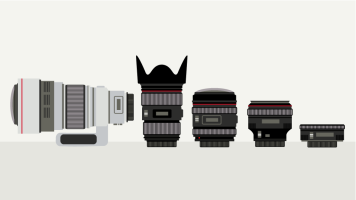
One lens can’t always do the trick, and sometimes three lenses is a bit too many to stuff in your bag. Luckily, if you plan well, a pair of quality lenses can often accomplish all you need, and then some. Here are some recommendations for lens pairings that may help you flesh out your lens collection, or decide what to bring on your next shoot. Obviously, you might find your own pairing works better.

by Richard Scali · Posted
As complementary as peanut butter is to jelly, the camera and tripod are an age-old pairing that still manages to maintain relevance and unmatched functionality in a world dominated by image stabilization and Photoshop tricks. While the form and function of a tripod is far simpler to understand than the scrolling menus of today’s feature-packed cameras, it can still be a chore to choose the right setup for your needs from among a sea of manufacturers and seemingly comparable models.
Now, what’s the big deal with tripods? Most photographers

by Elizabeth Groeschen · Posted
For many photographers, carrying multiple lenses quickly becomes more of a requirement than an elective. And as most already know, with additional lenses come additional lens accessories and the inevitable question of which is worth the investment and space it will take up in your camera bag. While some accessories like caps and hoods often come in the box with a new lens, other protective gear like cases, wraps, and bands are typically sold separately. These protective items get lost quickly out in the field or in loose pockets, and are

by Bjorn Petersen · Posted
The darkroom. Just thinking of it brings out the most nostalgic of feelings from all photographers, even if you learned in the digital age, and even if you’ve never even set foot in a traditional chemical darkroom. There is something so gratifying about the idea of hand-crafting your photographs from a physical negative, printing on real paper, and watching your images come to life in baths of chemistry. Without waxing too romantic about the whole idea, it is safe to say that even the most cutting-edge digital photographers would still
by John Harris · Posted
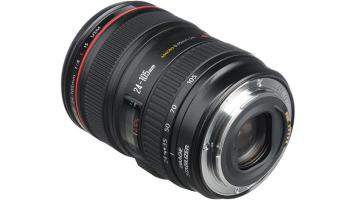
An ideal lens for travel photography needs to be compact and versatile. For example, the 70-200mm f/2.8 lens that is made by several manufacturers is a stalwart for pros and enthusiasts alike, and certainly fits into the versatile category, but these lenses are far from compact so they will be left out of this particular discussion. Also left out will be “fast lenses,” which is shorthand for a wide maximum aperture. While certainly an important factor in choosing a lens, we will downplay it for now, given that most fast lenses are either large

by Lawrence Cohen_3 · Posted
Buying an underwater housing is just the beginning. There are many accessories that are helpful or necessary for taking photos underwater. An external flash, also called a strobe, is your most important accessory. Photography is the art of creating images with light, and while the control of available and artificial light is important for all photography, it is especially crucial when shooting underwater. B&H carries 50 different strobe packages, so it’s no wonder choosing a strobe could be confusing for the beginning photographer. We'll

by Allan Weitz · Posted
What is a lens?
Superficially, a lens is little more than a cylinder containing optical elements that shift about as you focus by turning a ring around the cylinder. But even in its most basic form, a camera lens is far more complex than it might appear.
A lens is more than the sum of its parts. When you attach a lens to a camera, your choice of lens is very much like a painter's choice of brush. For finer details, the painter will choose a narrow, pointier brush. For cloud-free skies, a broader brush would be a wiser choice. Wide-angle lenses
by Eric Reichbaum · Posted
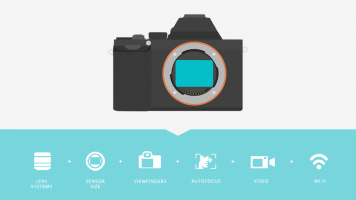
Mirrorless cameras have been on the market for a decade, but they have really begun to make waves in the past few years. Most serious photographers would have certainly been shooting with a DSLR camera just a few years ago, but now many have traded in their DSLRs for the smaller and lighter form factors that mirrorless cameras provide. Not only are mirrorless cameras usually lighter and smaller than their DSLR counterparts, but they’re quieter, as