Search results for: photography buying guide lenses focal length angle of view
About 46 filtered results
by Bjorn Petersen · Posted
When assembling a kit of lenses for photographing a wedding, one should take into consideration the location in which the wedding is taking place, the number of guests and, of course, the type of imagery you are seeking to create. To best represent a wedding in a dynamic manner, it is often preferable to have a range of lenses to achieve different perspectives of the event, rather than maintaining a constant perspective of your subject matter. A wide-angle lens, specifically, is a highly effective tool for capturing many of the scenes that

by Todd Vorenkamp · Posted
There is nothing that can replace the extreme close-up view of a rare bird in the wild. Binoculars can get you close but, if you want to look the bird in the eye or confirm that identification for your life list, you need a spotting scope. Spotting scopes pack incredible magnification in a generally simple and lightweight package that is

by Mathew Malwitz · Posted
We’ve all tried to photograph something up close. This small-scale world fascinates us all, whether it be a stunning flower or a bumble bee crawling about, but our cameras can’t seem to focus as close as we want. So, what is a struggling photographer to do?
There are several ways to do close-up, or "macro" photography, but the
by Luke Rollins · Posted
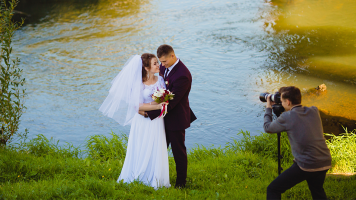
Many hobbyists reach a turning point in their craft when they decide to pursue wedding photography seriously. With the transition to pro comes the task of updating your lens kit accordingly, and most photographers would agree that investing in quality glass is essential. Unlike the rapid turnover of camera bodies, lenses will last for years and can make all the difference in creating quality images. Understanding what some of the best available options are will help you invest appropriately.
What to Consider
Weddings are long affairs, often

by Mathew Malwitz · Posted
Wedding and portrait photographers looking for a lightweight, compact system with exceptional performance need look no further than the FUJIFILM X cameras and lenses. While the size and weight advantage of mirrorless cameras spans from Micro Four Thirds to full frame, the APS-C sensors in the FUJIFILM X system allow the cameras and lenses to be relatively small and light. Full-frame mirrorless is attractive to many, but the portability advantage of APS-C sized lenses is not to be understated.
For those looking to one-up the full-frame shooters

by Todd Vorenkamp · Posted
The Micro Four Thirds system is becoming popular among a passionate group of wedding photographers. The compact size of the cameras and lens system, as well as the sheer number of available lenses from, OM System, Panasonic, and other manufacturers, not to mention the nearly limitless option of adapted lenses, means that the wedding photographer has many options for capturing the action.
It’s worth noting that OM System, formerly known as Olympus, has lenses with both branding. As lenses are updated, they’ll adopt the OM system name, but as

by Mathew Malwitz · Posted
Lens selection is a highly personal choice for the professional photographer. Your shooting style, client needs, and cost all factor into how you choose to build your kit. Wedding photographers require a greater variety of lenses as they must cover a diverse assortment of compositions in various environments and lighting conditions. As working professionals, it’s only natural to begin investing in high-quality professional glass. For Canon users, this is the L series.
Easily identified by a thin red line circling the lens barrel, L glass is
by Christopher Witt · Posted
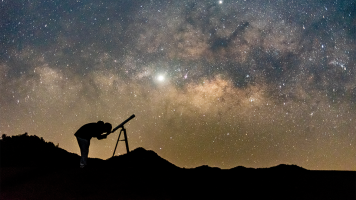
Humans’ fascination with the stars is as old as our ability to think and ask questions. For millennia we, as a species, were limited to observing the heavens with just our eyes. Of course, back then we were able to see more because light pollution didn’t exist, but making detailed observations was impossible. The invention of the microscope led to the development of the telescope, which allowed people to finally start exploring the larger universe. As technological advances were made and telescopes got bigger and better, their reach and the

by Todd Vorenkamp · Posted
Leave it to the world of photography to confuse size and speed. In lens-speak, the term “fast glass” refers to lenses with large apertures. In this article we take a look at the lenses with the largest-opening apertures. The aperture is the opening of a lens. The aperture’s size is expressed as a number that shows the ratio of the opening to the lens’s focal length. This number is referred to as an f/number, f/stop, focal
by Bjorn Petersen · Posted
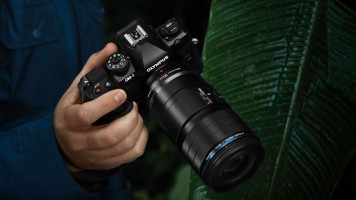
In the close-up, high-magnification world of macro photography, it is seldom that the tools vary from the so-called “standards.” The main reason for this is that there is something simple and elegant about that classic 100mm f/2.8; it is a proven design that simply works well. It offers a comfortable working distance, is easy to design to 1:1 magnification, and is versatile in that many photographers tend to work with these short telephoto macro

by Todd Vorenkamp · Posted
What is the best lens focal length for photographing the total solar eclipse? Well, there really isn’t a correct answer to that question. There are many factors involved, so let’s outline some options for different types of cameras and budgets.
Above: The Hinode satellite X-ray telescope mission captures the January 6, 2011 solar eclipse. © JAXA/NASA.
Expedition 43 Flight Engineer Samantha Cristoforetti took a series of photographs

by Todd Vorenkamp · Posted
What is the best camera for beginners? While this seems like a straightforward question, and many websites will just throw a list of camera options at you, the answer can be more complex than one specific camera recommended for every newbie photographer. Giving this question some thought and considering a few options may pay future dividends as a novice photographer evolves into a photographic artist. One certainty is that an entry-level camera should be easy to use, convenient to carry and employ, as well as being intuitive, while also

by Steven Gladstone · Posted
Let’s face it: Shooting film and video isn’t just a job for most of us, it is something we love. Everything that we do contributes to creativity of the images that we make. But the toll the day-in and day-out work can take on our creativity can be devastating. Sometimes you just need a break, something to reinvigorate you, like a fun, non-professional optic. Sometimes you need a different challenge, working with a different set of limitations; experiment, explore, create without having to worry about others judging or the consequences of

by Todd Vorenkamp · Posted
Many photographers ("You know who you are," says the face in the mirror) scour the Web's plethora of lens reviews looking for that magical new or vintage lens that offers unmatched sharpness, contrast, and color rendition. Yet, it is the pinhole that casts aside all of those wish-list items and delivers a unique photographic experience. Digital or analog, regardless of format, the pinhole camera and modern
by Bjorn Petersen · Posted
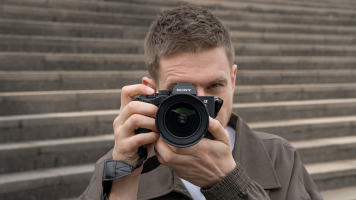
During a solid year of camera and lens development, Sony had a productive 2021 that saw a great deal of attention given to the prime lens. With six primes and one zoom being released over the past 12 months, Sony made a concerted effort to release some tempting, but humble, compact prime lenses along with some more high-end and fast G Master lenses. The brand has clearly reached a level of maturity at which it is filling in the gaps with more specialized and unique lenses, as well as updating some of the classic lenses with faster design and