Search results for: photography buying guide long short of camera lenses
About 51 filtered results
by Mathew Malwitz · Posted
If you've ever gone camera shopping, you've likely run into the term "mirrorless" more than a couple of times. After all, mirrorless cameras account for up to 90% of new interchangeable-lens cameras (according to Canon executives anyhow). But what does "mirrorless" actually mean? In this guide, we're going to explore what a mirrorless camera is, what makes it different from other cameras (hint: it's in the name), and how it can benefit
by Mathew Malwitz · Posted
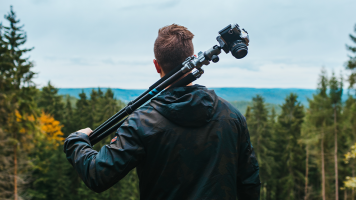
As complementary as peanut butter is to jelly, the camera and tripod are an age-old pairing that still manages to maintain relevance and unmatched functionality in a world dominated by image stabilization and Photoshop tricks. While the form and function of a tripod is far simpler to understand than the scrolling menus of today’s feature-packed cameras, it can still be a chore to choose the right setup for your needs from among a sea of manufacturers and seemingly comparable models.
Now, what’s the big deal with tripods? Most photographers

by Bjorn Petersen · Posted
When assembling a kit of lenses for photographing a wedding, one should take into consideration the location in which the wedding is taking place, the number of guests and, of course, the type of imagery you are seeking to create. To best represent a wedding in a dynamic manner, it is often preferable to have a range of lenses to achieve different perspectives of the event, rather than maintaining a constant perspective of your subject matter. A wide-angle lens, specifically, is a highly effective tool for capturing many of the scenes that
by Mathew Malwitz · Posted
We’ve all tried to photograph something up close. This small-scale world fascinates us all, whether it be a stunning flower or a bumble bee crawling about, but our cameras can’t seem to focus as close as we want. So, what is a struggling photographer to do?
There are several ways to do close-up, or "macro" photography, but the
by Luke Rollins · Posted
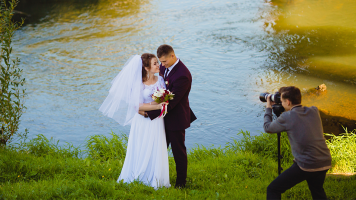
Many hobbyists reach a turning point in their craft when they decide to pursue wedding photography seriously. With the transition to pro comes the task of updating your lens kit accordingly, and most photographers would agree that investing in quality glass is essential. Unlike the rapid turnover of camera bodies, lenses will last for years and can make all the difference in creating quality images. Understanding what some of the best available options are will help you invest appropriately.
What to Consider
Weddings are long affairs, often

by Bjorn Petersen · Posted
As a student, much of your life is about making choices and sacrifices. “Should I skip this class and sleep in?” or “Should I go to class even though I’m too tired to pay attention?” There are a lot of hard decisions to make as a student, especially if you’re a burgeoning photographer looking to attain professional status.
But, as a student, means are often limited and you need to be more conscious about what gear to add to your kit. What gear is critical and worth the investment versus what are some of the things you can ignore for now and

by Bjorn Petersen · Posted
With medium format shedding many of its niche associations and becoming a more viable and mainstream format, now might just be the time to begin incorporating this larger format into your working repertoire. When film was still king among working photographers, medium format cameras, particularly 645, was seen as an ideal balance between image quality, weight, speed, and number of frames per roll. Once the shift to digital occurred, weight and speed became the primary differentiators in which cameras and systems were being considered for the
by Christopher Witt · Posted
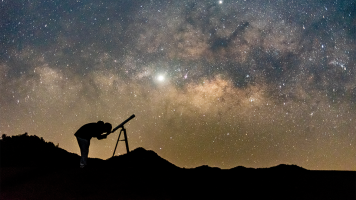
Humans’ fascination with the stars is as old as our ability to think and ask questions. For millennia we, as a species, were limited to observing the heavens with just our eyes. Of course, back then we were able to see more because light pollution didn’t exist, but making detailed observations was impossible. The invention of the microscope led to the development of the telescope, which allowed people to finally start exploring the larger universe. As technological advances were made and telescopes got bigger and better, their reach and the

by Rebecca Melville · Posted
What do street photographers really need? Give them a compelling scene, contrasting characters, and a stealth camera to capture it all, and they’re happy. While there aren’t really accessories that can make or break a street photographer’s ability to create, there are certainly things to make the workflow smoother, the load lighter, and the photos a little better. Let’s check out a few options you might consider gifting, below.
Camera Grips
Lightweight and easily concealed, compact cameras are the preferred choice of street photographers.

by Todd Vorenkamp · Posted
Binoculars make great gifts. Regardless of who you are shopping for, or what their hobbies are, a nice pair of binoculars can be appreciated and enjoyed by just about anyone. If you think about it, almost all of us find ourselves out in the world wishing we could have a closer view of something almost every day.
Now that I have convinced you to gift a beautiful pair of binoculars, you’ll click through to the binocular section of the B&H website
by Bjorn Petersen · Posted
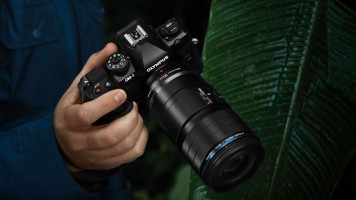
In the close-up, high-magnification world of macro photography, it is seldom that the tools vary from the so-called “standards.” The main reason for this is that there is something simple and elegant about that classic 100mm f/2.8; it is a proven design that simply works well. It offers a comfortable working distance, is easy to design to 1:1 magnification, and is versatile in that many photographers tend to work with these short telephoto macro
by Todd Vorenkamp · Posted
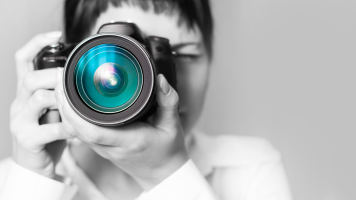
We all know that cameras make fantastic gifts for Mom on Mother's Day (or on birthdays and holidays as well!), but what if Mom is already a photographer? B&H Photo has you more than covered!
Is Mom a professional photojournalist? Is she the designated shutterbug for the local Scout troop? Maybe she is totally into floral macro photos, or is Mom responsible for the awesome family portraits that are framed on the mantle and hang on the wall?
Regardless of her photographic passions, there are always great gifts in all price ranges that can

by Christopher Witt · Posted
Even for the most seasoned and experienced astronomer, the question of the Sun and how to properly view it is as confusing as it is baffling. B&H is increasing its solar viewing offerings, so we’re here to give you a primer on what there is to see when looking at the Sun, and some of the tools you’ll need to view it safely and properly.
First, let me start by stating that you should NEVER look at the Sun without taking the proper precautions, and using only those optics SPECIFICALLY designed and certified for solar viewing. Failing to take
by Todd Vorenkamp · Posted
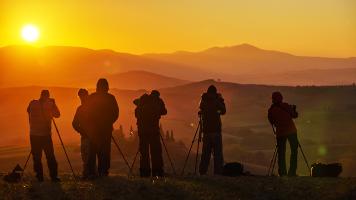
The tripod: a three-legged camera support. Why is the tripod market so flooded with options when they all look pretty much the same and are designed to do the same thing? Isn’t one tripod as good as any other? Why are some so expensive? Why are others comparatively inexpensive? Do some hold cameras more steadily than others? And, why in the world is that one pink?
In this article, we will be emphasizing the use of a tripod for photography.

by Bjorn Petersen · Posted
While film photography tends to take a back seat to digital photography nowadays, many photography programs still teach film photography to help you gain a better understanding of how the basic photographic process works. Without computers and an LCD screen to fall back on, shooting with film helps to reinforce technique and make you learn, understand, and trust yourself while shooting.
Film
The most obvious thing someone needs to begin his or her education in film photography is