Search results for: photography features art composition
About 73 filtered results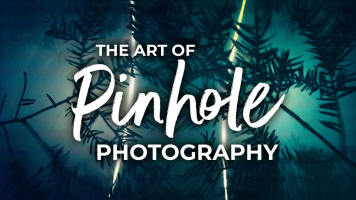
Posted
Experience the magic of pinhole photography with Heather Palecek. Learn how to build (and where to buy) a camera and receive tips for best practices. You'll be inspired to explore your creativity with this unique photography.
0:00 - Intro
4:48 - Info & history
20:42 - Different pinhole cameras and how to make them
37:27 - Dynamic pinhole photography
40:00 - Basic composition tips
41:13 - Portfolio
1:01:31 - Solar Journaling
1:04:10 - Community Garden project
1:07:16 - Surrender
1:08:27 - Observing the flow
1:11:04 - Transcendence
1:12:52

by Steven Gladstone · Posted
When creating images for a film, you try to balance your shots so that you draw the audience into the movie, while at the same time they forget that they are watching a movie. Usually, the last thing you want is to break the illusion and have the audience snap out of their reverie.
As you read this article, you may want to pause and rewatch some classic films, or films that had a powerful effect on you. Examining the new and different techniques, lighting, and compositions used to create impact, mood, and feeling will help you grow as a

by Jill Waterman · Posted
There is perhaps no truer sign of summer than Independence Day in the United States. The Fourth of July is when the summer season kicks into full gear, with barbeques, pool parties, family gatherings, and road trips galore—not to mention the fireworks!
One lead-up to this holiday that I will never forget found me hurtling down the New Jersey Turnpike at sunset in a Greyhound bus. As the twilight deepened, bright bursts of fireworks began shooting up past the tree line, close by and at a distance, reflecting in the darkened glass of the

by Todd Vorenkamp · Posted
Do you want to preserve the memory of that awesome neighborhood fireworks show? Let's discuss the best ways to try to make a memorable photograph commemorating the event.
Before we get started, let me say that there are many ways to accomplish fireworks photography and no technique is usually worse or better than others. The only thing that really matters as you head home after the show is:
You enjoyed the photographic process.
You are left with a photograph or photographs that you personally enjoy.
You enjoyed the fireworks show!

by John Harris · Posted
It would be foolish to claim that there is only one way to take a portrait, but there are some accepted norms and basic camera settings that you should understand if portraiture is to become your area of photographic interest. Remember though, as you walk down your creative path, that a portrait is more than a headshot, more than a beautiful photo of your subject; it is an opportunity to get to know someone, to have a visual conversation with a person, and to use your photographic skills to pass that understanding of the person on to the

by Mathew Malwitz · Posted
There’s an old adage that claims in order to be a wildlife photographer, you need a lot of time and a lot of money. This is only partly true. Many great wildlife photo opportunities can occur in urban parks and even in your own backyard, as long as we know what we’re doing. In this article, we’re going to cover a number of essential tips that will help you become a better wildlife photographer.
If you’ve read our introduction

by Todd Vorenkamp · Posted
Taking a look at any modern mirrorless or DSLR camera, you’ll notice a slew of controls, buttons, and dials. Atop nearly all cameras sits a large dial labeled with many letters and icons. This is our mode dial. It is how we control the level of power we give to our camera or take for ourselves.
One of the wonderful things that modern electronic digital and film cameras give you is many high-tech options for your image making. One of the horrible things that modern electronic digital and film cameras give you is many high-tech options for your

by Mathew Malwitz · Posted
Composition in photography refers to the way in which we arrange visual elements in an image. It's how we position the subject in the frame and how all elements combine to create a visually appealing photograph.
All photographs © Mathew Malwitz
Expensive cameras and long lenses can only get us so far. It's not the gear that makes the photo, but the photographer. A creative and observant eye is the key to making visually pleasing photographs. These skills can be learned, and with practice, you'll be well on your way to creating strong

by Mathew Malwitz · Posted
If renowned landscape photographer Ansel Adams were alive today, he would surely be astounded at the variety of cameras available. When compared to his hulking 8x10 view camera, today’s cameras look like child’s play. He would also be flabbergasted at the image quality these little devices produce.
This year, we have a bottomless well of cameras

by Todd Vorenkamp · Posted
There are many ingredients in the recipe that make a good photographic portrait—foreground, background, setting, pose, expression, color, lighting, and so on—but one element that can be as important to the result as the portrait sitter is the lens used to capture the portrait and help create the art.
Technically, any lens can be used to take a portrait with your camera, and there are traditional focal lengths for “portrait lenses” like 85mm and 105mm, but I asked my fellow B&H photographers, as well as our B&H Creative partners and

by Mathew Malwitz · Posted
Landscapes and wildlife are among the most challenging subject matter to capture well with a camera. Wildlife is unpredictable and despite your best efforts, will not respond to posing instructions. Landscapes are stationary but at the mercy of available light and weather conditions. All that being said, it is the unpredictable nature of landscape and wildlife photography that has earned these genres a very large, very dedicated, and very passionate following. The dedication of these photographers can make finding the right gift all the more

Posted
At first glance, photographers Chris Orwig and Aaron Anderson seem an unlikely pairing—with the natural light and high key palette of Chris’s portraits forming a sharp contrast to the cinematic lighting and film noir aura featured in Aaron’s work. Yet, their heartfelt discussion about creative reinvention in today’s podcast celebrates the notion that opposites attract. Adding to our core topic of reshaping skills at every stage of your career, we’ll also delve into keeping abreast of creative trends and remaining relevant as a creator in an

Posted
OM SYSTEM is hearkening back to its heritage with its latest release, the OM-3 Mirrorless Camera, which delivers advanced performance and creative versatility while drawing design inspiration from the iconic Olympus OM-1 SLR film camera of the 1970s. The company is also releasing updated versions of three lenses—17mm f/1.8 and 25mm f/1.8 primes and a 100-400mm f/5.6-6.3 super-telephoto zoom—to complement the release of the new
by Jordan Gallant · Posted
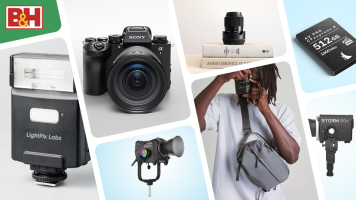
Lots of big announcements this week, including new releases from Sony and LightPix Labs that should definitely appeal to hybrid shooters. Elsewhere, Aputure expanded its STORM series with two new LED monolights.
Sony Unveils New Flagship Camera
The biggest news this week was Sony’s unveiling of the a1 II, an upgrade of the original Alpha 1 flagship with some impressive new features and enhancements. The second generation

by Bjorn Petersen · Posted
There were nearly 200 new lenses released this year, many of which were iterations of an existing lens. Many of the lenses were also wholly new designs, whether first-party designs to pair with a new flagship camera or third-party innovations designed to fill the gaps in existing lineups.
With such a breadth of new lenses available in the past 12 months, we're narrowing things down to cover some of the highlights and most unique or exciting lenses that came out