Search results for: photography features noise in digital images
About 86 filtered results
by Todd Vorenkamp · Posted
Do you want to preserve the memory of that awesome neighborhood fireworks show? Let's discuss the best ways to try to make a memorable photograph commemorating the event.
Before we get started, let me say that there are many ways to accomplish fireworks photography and no technique is usually worse or better than others. The only thing that really matters as you head home after the show is:
You enjoyed the photographic process.
You are left with a photograph or photographs that you personally enjoy.
You enjoyed the fireworks show!

by John Harris · Posted
It would be foolish to claim that there is only one way to take a portrait, but there are some accepted norms and basic camera settings that you should understand if portraiture is to become your area of photographic interest. Remember though, as you walk down your creative path, that a portrait is more than a headshot, more than a beautiful photo of your subject; it is an opportunity to get to know someone, to have a visual conversation with a person, and to use your photographic skills to pass that understanding of the person on to the

by Todd Vorenkamp · Posted
Taking a look at any modern mirrorless or DSLR camera, you’ll notice a slew of controls, buttons, and dials. Atop nearly all cameras sits a large dial labeled with many letters and icons. This is our mode dial. It is how we control the level of power we give to our camera or take for ourselves.
One of the wonderful things that modern electronic digital and film cameras give you is many high-tech options for your image making. One of the horrible things that modern electronic digital and film cameras give you is many high-tech options for your

by Todd Vorenkamp · Posted
Every facet of photography is about controlling light, from the amount of light we allow to enter our camera via the aperture of a lens to the duration of our exposure set by the shutter speed. But how does the camera measure the brightness of the scene to set these settings automatically? How do you, the photographer, know how much to adjust your exposure settings to achieve a specific result for the final image? This is achieved with an in-camera light meter.
What Is Metering?
Metering is how a camera evaluates the available light to

by Steven Gladstone · Posted
Whether you’re a student or a seasoned veteran, selecting the right camera can make your head spin with questions. Does sensor size matter? What’s the difference between 4:2:0 and 4:2:2? Do I really need a camera that can record 8K? What about raw? We’ll explain the key components that help a camera produce cinematic images, and in doing so, hopefully help you make that all-important decision.
Evaluate Your Needs and Your Budget
Before considering certain cameras, you must know your needs and your budget. And be realistic. If you are a student

by Mathew Malwitz · Posted
When you’re venturing into public spaces for street photography, a compact camera is a must-have. Sure, a lightweight camera is easier to carry around, but an unobtrusive shooter is also the key to getting those perfectly spontaneous shots. You’re going to want to go small and pocketable, with accessible settings to adjust easily while you’re on the move. Let’s explore some solid options for your everyday carry bag as a street photographer.
FUJIFILM X100VI
Reminiscent of classic street photo film cameras, the FUJIFILM

by Bjorn Petersen · Posted
Time is running out to find the perfect gift for the photographer in your life. Or maybe you're the photographer and your partner, friend, spouse, or parent has just sprung the question on you: "What kind of gift should I get you?" Well, to help make things a bit easier, we've assembled a list of our top 10 last-minute gifts for photographers.
1. Mini LED Light
The best item you never knew you needed, a

by Cory Rice · Posted
Using fast prime lenses to create razor-sharp portraits where the focus melts away like butter can be an addictive (and costly) pastime. The jump from an 85mm f/1.8 to an 85mm f/1.4 may seem minor on paper, but anyone who has used both lenses knows that the difference extends well beyond a few decimal points. This article is an homage to the top-tier primes designed for the most demanding portrait photographers. Hide your wallet before proceeding.
Photographs ©

by Bjorn Petersen · Posted
In an age where darkrooms are scarce, yet film photography is seeing a resurgence in popularity, a scanner can be your best option for converting film originals to usable digital files for printing, sharing, and archiving. Whether you are an active film photographer or just have an archive of negatives and slides from the past, a film scanner is a useful, dedicated tool that will breathe new life into your film originals.
Ranging from the most basic models for simply producing a web-shareable image, to the top-of-the-line versions for
Posted
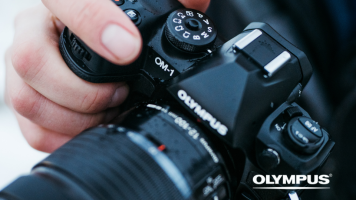
In 1972, the OM-1 35mm film camera brought pro performance to a smaller, more compact SLR. Today, OM SYSTEM is launching the digital OM-1, a Micro Four Thirds format flagship camera, and new M.ZUIKO 12-40mm f/2.8 and 40-150mm f/4 PRO zoom lenses. The OM-1 camera and its optics bring eye-watering specs to a smaller, lighter mirrorless interchangeable-lens camera system specifically designed for travel and adventure photography

by Todd Vorenkamp · Posted
Many photographers ("You know who you are," says the face in the mirror) scour the Web's plethora of lens reviews looking for that magical new or vintage lens that offers unmatched sharpness, contrast, and color rendition. Yet, it is the pinhole that casts aside all of those wish-list items and delivers a unique photographic experience. Digital or analog, regardless of format, the pinhole camera and modern

Posted
The day is finally here! Canon has, at last, unveiled its topflight mirrorless camera, the EOS R3. Combining assets from the EOS R5 and the flagship EOS-1D X Mark III DSLR, the R3 is a high-performance body built for speedy shooting, featuring fast and precise focusing, and sporting a robust, professional-grade body. It's the first 3-Series camera since the film era and introduces a wealth of new tech to Canon's mirrorless system, including an

by Todd Vorenkamp · Posted

by Jill Waterman · Posted
Wildlife conservation photographer Clay Bolt says, “As far back as I can remember, I've been fascinated with insects, and little things like frogs. My other twin passion was always art, particularly illustration, and later on painting. So, I’ve always gone back and forth to combine these two loves of my life.”
Growing up in South Carolina, Bolt was drawn to nature, but had yet to discover the rich biodiversity of his boyhood stomping grounds fully. After heading off to university with a portfolio of illustrations and paintings, he followed a

by Cory Rice · Posted
With digital cameras and editing software constantly improving, photographers are able to get away with a lot more today than they could in the past. Better sensors, flexible ISO ranges, raw image processing, and ever-advancing lens technologies have all contributed to a more forgiving margin of error for the photographer—or, to put it more optimistically—greater creative possibilities. For the portrait photographer, this means you don’t have to invest in a studio’s worth of gear to create compelling photographs of your sitters. Some will say