Search results for: photography features why compact digital cameras are so expensive
About 16 filtered results
by Todd Vorenkamp · Posted
Many interchangeable-lens cameras, be it DSLR or mirrorless, are sold today with what we call "kit" lenses. Current kit lenses, in general, thanks to computer technology and advanced manufacturing techniques, are more capable and of higher quality than those of yesteryear. However, many of us who use interchangeable-lens cameras feel the gravitational pull of other lenses that are not yet in our bags.
Adding lenses to your quiver is all about choices and selection and, in photography, we often find ourselves at a sort of "gear crossroads." The

by Mathew Malwitz · Posted
We’ve all tried to photograph something up close. This small-scale world fascinates us all, whether it be a stunning flower or a bumble bee crawling about, but our cameras can’t seem to focus as close as we want. So, what is a struggling photographer to do?
There are several ways to do close-up, or "macro" photography, but the

by Steven Gladstone · Posted
Whether you’re a student or a seasoned veteran, selecting the right camera can make your head spin with questions. Does sensor size matter? What’s the difference between 4:2:0 and 4:2:2? Do I really need a camera that can record 8K? What about raw? We’ll explain the key components that help a camera produce cinematic images, and in doing so, hopefully help you make that all-important decision.
Evaluate Your Needs and Your Budget
Before considering certain cameras, you must know your needs and your budget. And be realistic. If you are a student
by Christopher Witt · Posted
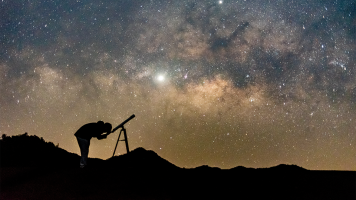
Humans’ fascination with the stars is as old as our ability to think and ask questions. For millennia we, as a species, were limited to observing the heavens with just our eyes. Of course, back then we were able to see more because light pollution didn’t exist, but making detailed observations was impossible. The invention of the microscope led to the development of the telescope, which allowed people to finally start exploring the larger universe. As technological advances were made and telescopes got bigger and better, their reach and the

by Rebecca Melville · Posted
What do street photographers really need? Give them a compelling scene, contrasting characters, and a stealth camera to capture it all, and they’re happy. While there aren’t really accessories that can make or break a street photographer’s ability to create, there are certainly things to make the workflow smoother, the load lighter, and the photos a little better. Let’s check out a few options you might consider gifting, below.
Camera Grips
Lightweight and easily concealed, compact cameras are the preferred choice of street photographers.

by Jill Waterman · Posted
Bristling along the sidelines of practically every professional sporting event, super-telephoto lenses are known for their ability to reach out and capture distant subjects with exceptional clarity and speed. They feel incredible in the hand, with top-of-the-line build quality and a heft that gives shooters confidence in their equipment. Many feature a variety of switches and buttons that allow users to set up the lens for optimal performance in any situation.
In addition to length, these lenses feature all of the latest technology, such as

by Cory Rice · Posted
One of the most daunting aspects of stepping up to an interchangeable-lens camera is the startup cost of purchasing a camera body and a lens. Fortunately, camera companies and retailers, well aware of this financial deterrent, often team up on a solution: the “kit” lens. While technically kit lenses come in a wide variety of shapes, sizes, and price points, for the purposes of this article I am thinking of a specific lens many photographers have encountered at one point or another when buying a new camera: the “all-purpose” zoom that provides

by Shawn C. Steiner · Posted
To answer the question posed by fellow writer Todd Vorenkamp in his article about the venerable 50mm prime, the lens I would choose if I were to be stranded on a desert island would have to be a 35mm prime. Sure, the 50mm is an old and reliable choice that should cover most subjects, but it doesn’t work amazingly for anything specific and, frankly, I think it’s a little boring these days. The 35mm, on full-frame of

by Allan Weitz · Posted
Macro photographs enable you to capture in-your-face close-ups of flowers, bugs, peeling paint, and—depending on your personal aesthetics—anything encrusted in rust. The following are 10 gift ideas designed to help you with tight close-ups of objects, rusty or otherwise.
1. Macro Lenses
Macro lenses are specifically designed to capture sharp close-up photographs. Available in

by John Harris · Posted
It was the year 2003, and a feature on my first digital camera changed the way I take pictures. I had purchased a Canon PowerShot G3 digital camera to use on a location scout for a film. I was one of the foolhardy who thought I’d never “go digital” but could not resist giving this model a try, which offered a relatively fast lens, a lot of new features, and actually kinda looked like a “camera.” The model had an optical viewfinder but also a 1.8" LCD screen on the back, which could tilt, twist, and swivel, allowing for accurate image

by Jill Waterman · Posted
Ami Vitale has a remarkable affinity for life-changing events. A native of South Florida, Vitale was a self-described shy, gawky child who, like many young girls, possessed little confidence. The assessment of a grade school teacher, who told her she was not very good at English, stuck with her for years. “I just thought that I had no ability as a writer, or as a creative person,” she says. “I remember thinking I was going to become an engineer because I had almost perfect math scores on my SAT.”
Photographs © Ami Vitale

by Allan Weitz · Posted
The topic of this article might seem easy-breezy to compose, but truth be told—it isn’t. For starters, how do you define “travel friendly?” Where are you going? How are you getting there? And what exactly do you plan on photographing once you get there? Do you already own a camera and lenses? If you do, are you happy with them and, if not, why?
There’s simply no way we can address every scenario but, at the very least, we can offer you food for thought.
Bigger Doesn’t Always Mean Better
With few exceptions, it would be fair to say just about

by Josh Taylor · Posted
Why mount classic lenses on your digital camera? Because they have character! As many of today’s creative digital shooters have discovered, some of the great old lenses of the analog era can capture images that have that elusive quality known as character. In other words, they render subjects like portraits and landscapes in a distinctive and appealing way that can’t quite be conveyed in words. Back in the day, writers tried to express these qualities by referring to the “rounded,” “luminous,” or “plastic” rendition of a specific lens.

by Allan Weitz · Posted
Wide-angle lenses often add depth and drama to landscapes, architectural photographs, still-life, and other genres of photography. When employed judiciously, these lenses make a great addition to the kits of sports, adventure, and wildlife photographers, and are also an important option for portraitists who wish to include an environmental context. For the casual photographer, they are indispensable when shooting groups, such as friends gathered around a table. The wide-angle view can often provide a very short focus distance, allowing the
by Justin Dise · Posted
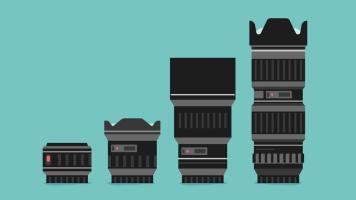
Whether you’re assembling a personal lens kit or compiling the equipment-rental list for your next film, selecting a lens package is an important decision. It can also be a daunting one, especially if you’re new to the game. So what lenses should you get? A complete set of primes? A couple of zooms? Both? The answers aren’t always clear. Ask ten DPs what their favorite lenses and focal lengths are, and you’ll likely get about as many answers.
The fact is that everyone has his or her own preferences, from focal length to build quality, to a