Search results for: photography lighting lighting basics for digital photography
About 26 filtered results
by Mathew Malwitz · Posted
The new school year is nearly upon us, which means it’s time to start stocking up on necessary gear and supplies. For film and photo students, that means finding the camera and gear that’s right for you.
Generally, schools require a DSLR or mirrorless camera with detachable lenses and full manual controls. Far from the smartphone or point-and-shoot pocket camera many of us are used to. To help you get the perfect tool, we’ve put together a list of some of our favorite cameras broken down into four categories:
Best Overall Cameras
Best Mid

by Todd Vorenkamp · Posted
Taking a look at any modern mirrorless or DSLR camera, you’ll notice a slew of controls, buttons, and dials. Atop nearly all cameras sits a large dial labeled with many letters and icons. This is our mode dial. It is how we control the level of power we give to our camera or take for ourselves.
One of the wonderful things that modern electronic digital and film cameras give you is many high-tech options for your image making. One of the horrible things that modern electronic digital and film cameras give you is many high-tech options for your

by Shawn C. Steiner · Posted
New cameras or lenses are great, but they’re not always the easiest gift to give every holiday season. Rather than spending hundreds or even thousands of dollars to please a photographer in your life, you might consider some smaller expendables that every photographer needs. They might not be the snazziest gifts out there, but your photographer will be grateful to have them.
Gaffer Tape
To non-photographers, a roll of tape might seem like the worst gift of all time. However,

by Rebecca Melville · Posted
If you ask most consumer-camera owners why they keep a filter on their lens, a majority will most likely reply, “For protection.” While filters do protect the surface of your lens against dust, moisture, and the occasional thumb print, the primary function of lens filters is really to improve the image quality of the pictures you take. There are many kinds of filters with obvious and lesser-known benefits, so if you’re looking for a lens

by Todd Vorenkamp · Posted
Often, we need to add extra light to a scene to ensure we have enough light to create an image, freeze movement, or simply enhance the scene for the sake of the photograph. The primary way photographers do this is by using a flash.
The electronic flash has been around since 1931 and, today, there are several variations—all with different potential uses for the photographer. Here, we will take a quick look at the types, compare them, and discuss the benefits of each type.
Terminology Basics
Before we dive into flash types, let’s get familiar

by Shawn C. Steiner · Posted
Time lapses feel a lot like photography during capture stages and a lot like video during the editing process. Creating them is a common progression for photographers looking to dip their toes into video and motion because you can start making high-quality time lapses with your current still photo equipment. If you are starting to tackle time-lapse projects, applying some video tricks can help smooth out your final product.
The Absolute Basics
I’m hoping that by the time you make it to this article you already have a basic understanding of how

by Todd Vorenkamp · Posted
Welcome to B&H Sports Photography Week! Running June 1-3, 2021, across all of B&H's channels, will be loads of new content and events about how to capture the fast action of sports with your camera. You'll find inspiring presentations from top sports photographers who wield their long lenses and super-fast cameras to create incredible images of athletes and sports.
Find us on social media at #BHSportsPhotoWeek to share and spread the action with your fellow photographers!
To get more involved, tune into the live sessions that the B

by Bjorn Petersen · Posted
As a beginner, one of the most daunting aspects of photography has to be figuring out how to achieve the exact image you have in mind. It’s tough enough to get the shot, but then editing opens up a whole additional world of possibilities, which can be pretty intimidating from the get-go. Luckily, Adobe Photoshop Elements 2021 is a friendly and intuitive tool that takes a lot of the guesswork out of editing and helps you develop skills

by Jill Waterman · Posted
There is no better example of the inspirational saying, “If you can see it, you can be it,” than in the grassroots efforts of the community-based arts program Newburgh Community Photo Project (NCPP). Founded in 2017 by photographer, educator, and community activist Vincent Cianni, NCPP teaches photography and related media to an underserved population of Newburgh youth, with a goal to explore critical social justice issues directly related to participants’ lives and community.
In our second story on notable youth photo programs, Cianni

by Stan Moniz · Posted
Being a photographer and a filmmaker, I've gravitated heavily toward the art form of time-lapse photography. It's the perfect blend of photography and videography, the best of both worlds. Because I mix this art form up with my undying love for capturing the night sky, I’m incredibly passionate about this process and sharing it with others.
Time-lapse photography is capturing consecutive photographs over a long period of time and then playing them back quickly in a series so that slow action appears to happen faster. Examples include clouds

by Jill Waterman · Posted
As described in our companion article that makes up Part 1 of this story, both teachers and students scrambled to face unique challenges and solve unforeseen problems with the sudden shift from face-to-face classes to remote learning in March 2020. Since a new school year is now upon us, we asked a diverse group of educators for updated tips, as well as insights about the online teaching/learning process.
In Remote

by Bjorn Petersen · Posted
Despite photography taking mainly a digital form nowadays, there is still immense value in the tactile side of photography, especially in regard to teaching photography. With education being based more in the home at the moment, it can be the perfect time to introduce someone to photography using the simplest and most basic tools. Pinholes are of the most primitive examples of photography but are also some of the most perfect tools with which to teach the basics of exposure without needing to complicate it using abstract modes, shutter speeds,

by Jennifer Hahn · Posted
ISO can be a sticky subject when it comes to video. It is used in photography when you have a great amount of control over your aperture, shutter, and exposure, and when you understand the lighting of your environment. But when used in video, if used too often, it can be more of an enemy than a friend to your footage. The most controversial setting is auto ISO, causing you to lose control over your ISO setting—and it can have mixed results. However, there are times when auto ISO can be your friend.
What ISO Is and What It Is Not
Technically,

by Jill Waterman · Posted
While much has been written about the significance of color management to optimal print output, the topic of adequate lighting conditions for the viewing and evaluation of photographic prints is an important detail that's usually given short shrift.
Tom P. Ashe is an undisputed expert in translating transitory images viewed on a screen to a stunning presence in print. In addition to literally writing the book on this subject with his 2014 title Color Management and Quality Output: Working with Color from Camera to Display to Print, Ashe is an
by Allan Weitz · Posted
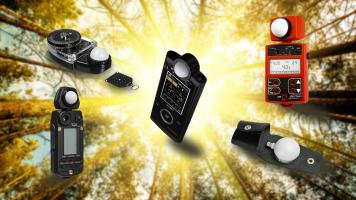
Almost every camera sold at B&H contains a light meter designed to calculate extremely accurate exposure readings, typically with a choice of Spot, Average, and Segmented metering modes. Good as they are, handheld light meters still have the upper hand when it comes to analyzing light.
For starters, the meter in your camera only reads reflected ambient light. If you’d prefer to take an incident reading, i.e., measure the light falling onto you subject rather than reflecting off your subject, you can’t do it without having to add