Search results for: photography tips advice camera settings for photographers
About 23 filtered results
by Todd Vorenkamp · Posted
When the moon passes directly between Earth and the sun, those on Earth are treated to one of nature’s greatest spectacles—a total solar eclipse. It is a phenomenon that almost every observer would like to capture in a photograph.
Due to the rarity of the event, the short duration in which to capture it, and the dynamic nature of the subject, it is one of those photographic opportunities that requires the proper gear, setup, planning, and practice.
Eclipse and solar

by Jill Waterman · Posted
Instead of an apron, food photographer Joanie Simon wears many hats—commercial and editorial imagemaker, recipe developer, photo educator, Blogger, YouTube Influencer, Livestreamer, and content creator extraordinaire. For more than a dozen years, Simon has built her brand into a powerhouse of creative content and learning, to whet the appetites of both foodies and photographers alike. Her straightforward approach to this specialized field is of value to shutterbugs at all levels of experience, from beginners on cell phones to experienced pros.

by Jill Waterman · Posted
A thirst for discovery and lust for adventure is the fuel behind automotive and adventure lifestyle photographer Shelby Knick. After sampling the rarefied world of high fashion merchandising, Knick reinvented herself by chasing down pictures on the racetrack, and her career has skyrocketed from there. Among the many accolades from her global trek to capture elegant living and all things fast, Knick is one of the first Hasselblad Heroines, leading us to celebrate her many accomplishments in honor of

by Jill Waterman · Posted
Over the past 35 years, Sally Davies has photographed the streets of New York City with a mix of anthropological endurance and high style. But, despite her encyclopedic vision of the city’s exterior face, Davies became troubled by the thought that future generations would know nothing of the people living inside all the buildings she had pictured. Her resulting quest to photograph and interview New York residents in the spaces they call home “had wings right from the first day,” as she describes it—with people of different races, genders,

by John Harris · Posted
What can you do with a high-end telephoto lens? Be a boss, is what you can do. I mean, c’mon! Strutting around the sidelines or cuttin’ through the bush with one of these beasts resting on your shoulder―not only do you look tough, but you’re also carrying a lens that you need to get the best photos in sports and wildlife photography. When I say best, let’s not underestimate the greatness of photographers who can create wonderful images with a wide-angle lens or even a telephoto of lesser quality, but to really excel in the disciplines of

by Jill Waterman · Posted
In his 1997 article “The Problem with Wildlife Photography,” author and environmental activist Bill McKibben wrote, “Without Kodak there’d be no Endangered Species Act.”
While viewed by some at the time as controversial, McKibben’s point has only gained traction in the intervening years. Recent news reports abound with stories of overenthusiastic shutterbugs who do harm to themselves—or worse yet, to their intended animal subjects—when attempting selfies in the wild or trying to capture a prize-winning close-up. Fueled by the power of

by Todd Vorenkamp · Posted
Specular out-of-focus highlights have appeared in photographs since the first photos were taken through lenses. In 1997, Photo Techniques magazine introduced the word “bokeh” to the photography world’s vernacular and the out-of-focus areas of photographs have been scrutinized ever since. Before the term, there was certainly discussion about the aesthetics of the out-of-focus specular highlights of a photograph, but until 1997, there wasn’t a good word in the English language to describe the phenomenon. Credit goes to Mike Johnston, article

by Todd Vorenkamp · Posted
1. Shoot every day Like any skill, the more you do it, the better you can get. The best camera you have is the one in your hand, so if you aren’t out with your full DSLR kit, don’t be afraid to take great photos with your cell phone camera or a point-and-shoot. Photography is photography, make pictures with a camera. Any camera.
2. Always have your camera near Pull up a chair and I can describe two amazing scenes that have been indelibly embedded in my mind. Unfortunately, for the first, my camera was broken (I was at sea, far from
by Linda LeNoir · Posted
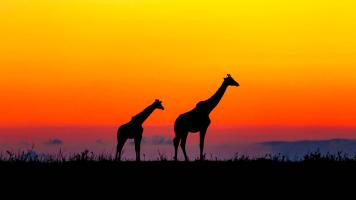
Are you ready for some photographic tips for your upcoming African safari? In Part 1 of this series, we discussed the things you need to do to prepare for your trip. Part 2 delves into photo gear [every B&H Explora reader’s favorite subject]. And here, in Part 3, we share some essential tips for getting great photos once you have embarked on your safari.
Above photograph: Mother and Child. Giraffes walking in the Masai Mara at Sunrise; Masai Mara National Reserve, KenyaCanon EOS 5D Mark III; EF 400 f/4 DO IS USM lens; manual exposure, 1

by Todd Vorenkamp · Posted
When should you upgrade your digital camera? While that question does not have a clear one-size-fits-all answer, it is not a difficult question to ponder for many photographers. The answer, believe it or not, is that you rarely, if ever, need to upgrade your camera for the announcement and release of each and every new model.
It happens every few years (and now much more frequently than it used to). You are browsing the B&H Photo website or reading B&H Explora and your Favorite Camera Mk. III has just been replaced by Favorite Camera

by Cory Rice · Posted
With digital cameras and editing software constantly improving, photographers are able to get away with a lot more today than they could in the past. Better sensors, flexible ISO ranges, raw image processing, and ever-advancing lens technologies have all contributed to a more forgiving margin of error for the photographer—or, to put it more optimistically—greater creative possibilities. For the portrait photographer, this means you don’t have to invest in a studio’s worth of gear to create compelling photographs of your sitters. Some will say

by Allan Weitz · Posted
I’ll never forget the first time I looked through the viewfinder of a camera fitted with a 20mm ultra-wide-angle lens. Everything looked amazing and I blew several rolls of film shooting everything I saw along the way. Prior to using this “exotic” lens, I had never shot with anything wider than the 50mm normal that came with my first 35mm camera.
The sobering part came when I developed the film and started eyeballing the results of my first outing. In a word, they were underwhelming, but I kept at it until I figured out how to use ultra-wide

by Shawn C. Steiner · Posted
Even when you’re photographing distant landscapes with wide-angle lenses, you may notice that the image doesn’t look as sharp as you thought it would. Or perhaps some objects are tack sharp, but as you look farther into the foreground or background, it loses some of that detail. One solution is to use a technique known as focus stacking to ensure your images are as sharp as possible throughout the entire image.
What Is Focus Stacking?
A popular technique for macro and product photography, focus stacking is a technique in which multiple images

by Jill Waterman · Posted
Each autumn, as the days get shorter and the weather cools, chlorophyll production slows in hardwood trees and bushes, causing leaves to lose the vibrant green of summer. As these conditions overtake the map, nature puts on a brilliant show of color in many parts of the United States. The changing of the leaves follows a rough pathway from north to south, starting in early September and often lasting into November in southern locales.
Above photograph: Colorado Gold, Maroon Bells Scenic Area © Bryan Carnathan
Fall foliage season is a big draw

by Jill Waterman · Posted
As described in our companion article that makes up Part 1 of this story, both teachers and students scrambled to face unique challenges and solve unforeseen problems with the sudden shift from face-to-face classes to remote learning in March 2020. Since a new school year is now upon us, we asked a diverse group of educators for updated tips, as well as insights about the online teaching/learning process.
In Remote