Search results for: photography tips solutions aperture explained
About 11 filtered results
by Mathew Malwitz · Posted
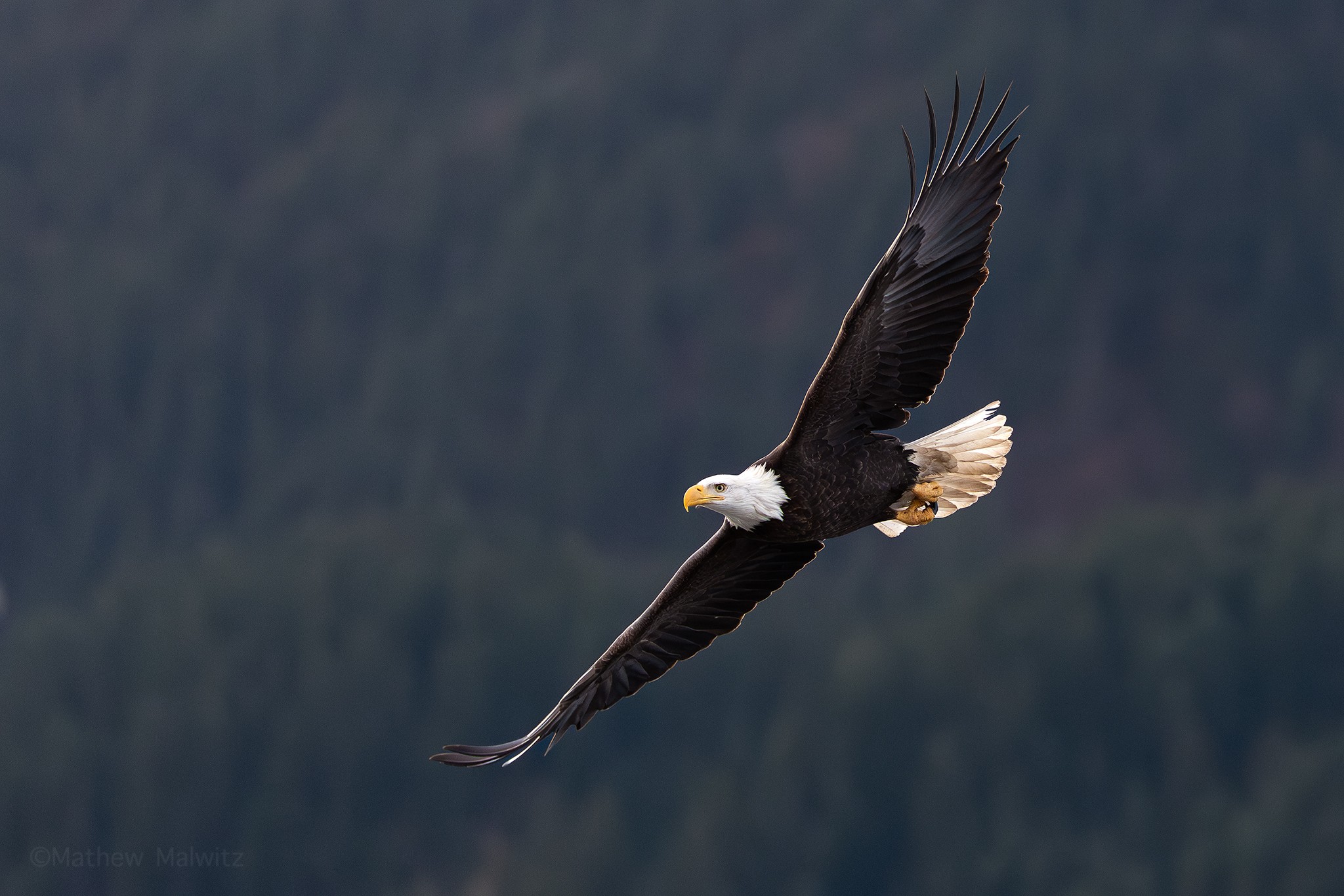
The bald eagle, one of the most regal birds of prey, has a secret. It’s notably one of the most difficult subjects to expose for. If we trust the camera in an automatic mode, we’re likely to get either an overly bright head, or a body that’s too dark in shadow to see. The only reliable way to capture good exposures of these birds is to expose to the right.
Mathew Malwitz
This technique is as useful as it is controversial,

by Zack Young · Posted
Once you’re familiar with the basic concepts behind high-volume photography, the next logical step is to figure out what gear you need to purchase. That’s when the panic might hit. Suddenly you’re flooded with decisions about cameras, lenses, strobes, backdrops, barcode scanners, and more, each category including tons of different options at every

Posted
Rich Johnson is here with model Thirl Hupp to show you how to create a dramatic portrait, anywhere. Johnson explains how to keep your setup simple, how to pose your client, and what challenges you could face while shooting on location.
0:00 - Introduction
2:33 - Think About Why You’re Capturing the Portrait
4:16 - First Setup
11:00 - Tips for Working with Models/Clients
14:00 - Adjusting the Lights
18:46 - Balancing Your Portfolio and Working with Clients
20:06 - Adjusting Lights and Posing
29:08 - How to Deal with Unwanted Lights on Location

by Allan Weitz · Posted
If the longest telephoto lens you own never seems to get you in tight enough to your subject, you have three choices. The first is to get up and get physically closer to your subject. If you can’t, for whatever reason, do this, you can either take the picture as is and crop it to your liking post-capture, or you can use a teleconverter.
Photographs © Allan Weitz 2021
Either method will work, albeit at a cost. As for the price of cropping versus the price of

by Bjorn Petersen · Posted
Using flash is one of the technical aspects of photography that’s difficult to understand, mainly because it’s something you cannot really see with your own eyes. Working with natural light, you can usually envision how your shot will turn out, and then when you become a bit more skilled, you can even envision how the effects of aperture and shutter speed will affect your images. Working with flash further complicates our visual relationship to what we’re photographing, since it’s an additional level of abstraction we’re adding to the mix

by Jennifer Hahn · Posted
ISO can be a sticky subject when it comes to video. It is used in photography when you have a great amount of control over your aperture, shutter, and exposure, and when you understand the lighting of your environment. But when used in video, if used too often, it can be more of an enemy than a friend to your footage. The most controversial setting is auto ISO, causing you to lose control over your ISO setting—and it can have mixed results. However, there are times when auto ISO can be your friend.
What ISO Is and What It Is Not
Technically,

by Bjorn Petersen · Posted
Macro photography is a specialized genre that has wide appeal. Despite its familiarity to most as just being “close-up shooting,” there are a variety of terms and tools that come up in the macro photography field that don’t seem to affect other broader, more general shooting methods. Let’s take a look at some of the specialized nomenclature and tools of the macro trade.
1. Macro
Starting with the obvious one first, macro photography is loosely defined as close-up photography done at scales of life-size or greater. We’ll get into this more in

7,919 Views· Posted
In this B&H video, photographer David Flores explores the "trinity" of photography fundamentals: ISO, aperture, and shutter speed. Beyond the immediate goal of proper exposure, learning how to control all three settings to

by Shawn C. Steiner · Posted
There are many different macro lenses on the market today, with focal lengths from 15mm to 200mm. Most of them hit the same 1:1 magnification ratio that gives shooters the life-sized reproduction they want for superb close-ups. With so many options to choose from, how should you go about making your decision?
To begin, you should think about what and how you plan to photograph. If you are working with jewelry in a studio, you are going to have very different

by Allan Weitz · Posted
Sometimes, the phrases, acronyms and strings of numbers or number-letter combinations used to identify photographic hardware or techniques can be daunting to the uninitiated neophyte photographer.
We've prepared a list of the basic terms. Have we left any out that you think should be added? Please let us know!
0-9 | A | B | C | D | E | F | G | H | I |

by Bjorn Petersen · Posted
If you spend much time perusing the Lenses section of the B&H website, or follow along with the latest announcements of new glass, you're likely to run into a range of phrases that are not inherently known to those with less than a keen, honed understanding of photographic and optical geekery. Scientific-sounding words like aspherical elements, chromatic aberration, coma, low dispersion, and high refractive index to the layman often lead to imprecise thoughts