Search results for: photography tips solutions art film developing
About 13 filtered results
by Mathew Malwitz · Posted
Through the cacophony of forest sounds, your ears home in on a buzzy, almost garbled ascending song. Perhaps you recognize it immediately, or maybe you need to confer with one of the trusty internet databases or apps. You train your eyes on the canopy, scanning for movement of any kind, when you see it: the cerulean warbler, a small rowdy songbird with wings slightly splayed from the body. Quickly, you lower your binoculars and train your camera on the little blue passerine before snapping a few frames.
The resulting photos clearly show the
by Mary Latvis · Posted
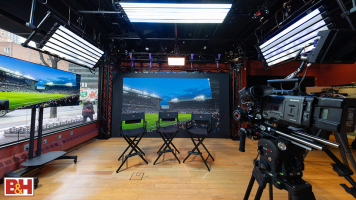
Getting ready to prep or shoot your latest video project? In addition to being the largest photography store in the USA, B&H Photo also incorporates The Studio alongside a state-of-the-art technology space, The Studio Technology Center (STC). The team focuses on providing complete professional video solutions while The Technology Center serves as an access hub to latest cinema and broadcast technology,

by Luke Rollins · Posted
Color negative and color transparency films have distinctive ways of rendering specific colors, and may have a warm (reddish), cool (bluish), or neutral color balance, as well as different color contrast characteristics. Thanks to the resurgence in film’s popularity in recent years, analog shooters have an astonishing number of choices, from major manufacturers like Kodak, Ilford, and Fujifilm, to smaller suppliers like Foma, Rollei, Agfa, Lomography, Kentmere, and Arista.
Obviously, we can’t include comprehensive info and hands-on impressions

Posted
Photographers often react instinctively against artificial intelligence, typically focusing on controversial generative AI. Meanwhile, a different branch of AI technology—machine learning systems—has been making remarkable progress helping photographers manage overwhelming image workflows under tight deadlines.
Above Image © Sam Hurd
In today's show, we explore this trending topic in a discussion with Justin Benson and Sam Hurd, both accomplished wedding photographers and tech entrepreneurs.
Justin begins by clarifying the distinction between

by Bjorn Petersen · Posted
You might hear it all the time: "Protect your prints by storing them archivally" or "This paper is archival-rated for X years" or "Keep your film safe by storing it in an archival box." Whatever it is, it's easy to gather what you need to store your tangible photographic media in archival conditions to prolong its lifespan to the fullest and to ensure it looks just as good in several years as it does today.
What Is Archival?
The term "archival" is thrown around a lot in the world of storage and display methods for film and prints, but what

Posted
Rodney Smith was a photographic visionary, with an allegiance to the image above all else. Long acclaimed for his iconic black-and-white pictures—not to forget his later jewel-like color scenes—Smith captured enchanted worlds full of subtle magic and lighthearted humor. Using only analog film and the aesthetics of natural light, his dream-like photographs are matched in quality by the craft and physical beauty of his prints.
Above photograph © The Estate of Rodney Smith
Smith died in 2016, yet the enduring precision, elegance, and whimsy of

by Todd Vorenkamp · Posted
If someone were to ask me what is the fastest, easiest, and most effective way of instantly improving their photography, my answer would be: a tripod. In the quest to make better photographs, we often dream of owning the latest camera body or the most expensive lenses. For many of us, these remain out of reach and impractical. A quality tripod, however, can be had for less than the price of a New York City dinner for two (with drinks) and, because of that, I

by Jill Waterman · Posted
Photo education has undergone significant changes since the story Photography Student? Here Is Some Advice from Teachers was published last year at this time—changes that are no less dramatic than the process of teaching and learning as a whole. With the sudden shift from face-to-face classes to remote learning, in March 2020, teachers and students scrambled to face unique challenges and solve unforeseen
by Cory Rice · Posted
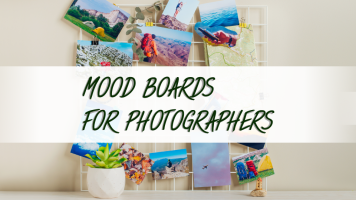
Mood boards have long served as efficient platforms for communicating ideas in the advertising, fashion, and film worlds. Their popularity stems from the simple fact that it is easier to show than to describe the direction of a visual project when working with a large creative team. Freed from its commercial roots, moodboarding can be a powerful exercise for photographers working through new ideas or planning future projects.
Foamcore provides an excellent support for presentations while sketchbooks and notebooks are perfect for personal,

by Bjorn Petersen · Posted
Nowadays, making a proper exposure with your digital camera is simple and straightforward: set your camera to A, S, or P and let the camera do the work. It’ll work most of the time and, in those instances where it doesn’t, you might pull out an external meter for a bit more precision. In all of these cases, you always have the rear LCD to double-check your shots if you’re unsure and, for the fanatical, you can even use a live-exposure histogram while shooting. When you’re using film, however, the luxury of being able to check your exposure by

by Josh Taylor · Posted
Today’s digital cameras are capable of awesome imaging performance and they offer an unparalleled combination of convenience, efficiency, and cost effectiveness that has made them the dominant mode of image capture. Nevertheless, shooting black-and-white film, especially in medium format, is a fascinating and worthwhile experience that’s rewarding, fun, and can also go a long way toward making you a more thoughtful and effective digital photographer.

by Daniel Wagner_1 · Posted
There are several schools of thought regarding whether or not a Rolleiflex TLR is a good camera for street photography. On the negative side, the exposures per roll are limited to 12, the vintage design often attracts attention, and it takes longer to advance the film to the next frame. On the positive side, the camera can be operated stealthily by shooting from the waist and/or aiming the camera perpendicular to the direction you’re facing; the 120 negative is much larger than its 35mm counterpart; and the leaf shutter is quieter and has
by John Harris · Posted
Len Speier has been shooting on the streets of New York City since the 1960’s. He’s actually been shooting a lot longer than that, but he didn’t get serious with his art until after a stint in the Army and a career as a trial lawyer. At 86, his work is in the permanent collection of numerous museums, and he’s a respected teacher, notably developing a popular course at The New School, entitled, “What Every Photographer Should Know about the Law.” Mr. Speier spoke with us about his shooting experiences and the changes in street photography