Search results for: photography tips solutions composition in photography film
About 44 filtered results
by John Harris · Posted
It would be foolish to claim that there is only one way to take a portrait, but there are some accepted norms and basic camera settings that you should understand if portraiture is to become your area of photographic interest. Remember though, as you walk down your creative path, that a portrait is more than a headshot, more than a beautiful photo of your subject; it is an opportunity to get to know someone, to have a visual conversation with a person, and to use your photographic skills to pass that understanding of the person on to the

by Todd Vorenkamp · Posted
Taking a look at any modern mirrorless or DSLR camera, you’ll notice a slew of controls, buttons, and dials. Atop nearly all cameras sits a large dial labeled with many letters and icons. This is our mode dial. It is how we control the level of power we give to our camera or take for ourselves.
One of the wonderful things that modern electronic digital and film cameras give you is many high-tech options for your image making. One of the horrible things that modern electronic digital and film cameras give you is many high-tech options for your

by Bjorn Petersen · Posted
You might hear it all the time: "Protect your prints by storing them archivally" or "This paper is archival-rated for X years" or "Keep your film safe by storing it in an archival box." Whatever it is, it's easy to gather what you need to store your tangible photographic media in archival conditions to prolong its lifespan to the fullest and to ensure it looks just as good in several years as it does today.
What Is Archival?
The term "archival" is thrown around a lot in the world of storage and display methods for film and prints, but what

by Rachel Leathe · Posted
Did you know that the first photograph ever taken was of a landscape?
“View from the Window at Le Gras” was captured by Nicéphore Niépce, in 1827. It features a very abstract view from Niépce’s window. Then, in 1839, Louis-Jacques-Mandé Daguerre made history with his image of

by Todd Vorenkamp · Posted
When the moon passes directly between Earth and the sun, those on Earth are treated to one of nature’s greatest spectacles—a total solar eclipse. It is a phenomenon that almost every observer would like to capture in a photograph.
Due to the rarity of the event, the short duration in which to capture it, and the dynamic nature of the subject, it is one of those photographic opportunities that requires the proper gear, setup, planning, and practice.
Eclipse and solar

by Todd Vorenkamp · Posted
Raw vs. JPEG. The debate has persisted since the early days of digital photography. With modern digital technology, in-camera JPEG processing has never been better. Across brands, some photographers claim to have switched their workflow to JPEG exclusively, forgoing the advantages (and disadvantages) of shooting raw files. Others shoot raw + JPEG simultaneously to enjoy the benefits of both. Of course, many shoot only raw images. With a week in Ireland to focus on photography, I decided to dive deeper into the raw vs. JPEG option and see if it

by Allan Weitz · Posted
If the longest telephoto lens you own never seems to get you in tight enough to your subject, you have three choices. The first is to get up and get physically closer to your subject. If you can’t, for whatever reason, do this, you can either take the picture as is and crop it to your liking post-capture, or you can use a teleconverter.
Photographs © Allan Weitz 2021
Either method will work, albeit at a cost. As for the price of cropping versus the price of

by Todd Vorenkamp · Posted

by Todd Vorenkamp · Posted
1. Shoot every day Like any skill, the more you do it, the better you can get. The best camera you have is the one in your hand, so if you aren’t out with your full DSLR kit, don’t be afraid to take great photos with your cell phone camera or a point-and-shoot. Photography is photography, make pictures with a camera. Any camera.
2. Always have your camera near Pull up a chair and I can describe two amazing scenes that have been indelibly embedded in my mind. Unfortunately, for the first, my camera was broken (I was at sea, far from

by Todd Vorenkamp · Posted
Thirty? Really? Thirty questions for every photo? The title of this article might make you think there’s a burdensome checklist that must be completed every time you release the camera’s shutter.
There is not.
However, if you want to take your photography to new dimensions, this list of questions—some dealing with the physical act of the photograph and some dealing with the inner thoughts behind the image—might be just what you need to get your head, feet, or camera in the right place, to help make a good photograph great or a great photograph

by Todd Vorenkamp · Posted
Like the world’s tidal waters, photographic creativity ebbs and flows for many of us. Sometimes creativity can use a jump-start, an artificial method to get the photographer to start looking at the world in a new way in order to facilitate, restart, refine, or improve your photography.
There are many ideas on how to get yourself to push through an artistic block or inspire you to further expand your boundaries. Not all of them involve the camera. Several websites and books publish a mix of assignments or exercises for the intrepid photographer

by Todd Vorenkamp · Posted
If someone were to ask me what is the fastest, easiest, and most effective way of instantly improving their photography, my answer would be: a tripod. In the quest to make better photographs, we often dream of owning the latest camera body or the most expensive lenses. For many of us, these remain out of reach and impractical. A quality tripod, however, can be had for less than the price of a New York City dinner for two (with drinks) and, because of that, I

by Bjorn Petersen · Posted
There’s no denying the appeal of fast lenses and super versatile zooms, but sometimes a small and compact prime lens is all you really need—especially if you’re a landscape photographer. Whether it’s for the smaller footprint, lighter weight, or just because you like the look of a certain lens, there are many cases for trading in the huge, heavy, and complex lenses for the humble, compact, and slower prime.
Smaller and Lighter
The most obvious reason to go the way of the slow prime is because of the noticeable savings in weight and size. If

by Allan Weitz · Posted
A friend of mine once described his favorite wide-angle lens as his “gateway to landscape photography,” and that’s a pretty good metaphor for wide-angle lenses if I ever heard one. Wide-angle lenses and ultra-wide-angle lenses naturally lend themselves to capturing landscapes with a sense of depth. They also tend to capture a sense of drama that you seldom get when photographing landscapes with longer focal length lenses.
Photographs © Allan Weitz 2021
Wide-angle lenses feature angles of view (AoVs) ranging from about 63° to about 74°, which
by Todd Vorenkamp · Posted
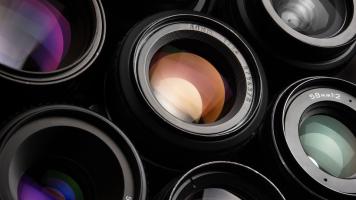
Many new photographers find that their images lack a certain feel or “pop.” While it is tempting to think that buying the newest version of your DSLR or mirrorless interchangeable lens camera is the key to unlocking your hidden photographic potential, it is not. If you want to move your photos from “meh” to “wow!” there are two things you should focus on (no pun intended): composition and upgraded optics. This