Search results for: photography tips solutions how clean your camera lens sensor
About 31 filtered results
by Luke Rollins · Posted
IN THIS ARTICLE
1. (Don’t Fear) the Gear2. Good Dental Photography Is Good Photography3. Macro Discipline, Portrait Mindset4. Embrace the Flash5. Clinical, but with an Eye for Marketing
For dentists, the evidentiary benefits of a photographic practice go beyond meeting industry standards. They can be the foundation for professional development and the growth of your business. That said,
by Luke Rollins · Posted
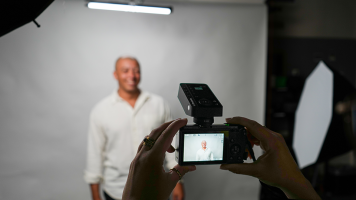
At first glance, studio photography and the compact camera may seem strange bedfellows. The type of work associated with the studio—still life, product photography, portraiture, macro photography—usually wants cameras with larger sensors and interchangeable lenses, especially in professional applications. Compact, point-and-shoot cameras, for their part, have their natural home in everyday, travel, nightlife, and street applications, where their discretion and size become virtues.
It might seem almost cruel to introduce the compact to the

by Mathew Malwitz · Posted
If there’s one question fledgling photographers often ask, it’s “How did you get such a nice background?” Backgrounds are an essential element of a photograph that are often neglected. In fact, it’s safe to say that a background is as important to a composition as the subject itself. After all, a distracting one will detract from an image.
In this guide, we’re going to cover the many methods used to capture clean, smooth backgrounds in our images. This will encompass the settings and gear involved as well as the in-the-field techniques you can

by Mathew Malwitz · Posted
As you begin to research cameras, you’ll likely hear some technical jargon about sensors. While it’s easy to ignore some elements of any devices, there’s no way to work around sensors. But what is a sensor and what does it do? In this guide, we’re diving into the often confusing world of imaging sensors. By time we’re done, you’ll have a better understanding of the most significant component in our digital camera.
About Sensors
What Is an Imaging Sensor?
At the heart of our digital cameras sits an imaging sensor, which serves as the digital

by Allan Weitz · Posted
When it comes to travel, landscape, and seascape photography, I always try to keep at least one long focal length lens in my bag for photographing subjects to which I either cannot get closer or—in the case of a Siberian tiger guarding her cubs—to which I have no business getting closer.
Photographs Ó Allan Weitz 2020
The definition of a long telephoto lens depends on whom you ask, not to mention what format camera they are using. For some, a 105mm lens is long. For others, it’s anything beyond 200mm or 300mm. For me, 300mm has always been the

by Todd Vorenkamp · Posted
Great products deserve (and often receive) great product photography. Whether you are photographing items for online sales, Internet auctions, or simply taking still life photos of a prized possession, there are some simple (and relatively inexpensive) gear and tips that can help your photos stand out from the others.
Online Auctions & Internet Marketplaces
We’ve all seen sub-par product images online. Let’s face it, they do not want to make you reach for your credit card or increase your bid. Smartphone snapshots are perfectly fine if you

by Todd Vorenkamp · Posted
A lens’s hyperfocal distance—a mathematical combination of lens focal length, aperture or f-stop, and focus distance—is a tool that photographers can use to maximize their depth of field for capturing nearby foregrounds and distant backgrounds in acceptable sharpness.
While you can always dial up your lens’s sharpest aperture (sweet spot), many landscape photographers want as

by Todd Vorenkamp · Posted
Welcome to Part 3 of our journey into the world of Intentional Camera Movement (ICM) photography. In this final chapter of the 3-part series of articles, we voyage back into the mental aspects of creating ICM art, as well as take in some tips for some of the more common ICM subjects and finish with inspirational words from some of the masters of the craft.
Above image © Morag Paterson
Approach
Because ICM eschews many of the lessons we have tried so hard to learn in photography over the years, the approach and process are very

by Todd Vorenkamp · Posted
Welcome to Part 2 of our deep dive into the world of Intentional Camera Movement (ICM) photography. In this second part of the three-part series of articles, we look at the kinds of gear that ICM artists recommend, as well as the technical side of the art including camera settings and techniques.
Above image © Ceri Herd
Camera
Gear is not a limiting factor in exploring ICM photography—you can even use a smartphone, provided you have a way of controlling the shutter speed. For repeatable, deliberate results, you will want to have a camera that

by Todd Vorenkamp · Posted
If you are selling a used car online, one great way to make your car stand out from the rest and attract more attention is to up your photo game. You don’t need to be a professional photographer to capture compelling images of the car or truck you are ready to sell—a few simple tips can help your photos grab the attention of possible buyers.
Photographs © Todd Vorenkamp
You’ve seen the standard used-car photo—the boring shot taken outside a dealership, in a driveway or crowded parking lot, midday, from standing eye level, of a sterile-looking

by Todd Vorenkamp · Posted

by Todd Vorenkamp · Posted
Image “sharpness” has been the goal of many photographers over the years. Some photographers seem to nail the “razor-sharp” or “tack-sharp” image every time, while some struggle to capture a truly sharp image.
Photographs ©Todd Vorenkamp
Before we start, know that there are basic ways photos end up not being sharp.
1. Movement Either the camera, or the subject is in motion during the capture.2. Optics/Electronics Soft focus, soft lens, etc.3. Atmospheric The amount and quality of air between the camera and subject.
Here we will break down all

by Todd Vorenkamp · Posted
Shallow depth of field (DOF) is one of the visual effects that many photographers seek in their everyday photographs. To accomplish this, there is the grail quest for lenses with larger and larger maximum apertures. In the world of macro and

by Todd Vorenkamp · Posted
So, you just bought a shiny, new, and maybe expensive, lens for your camera, and being the savvy consumer, you did your homework. You pored over customer reviews on the B&H Photo website, read online reviews splattered all over the Internet, grabbed a copy of every photo magazine that reviewed the lens, bookmarked dozens of websites, and now have the lens’s MTF curve charts burned into your retinas.
Now, your lens is here and it is time to go out shooting.

by Allan Weitz · Posted
If you haven’t touched your cameras since the leaves turned color and fell from the trees, it’s time to break out your gear, clean it up, and get everything ready for a new season of picture taking. In case you haven’t noticed—spring is coming down fast! If you are an outdoor photographer and are thinking of ways to upgrade your gear, see my article Ten Ways to Upgrade Your Gear for Outdoor Photography.
For