Search results for: photography tips solutions how to choose right camera battery
About 12 filtered results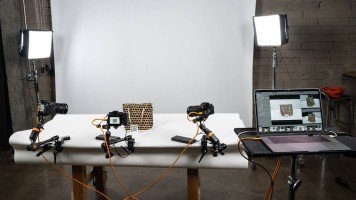
by Luke Rollins · Posted
At its most basic, tethered shooting involves connecting your camera, wired or wirelessly, to your computer as you shoot. You’ve likely seen it in some behind-the-scenes video for a professional studio shoot, or you just have a friend who swears it’s the best thing since sliced bread. Tethering is a shooting technique that can benefit many a photographer’s workflow significantly, though upon first hearing of it, the idea of tethering can be something that first requires a bit of education. Hopefully, this introduction will help get you started

by Mathew Malwitz · Posted
Lighting is the key to all photography. While elaborate, multi-light setups may appear to be the standard, the creative photographer can produce a seemingly endless range of images using just one light source. This guide is designed to help those beginners out there build the perfect one-light kit for portrait photography.
Why One Light?
I completely understand why multi-light “studio in a box” kits are tempting to beginner and budget-conscience photographers. Why spend hundreds of dollars on one light when you can get three lights complete

by Darrell Holdaway · Posted
There is a first time for everything, and if you have your mind set on producing a wedding video, you will encounter plenty of “firsts” during that initial wedding weekend. There is a first kiss, a first dance, and a first slice of cake. Where will you have your cameras set up for each of these memorable moments? Will you need lights for every shot? How will you manage the audio? When the bride says “I do,” you will want everything in place to ensure that you capture every word and angle. This guide will address equipment needs, event

by Rachel Leathe · Posted
I can’t count the number of times a stranger has approached me while I’ve been setting up my drone to ask if they can watch the launch. I imagine this is how the world’s first television owners must have felt as the neighborhood kids crowded around the only television on their block to witness such groundbreaking technology.

by Emily Mandagie · Posted
"Alright, your time in flight will be approximately twelve minutes." Berty and I swallowed that weighted sentence and nervously nodded in response. Smiles were on the outside, but deep inside we were wondering how in the world we were going to make the most of those fleeting seconds in that helicopter and capture exactly what we wanted from the sky!
Aerial photography can be exciting and exhilarating. But it can also come with a lot of added challenges, such as time limits, weather conditions, and—let's be real—a large expense! (Flights aren't

by Todd Vorenkamp · Posted
Congratulations on getting a new camera, and welcome to the world of photography! You are going to love it. Before you go out shooting, take a look at these 10 things you should do first with your brand-new camera.
1. Charge the Battery
Being fresh out of the box, your camera’s battery is unlikely to be fully charged. Plus, manufacturers usually recommend a full charge cycle before you go out shooting for the first time. So, throw it on the charger and fill 'er up!
Also, we highly recommend having a

by Allan Weitz · Posted
The leaves may be down and your frost-laden lawn might be making crunchy sounds when you cross it in the morning, but that doesn’t mean you have to pack your cameras away until Spring; if you do, you’re going to miss some fine picture-taking opportunities.
Appropriate layers of warm clothing and insulated boots aside, capturing strong stills and video during the cold months of the year requires a bit of foresight, a few recommended weather-related accessories, a measure of common sense, and the desire to take great pictures despite the cold.

by Cory Rice · Posted
When Nicéphore Niépce invented the first permanent photographic process in the early 19th century, he named it heliographie—or, sun-writing. Nearly two hundred years later, the sun continues to provide a quality light source to photographers at a fraction of the cost of its competitors. Like any creative decision, using natural light for portraits has its pros and cons. Its popularity stems from the facts that it is free, accessible,

by John Harris · Posted
Considering the current climate and how active picture-taking isn’t necessarily at the forefront of everyone’s mind, it seems a good moment to clean your camera’s sensor or (if you can suspend taking pictures of your cat) send your camera to have a professional cleaning and tune-up. Obviously, there are advantages to both, so with a little help from Paul Naraine, of PhotoTech, let’s have a look at the differences and do a little how-to.
First, be sure that

by Bjorn Petersen · Posted
One of the genres of photography in which nearly everyone participates to some degree, landscape photography is one of the most classic and traditional categories of our medium. It is representative for so many reasons, whether being used for conservation purposes, documentary, backgrounds, events, or as a symbol—landscapes, as mundane or as grand as they might be, are the settings in which we exist. So how do we photograph these spaces? Or, more pointedly, how do we successfully photograph the land? It’s a rich topic, but on a practical level

by Shawn C. Steiner · Posted
If you are here I’m guessing you’ve done a time lapse or two, maybe read our introductory article or Stan Moniz’s night-specific piece, and want to see how you can make your time lapses even better. I’ll admit it, time lapses are tough. There is a ton of information you need to know about photo and video to make

by Shawn C. Steiner · Posted
Time-lapse videos have invaded nearly every form of media in recent years, even breaking into our social media apps with the recent development of the hyper-lapse. These types of videos can be quite difficult to make, especially with the time requirements inherent in capturing and transforming a lengthy event into a few seconds of footage. They can also be some of the most stunning and interesting videos to watch. To capture even better photos and videos for time-lapses, here are some tips that will help elevate your imagery.
Work in Manual