Search results for: photography tips solutions lighting fundamentals
About 18 filtered results
by Mathew Malwitz · Posted
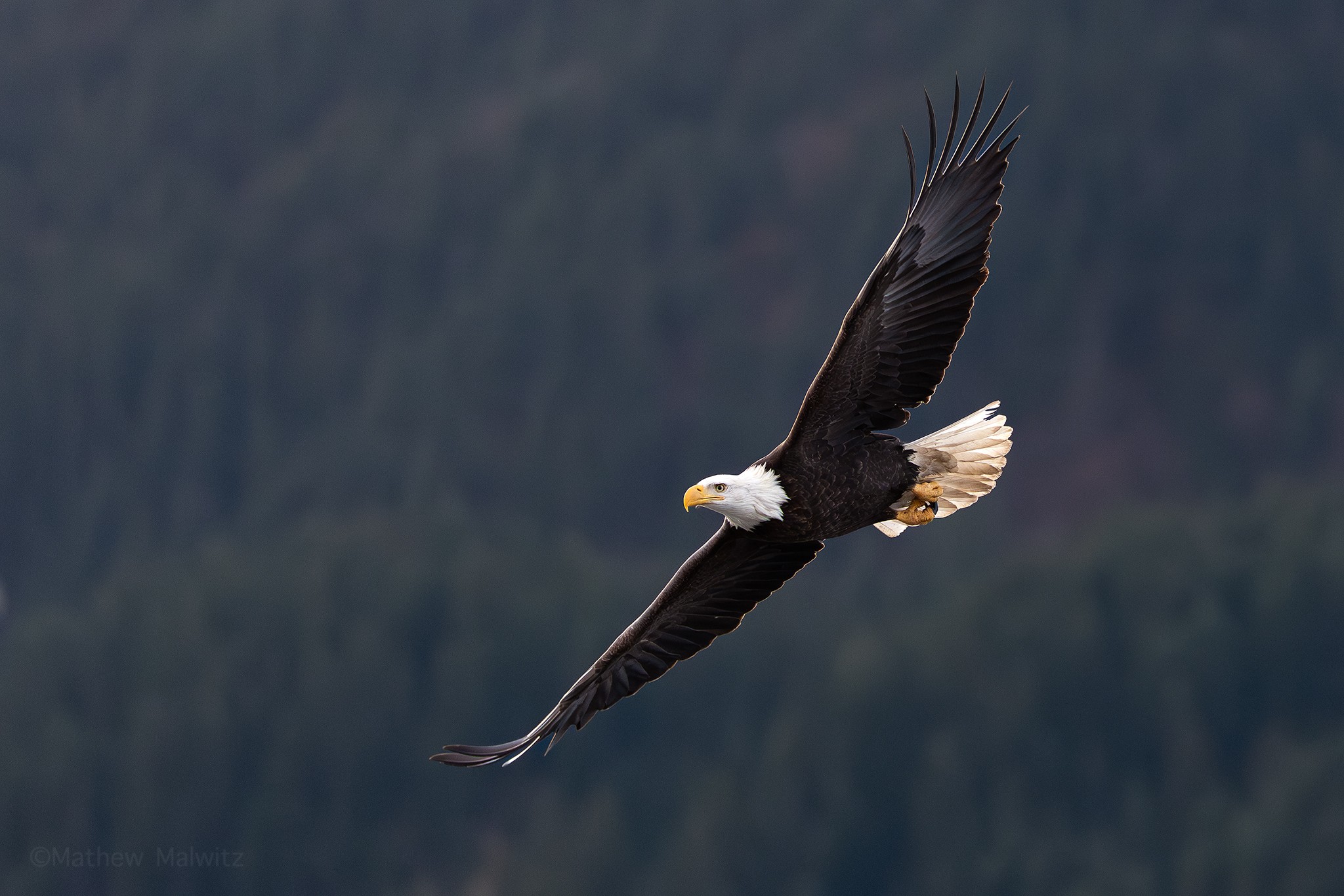
The bald eagle, one of the most regal birds of prey, has a secret. It’s notably one of the most difficult subjects to expose for. If we trust the camera in an automatic mode, we’re likely to get either an overly bright head, or a body that’s too dark in shadow to see. The only reliable way to capture good exposures of these birds is to expose to the right.
Mathew Malwitz
This technique is as useful as it is controversial,

by Luke Rollins · Posted
IN THIS ARTICLE
1. (Don’t Fear) the Gear2. Good Dental Photography Is Good Photography3. Macro Discipline, Portrait Mindset4. Embrace the Flash5. Clinical, but with an Eye for Marketing
For dentists, the evidentiary benefits of a photographic practice go beyond meeting industry standards. They can be the foundation for professional development and the growth of your business. That said,
by Luke Rollins · Posted
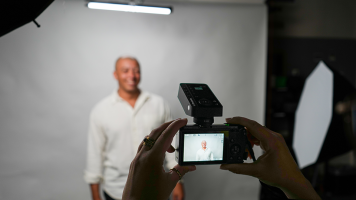
At first glance, studio photography and the compact camera may seem strange bedfellows. The type of work associated with the studio—still life, product photography, portraiture, macro photography—usually wants cameras with larger sensors and interchangeable lenses, especially in professional applications. Compact, point-and-shoot cameras, for their part, have their natural home in everyday, travel, nightlife, and street applications, where their discretion and size become virtues.
It might seem almost cruel to introduce the compact to the
Posted
Sony Artisan of Imagery Tony Gale is back in the Event Space to give a three-part series on portrait lighting. In part one, you'll learn the fundamentals of using constant light to create beautiful, well-lit portraits.
0:00 - Intro
1:30 - Different constant lights
6:15 - Using sunlight
11:54 - Using a single lightbulb
14:14 - Single light (with modifiers)
23:43 - Why continuous lighting vs flash
32:29 - Controlling the background
40:14 - Main & full lights (with modifiers)
55:52 - Rim light
57:42 - White balance & color checkers
1:01

Posted
Portrait photographer Mike Foley covers the theory behind portraiture, focusing on how to use shapes and posing to create stronger compositions. Mike also discusses the power of simple lighting and how to achieve professional results with a minimal setup.
0:00 - Intro
2:27 - Classic approach
10:03 - Finding / making a triangle in frame
22:51 - Rembrandt lighting
39:54 - Bringing both methods together
43:26 - Closing
Sponsored by
by Mathew Malwitz · Posted
Through the cacophony of forest sounds, your ears home in on a buzzy, almost garbled ascending song. Perhaps you recognize it immediately, or maybe you need to confer with one of the trusty internet databases or apps. You train your eyes on the canopy, scanning for movement of any kind, when you see it: the cerulean warbler, a small rowdy songbird with wings slightly splayed from the body. Quickly, you lower your binoculars and train your camera on the little blue passerine before snapping a few frames.
The resulting photos clearly show the

Posted
Join photographer Jose Esquilin as he walks you through the ins and outs of lighting.
0:00 - Intro
1:16 - About Jose
6:19 - Gear
8:45 - Light vs. Lighting
22:52 - Joes's Process
34:43 - Setup and Tools
36:32 - Investment
40:31 - Exposure
46:12 - Post-Processing
47:30 - Create
52:36 - Final Thoughts
56:00 - Q&A
Sponsored by

by Darrell Holdaway · Posted
There is a first time for everything, and if you have your mind set on producing a wedding video, you will encounter plenty of “firsts” during that initial wedding weekend. There is a first kiss, a first dance, and a first slice of cake. Where will you have your cameras set up for each of these memorable moments? Will you need lights for every shot? How will you manage the audio? When the bride says “I do,” you will want everything in place to ensure that you capture every word and angle. This guide will address equipment needs, event

Posted
Sony Alpha Ambassador Autumn Schrock shares her unique approach to capturing stunning landscapes, including the necessary fundamentals that'll you get started in landscape photography.
0:00 - Intro - Why Landscape Photography?
3:30 - Safety
8:38 - Location
12:30 - Light
22:29 - Weather
26:15 - Settings
40:47 - Gear
52:23 - Photos with different filters
54:00 - Composition
1:03:49 - Summery
1:06:08 - Final thoughts
Sponsored by

by Tim Ireland · Posted
Photography is often described as painting with light, and understanding how to manipulate light effectively is a fundamental skill for any photographer. While natural light has its place, using strobes and lighting modifiers can give you greater control over your lighting conditions, especially for product photography. Having a solid understanding of basic lighting gear and lighting modifiers will introduce you to simple yet effective lighting techniques, helping you take your product photography to new dimensions.
Understanding Strobes

by Todd Vorenkamp · Posted
Welcome to Part 2 of our deep dive into the world of Intentional Camera Movement (ICM) photography. In this second part of the three-part series of articles, we look at the kinds of gear that ICM artists recommend, as well as the technical side of the art including camera settings and techniques.
Above image © Ceri Herd
Camera
Gear is not a limiting factor in exploring ICM photography—you can even use a smartphone, provided you have a way of controlling the shutter speed. For repeatable, deliberate results, you will want to have a camera that

by Cory Rice · Posted
Chosen for their power and valued for their efficiency, monolights have long served as the light source of choice for portrait photographers. Whether working in studio or on location, these all-in-one strobes can play nearly any role in a lighting setup. Add the wide range of modifiers available to shape their output, and it becomes hard to think of a more valuable lighting tool in the portrait studio. This article introduces the equipment you will need to get up and running

by Todd Vorenkamp · Posted
Setting up your camera properly for night or low-light photography is a fundamental key to successful images. There are no hard and fast rules for settings for night photography because many of the settings you choose depend on the scene before you and how you want it to look in the final image. However, this guide will give you a foundation for setting up your camera to capture the wonders of the night.
Photographs ©Todd Vorenkamp
Exposure Mode

by Todd Vorenkamp · Posted
1. Shoot every day Like any skill, the more you do it, the better you can get. The best camera you have is the one in your hand, so if you aren’t out with your full DSLR kit, don’t be afraid to take great photos with your cell phone camera or a point-and-shoot. Photography is photography, make pictures with a camera. Any camera.
2. Always have your camera near Pull up a chair and I can describe two amazing scenes that have been indelibly embedded in my mind. Unfortunately, for the first, my camera was broken (I was at sea, far from

by Bjorn Petersen · Posted
Despite photography taking mainly a digital form nowadays, there is still immense value in the tactile side of photography, especially in regard to teaching photography. With education being based more in the home at the moment, it can be the perfect time to introduce someone to photography using the simplest and most basic tools. Pinholes are of the most primitive examples of photography but are also some of the most perfect tools with which to teach the basics of exposure without needing to complicate it using abstract modes, shutter speeds,