Search results for: photography tips solutions outdoor portrait photography comprehensive guide tips
About 4 filtered results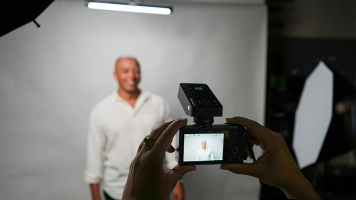
by Luke Rollins · Posted
At first glance, studio photography and the compact camera may seem strange bedfellows. The type of work associated with the studio—still life, product photography, portraiture, macro photography—usually wants cameras with larger sensors and interchangeable lenses, especially in professional applications. Compact, point-and-shoot cameras, for their part, have their natural home in everyday, travel, nightlife, and street applications, where their discretion and size become virtues.
It might seem almost cruel to introduce the compact to the

by Mathew Malwitz · Posted
Despite what you might have seen on the internet, you don’t need all the money and time in the world to photograph wildlife. Sure, an African safari would be nice, but it is by no means the only way to capture stunning images of wild animals. In fact, regardless of where you live, odds are there’s a vast ecosystem that likely goes unnoticed. If you have trees in your neighborhood, you’re off to a great start.
What You Need to Photograph Wildlife
While gear plays a crucial role in our ability to photograph wildlife, it isn’t everything. In this

by Luke Rollins · Posted
Subject and style may vary, but consistency is a quality shared by all successful photo studios. When working indoors, that begins with lighting. Strobes remain the bread and butter of many still photography studios. Unlike natural light, which can be finicky and unpredictable; on-camera flashes, which are not typically designed for studio use; or continuous lights, which can become costly as output increases; strobes are built to withstand the rigors of studio life while providing flexible and powerful light. But with so many options on the

by Allan Weitz · Posted
As a working photographer, the center of the universe is your camera bag and its contents. Your cameras and lenses are the tools of your trade. As you may have noted, both are mentioned in plural because just as you wouldn’t jump out of an airplane without a backup parachute, you shouldn’t attempt to photograph an emotionally spiked, non-repeatable event armed with only one camera. The same applies to lenses, too. The many aspects that comprise shooting weddings—portraits, the ceremony, dimly lit environs, tight, crowded quarters and bright