Search results for: photography tips solutions tips for better mobile photography
About 50 filtered results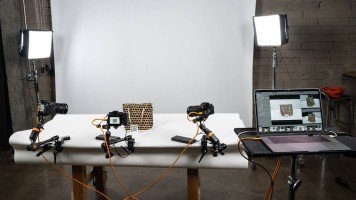
by Luke Rollins · Posted
At its most basic, tethered shooting involves connecting your camera, wired or wirelessly, to your computer as you shoot. You’ve likely seen it in some behind-the-scenes video for a professional studio shoot, or you just have a friend who swears it’s the best thing since sliced bread. Tethering is a shooting technique that can benefit many a photographer’s workflow significantly, though upon first hearing of it, the idea of tethering can be something that first requires a bit of education. Hopefully, this introduction will help get you started

by Mathew Malwitz · Posted
First, a disclaimer: Like composition, lighting portraits is a subjective exercise. A setup that works for one situation may not work for the next, and lighting that one photographer adores might repulse another. Cultivating a personal lighting style involves an awareness of conventional approaches and willingness to go beyond what everyone else is doing. Study portraits

by Mathew Malwitz · Posted
These days, everyone has a camera right in their pocket. Smartphones have long been the go-to camera for quick photos of our friends, family, pets, and of course, ourselves. With features like portrait mode, users can simulate blurry backgrounds and isolate their subject for more eye-catching images. What else could you ever need? What if I told you that with the

by M. Brett Smith · Posted
Thanks to the continued development of drone technology, aerial imaging has become a much more viable and potentially lucrative option for wedding photographers and videographers. Modern drones can capture images like never before, whether it’s a breathtaking still from a new and previously unattainable perspective or a cinematic tracking shot of the entire ceremony. With the right drone, the

by Todd Vorenkamp · Posted
When the moon passes directly between Earth and the sun, those on Earth are treated to one of nature’s greatest spectacles—a total solar eclipse. It is a phenomenon that almost every observer would like to capture in a photograph.
Due to the rarity of the event, the short duration in which to capture it, and the dynamic nature of the subject, it is one of those photographic opportunities that requires the proper gear, setup, planning, and practice.
Eclipse and solar

by Todd Vorenkamp · Posted
One of the first words I learned how to say was, “Moon.” All of my life, I have been fascinated by our natural satellite and I have been photographing it for as long as I have had a camera. My photos have gotten better over the years, but I still search for the perfect photo of the moon. Here are some tips and thoughts for your own lunar photography.
Above photograph: A waxing gibbous moon the day before the full moon. FUJIFILM X-T1; Leica APO-Televid 77 spotting scope @ 1000mm (1500mm, 35mm equivalent); f/13, 1/500-second, ISO 200

by Todd Vorenkamp · Posted
Why would you use an instant printer to print your photographs? Most people immediately visualize taking a snapshot of a friend or loved one and handing them a photograph—and that is an absolutely perfect answer to the question. However, since many of us have gotten accustomed to the print-free life of digital photography, it might be good to brainstorm and discuss some uses for the photographic print—specifically, but not limited to, the FUJIFILM INSTAX instant
by Todd Vorenkamp · Posted
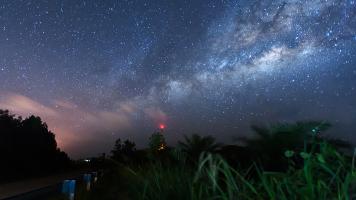
Welcome to Part 2 of my guide to Basic Backyard Astrophotography. If you missed Part 1, please click here and we will see you back on this page in a few minutes. In this segment, we talk about the gear you need to create your own astrophotos. We also touch on preparation for viewing the night sky, because you should know what you can see and what you might want to photograph.
Gear: The Bare Minimum
In

by Todd Vorenkamp · Posted
1. Shoot every day Like any skill, the more you do it, the better you can get. The best camera you have is the one in your hand, so if you aren’t out with your full DSLR kit, don’t be afraid to take great photos with your cell phone camera or a point-and-shoot. Photography is photography, make pictures with a camera. Any camera.
2. Always have your camera near Pull up a chair and I can describe two amazing scenes that have been indelibly embedded in my mind. Unfortunately, for the first, my camera was broken (I was at sea, far from

by Jill Waterman · Posted
Jean Fruth is a diehard baseball fan. “Growing up in New York, with two great hometown teams, how could you not connect with the sport?” she asks. As a teen, she worked in a restaurant owned by serious Mets fans who had season tickets, “And they would take me to games,” she reminisces. “And my grandfather was a Mets fan, listening to games on the radio.”
Such formative influences foreshadow her ultimate path to becoming one of baseball’s preeminent photographers, yet it took many years of exploration for Fruth to put a plan into action. “My
by Bjorn Petersen · Posted
Many genres of photography benefit from planning your shots beforehand, whether that means sketching ideas in a studio, taking some casual smartphone photos beforehand, or creating a schedule and shot list for a shoot. For landscape photographers, planning is an essential part of the process, mainly because it will improve your efficiency and help you get the shot you need by being in the right place at the right time. For planning a specific shot, nothing beats having personal experience with a location to be familiar with where to go, and

by Allan Weitz · Posted
The leaves may be down and your frost-laden lawn might be making crunchy sounds when you cross it in the morning, but that doesn’t mean you have to pack your cameras away until Spring; if you do, you’re going to miss some fine picture-taking opportunities.
Appropriate layers of warm clothing and insulated boots aside, capturing strong stills and video during the cold months of the year requires a bit of foresight, a few recommended weather-related accessories, a measure of common sense, and the desire to take great pictures despite the cold.

by Allan Weitz · Posted
Am I the only one who thinks it’s funny that when a new smartphone debuts, the only thing people ask about is the camera? Is it a decent phone? Nobody cares. Does the caller sound like they’re calling from Mars? If they do it’s not the phone—contact your carrier. The only things people seem to care about are how many megapixels and how many lenses it has.
Unlike earlier-generation smartphones, which typically had a single semi-wide-angle camera lens with some form of digital zoom, today’s smartphones offer multiple lens options that enable you

Posted
In early July 2020, Canon announced a pair of EOS R-series cameras that should prove to be true game changers in the world of mirrorless cameras. The new cameras are the Canon EOS R5 and R6. Both are full-frame cameras—the R5 features a 45MP sensor, the R6 features a 20MP sensor—and have amazing stills and video. The following is everything else you need to know about these exciting new cameras.
Also, at the top of this page is a replay of our Live Q&A with Canon Technical Expert Rudy Winston. You'll find some questions have an
by Cory Rice · Posted
Mood boards have long served as efficient platforms for communicating ideas in the advertising, fashion, and film worlds. Their popularity stems from the simple fact that it is easier to show than to describe the direction of a visual project when working with a large creative team. Freed from its commercial roots, moodboarding can be a powerful exercise for photographers working through new ideas or planning future projects.
Foamcore provides an excellent support for presentations while sketchbooks and notebooks are perfect for personal,