Search results for: photography tips solutions understanding raw image files
About 10 filtered results
by Mathew Malwitz · Posted
At one point or another, you’re bound to hear someone say that you need to shoot in a RAW file format. There are advantages to this decision, from additional detail to better control over the look of our final image. But what exactly is a RAW file and what does it do for our photographs? In this guide, we aim to give you a better understanding of the RAW file and how to use it to our advantage.
What Is a RAW File?
RAW files, sometimes referred to as digital negatives, are the raw data recorded by your camera’s imaging sensor. This data is

by Mathew Malwitz · Posted
There’s an old adage that claims in order to be a wildlife photographer, you need a lot of time and a lot of money. This is only partly true. Many great wildlife photo opportunities can occur in urban parks and even in your own backyard, as long as we know what we’re doing. In this article, we’re going to cover a number of essential tips that will help you become a better wildlife photographer.
If you’ve read our introduction

by Mathew Malwitz · Posted
If you’ve been around photography for any length of time, you’ve probably heard of ISO. ISO is one of the three settings that determine our exposure in photography. These settings are collectively referred to as the exposure triangle. ISO is unique in this equation, and in this guide, we’re going to explore why.
ISO can be referred to in two ways. It’s most commonly spoken as an abbreviation, but it is also sometimes referred to as a word pronounced as eye-so. General consensus is that you call it whichever you like. After all, it’s not what

by Mathew Malwitz · Posted
Portraiture: It’s one of the most popular and prevalent forms of photography. Although it may seem simple on paper, it comes with its own unique obstacles. Of course, you’ll want to be familiar with your gear. This is essential to all working photographers, but it allows you to focus your efforts on the genre-specific challenges you’ll face.
When photographing people, you’ll find that some folks are photogenic, while others are not. Your job as a photographer is to break down the barriers set by your clients and to put them in the most

by Jill Waterman · Posted
Making pictures by night is a curious practice. While specialists of this subject embrace it as a deep-seated passion and have a never-ending quest for technical and creative advancement, those more familiar with daytime photography are often unaware that tried and true photography rules often need to be adapted or even overlooked at night. With this in mind, consider the following tips the next time you venture out in the darkness, to help you to adapt.
1. Take a Chance and Explore the Unknown
What’s my exposure time? This is the number one
by Jason T · Posted
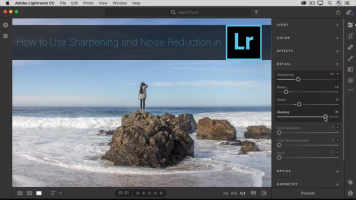
Photographers generally don’t agree on much. Sony, Nikon, or Canon? If you ask three different photographers, you’ll get three different answers. Color or black-and-white? Film or digital? The debates go on and on. But there’s one thing almost everyone can agree on, and that is that a good photo is a sharp photo. If there’s one immutable truth in the photography lexicon, that may be it. And, many of us will go through great lengths to get the sharpest photo, whether it was captured that way to begin with, or not.
The truth is, due to huge

by Cory Rice · Posted
When many people think of special effects, they think of dimly lit rooms, expensive computers, and complicated software. While this may be an accurate picture if you are editing a blockbuster action movie, digital still photographers can do a lot to their images even before transferring files off their camera. The following guide covers some of the more popular in-camera effects on the market to consider when purchasing a new camera or for better understanding the camera you already own.
Film Simulation and Color Profiles
In recent years,

by Cory Rice · Posted
Over the past few years, pixel-shift image capture has transformed from a luxury reserved for deep-pocketed specialists to an increasingly common feature on new, resolution-oriented cameras. Today, in addition to Hasselblad’s behemoth Hasselblad H6D-400c, Olympus, Pentax, Sony, and Panasonic offer versions of the technology at much more accessible prices.
While it is advertised under several names (High Resolution Mode,

by Allan Weitz · Posted
Sometimes, the phrases, acronyms and strings of numbers or number-letter combinations used to identify photographic hardware or techniques can be daunting to the uninitiated neophyte photographer.
We've prepared a list of the basic terms. Have we left any out that you think should be added? Please let us know!
0-9 | A | B | C | D | E | F | G | H | I |

by Steven Gladstone · Posted
In the world of film production, a Digital Imaging Technician (DIT) can be many things. Depending on the scope of the production, the scope of their job is constantly evolving. Taking advantage of the wonders of email, I checked in with a few working DITs to get a better understanding of their complex and ever-changing job. What became apparent quickly was that although most people in the industry start off as beginners, taking on the role of DIT requires a healthy balance of experience, people skills, technical knowledge, and an almost