Search results for: photography tips solutions understanding resolution image quality
About 11 filtered results
by Mathew Malwitz · Posted
As you begin to research cameras, you’ll likely hear some technical jargon about sensors. While it’s easy to ignore some elements of any devices, there’s no way to work around sensors. But what is a sensor and what does it do? In this guide, we’re diving into the often confusing world of imaging sensors. By time we’re done, you’ll have a better understanding of the most significant component in our digital camera.
About Sensors
What Is an Imaging Sensor?
At the heart of our digital cameras sits an imaging sensor, which serves as the digital

by Rachel Leathe · Posted
What makes a camera good for landscape photography? In this article, we’ll dive into factors such as megapixel count, sensor size, usability, weather readiness, and design—helping you develop your own personal metric for finding the ideal camera. We’ll help you wade through all the technical mumbo jumbo to figure out what specs really matter, whether you want to capture stunning mountain ranges or shoot star-strewn night skies.
Megapixels
It doesn't get much more basic than megapixels. They're like the atoms of photography. But just how many

by John Harris · Posted
What can you do with a high-end telephoto lens? Be a boss, is what you can do. I mean, c’mon! Strutting around the sidelines or cuttin’ through the bush with one of these beasts resting on your shoulder―not only do you look tough, but you’re also carrying a lens that you need to get the best photos in sports and wildlife photography. When I say best, let’s not underestimate the greatness of photographers who can create wonderful images with a wide-angle lens or even a telephoto of lesser quality, but to really excel in the disciplines of

by Todd Vorenkamp · Posted
Specular out-of-focus highlights have appeared in photographs since the first photos were taken through lenses. In 1997, Photo Techniques magazine introduced the word “bokeh” to the photography world’s vernacular and the out-of-focus areas of photographs have been scrutinized ever since. Before the term, there was certainly discussion about the aesthetics of the out-of-focus specular highlights of a photograph, but until 1997, there wasn’t a good word in the English language to describe the phenomenon. Credit goes to Mike Johnston, article

by Allan Weitz · Posted
The term “bokeh” was made popular in the late 1990s by Mike Johnston, the editor of Photo Techniques magazine, who produced a series of articles on the subject for his publication. Based on the Japanese term “boke-aji,” it was used to describe the quality of the blurry or hazy portions of a photograph. The term quickly weaseled its way into the lexicon of desirable lens attributes. The funny thing is, many photographers still aren’t quite clear as to what bokeh really is.
Resolution, contrast, color quality, and distortion are lens qualities

by Dawn Wayand · Posted
Your camera is an extension of you in your studio. What you shoot with can be just as important as how you shoot. Choosing the right gear to help you perform better during a photo shoot is worth careful consideration. In this article, I will discuss cameras, but go more into depth on lenses, light meters, and care kits for your gear to help give you a better understanding of each and what features to look for when purchasing each component.
Robert Olsen;Model: Kristin Rutty
Digital Cameras
There are a few different types of digital

by Cory Rice · Posted
Over the past few years, pixel-shift image capture has transformed from a luxury reserved for deep-pocketed specialists to an increasingly common feature on new, resolution-oriented cameras. Today, in addition to Hasselblad’s behemoth Hasselblad H6D-400c, Olympus, Pentax, Sony, and Panasonic offer versions of the technology at much more accessible prices.
While it is advertised under several names (High Resolution Mode,

by Shawn C. Steiner · Posted
Love it or hate it, high-quality video is now a significant part of the latest DSLRs, mirrorless cameras, and point-and-shoots. This is, in part, because of a greater consumption of video content, thanks to faster Internet, impressively good mobile screens, and what I see as a natural evolution of visual media. So, with this higher demand of stellar video content, many dedicated still photographers are making the leap to video. This series is designed to help guide a photographer through the often confusing world of digital filmmaking.
A few

by Allan Weitz · Posted
Sometimes, the phrases, acronyms and strings of numbers or number-letter combinations used to identify photographic hardware or techniques can be daunting to the uninitiated neophyte photographer.
We've prepared a list of the basic terms. Have we left any out that you think should be added? Please let us know!
0-9 | A | B | C | D | E | F | G | H | I |

by Bjorn Petersen · Posted
If you spend much time perusing the Lenses section of the B&H website, or follow along with the latest announcements of new glass, you're likely to run into a range of phrases that are not inherently known to those with less than a keen, honed understanding of photographic and optical geekery. Scientific-sounding words like aspherical elements, chromatic aberration, coma, low dispersion, and high refractive index to the layman often lead to imprecise thoughts
by Shawn C. Steiner · Posted
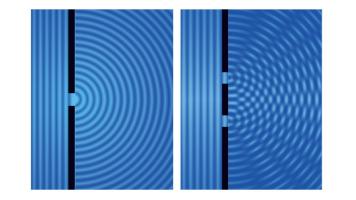
With the ever-increasing number of pixels manufacturers can cram onto a single digital image sensor, the optics themselves are beginning to become the limiting factor in image quality. This is making it all the more important to stop down our lenses in an effort to squeeze as much sharpness from them as possible. Unfortunately, while stopping down is a great way to sharpen pictures, if we go too far, we end up with deteriorating image quality. This optical effect is called diffraction.