Search results for: photography tips solutions using flash diffusers better light
About 13 filtered results
by Luke Rollins · Posted
Achieving a standard of production value is an essential component of establishing a brand and growing a following. For part-time, burgeoning, and mid-level creators, it can feel like bridging that gap is less a matter of learned skill and more about the equipment you can afford.
In most cases, the problem isn’t budget at all. Acquiring the specific know-how can give your content professional sheen with little to no financial outlay.
Lighting design is arguably the most immediately visible production component—and the one most capable of

by Luke Rollins · Posted
The wealth of B&H is not measured in sales, but in the accumulated knowledge of its people. The breadth of such experience is impossible to quantify, let alone price, which is why we’re offering this batch of wedding photography advice completely free of charge.
Andrea Buritica, Sales Associate – Chat & Email
Burikitak Photography
One of the best parts about working at B&H is that I get to talk about gear all day. However, it’s doing wedding

by Mathew Malwitz · Posted
Who doesn’t want to capture fun and creative portraits of our four-legged friends? We know we love it. In fact, pet photography may just be the most popular form of photography there is. Think of all the smartphone snaps of yawns, big stretches, and funny moments we all take of our cats, dogs, chinchillas, and beyond.
Quick snaps aside, you know what really ups the quality of our pet portraits? Lighting. Just as with any form of portrait, lighting unlocks possibilities that can be impossible without it. But what lighting system should we use?

by Luke Rollins · Posted
Subject and style may vary, but consistency is a quality shared by all successful photo studios. When working indoors, that begins with lighting. Strobes remain the bread and butter of many still photography studios. Unlike natural light, which can be finicky and unpredictable; on-camera flashes, which are not typically designed for studio use; or continuous lights, which can become costly as output increases; strobes are built to withstand the rigors of studio life while providing flexible and powerful light. But with so many options on the

by Mathew Malwitz · Posted
For macro photographers, having the right gear is essential. Magnification and lighting are key, but you don’t necessarily need the biggest, priciest macro lenses out there to get close-up shots. If you’re a macro photographer yourself or buying a gift for one, we have some excellent recommendations for every budget.
Gifts Under $50
1. Close-up macro filters (like this Macro Lens

by Zack Young · Posted
Once you’re familiar with the basic concepts behind high-volume photography, the next logical step is to figure out what gear you need to purchase. That’s when the panic might hit. Suddenly you’re flooded with decisions about cameras, lenses, strobes, backdrops, barcode scanners, and more, each category including tons of different options at every

by Zach Young · Posted
The aesthetics of street photography has evolved greatly over the years. On one side of the spectrum, you have the more “natural” look championed by icons like Henri Cartier-Bresson, William Klein, and Vivian Maier: no added light, no post-processing, no cropping, etc. Elsewhere, you have the innovators, the iconoclasts—artists like Bruce Gilden and Dina Litovsky—who regularly eschew the natural aesthetic by utilizing a

by Todd Vorenkamp · Posted
Photography is all about capturing light. In fact, the etymology of the word “photograph” is basically “light drawing.” To make a photograph that we can see, we have to control both the amount of light that is exposed to a photosensitive surface, be it film or a digital sensor, and also control the sensitivity of that surface to the light. In this series, we will discuss a bit of the physics and characteristics of light and then how a camera and lens combine to control exposure by using what is commonly known as the “Exposure Triangle.”

by tom kirkman · Posted
A softbox is an enclosure designed to fit around an artificial light source, such as a flash tube or halogen lamp. Its reflective interior intensifies the light output and projects it through its only means of escape—the front diffusion screen. This creates a quality of light long appreciated by photographers and videographers, which resembles the softer light one might find streaming through a window. It also creates square or rectangular highlights in the reflective surfaces of your subjects. The "soft" name stuck because of the quality of

by tom kirkman · Posted
After posing for a few gigabytes of formals in a hall, you can sense the wedding party’s palpable relief when, weather permitting, it’s time to take it outside. If you’re lucky enough to have nicely landscaped grounds, it’s a great opportunity to stop fighting with the tungsten light sources inside and take advantage of that flash-friendly sunlight.
Whether you’re just starting out as a wedding photographer or a friend asked you to shoot his or her wedding or you’re a seasoned professional, you’ll need some kind of help to maximize your

by Allan Weitz · Posted
As a working photographer, the center of the universe is your camera bag and its contents. Your cameras and lenses are the tools of your trade. As you may have noted, both are mentioned in plural because just as you wouldn’t jump out of an airplane without a backup parachute, you shouldn’t attempt to photograph an emotionally spiked, non-repeatable event armed with only one camera. The same applies to lenses, too. The many aspects that comprise shooting weddings—portraits, the ceremony, dimly lit environs, tight, crowded quarters and bright
by Jill Waterman · Posted
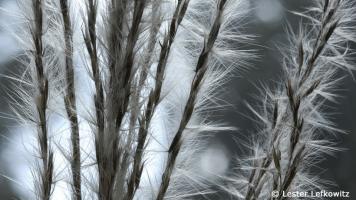
The mysterious realms of miniscule objects, colorful flora and creepy-crawly bugs hold a fascination for image makers of all sorts. Most photographers know that capturing images on such an intimate scale requires a macro lens or special accessories to allow for close focusing, but another critical component is the lighting.
For an overview on the different lighting tools and approaches to consider, we spoke with macro photography and lighting specialist Lester Lefkowitz, who will present a talk about macro photography at the
11,298 Views· Posted
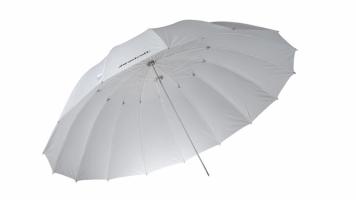
In this quick tutorial, wedding photographer Moshe Zusman talks about how he handles lighting with different tools and light shapers. He suggests using off-camera flash for more creativity; you can start with speed lights, and then advance to studio systems with light-shaping tools such as softboxes, grid diffusers, and umbrellas. For more flexibility, you can use wireless triggering systems to fire your camera and flash. Zusman likes grid diffusers on a softbox because the light is more angular and he has more control; it’s easier to balance