Search results for: photography tips solutions what is focus breathing
About 11 filtered results
by Mathew Malwitz · Posted
These days, everyone has a camera right in their pocket. Smartphones have long been the go-to camera for quick photos of our friends, family, pets, and of course, ourselves. With features like portrait mode, users can simulate blurry backgrounds and isolate their subject for more eye-catching images. What else could you ever need? What if I told you that with the

by Brian Zwiebel · Posted
When winter rolls around, many bird photographers choose to hibernate like a bear or fly south like a bunting. However, with a few precautions and considerations, winter can be an excellent time of year to photograph birds, even in the northern climates. Over the years, I have made dozens of trips to photograph birds in some pretty extreme locations, such as the high arctic, northern Michigan, and northern Minnesota. In this first part of my two-part series, I will share my strategies to prepare yourself and your gear in the best ways for
by Todd Vorenkamp · Posted
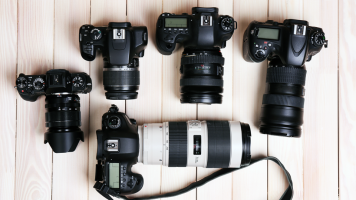
In the ever-changing digital world, it is often financially difficult to keep pace with the technology and constantly acquire the latest and greatest gear. Many of us save up our hard-earned cash to get the latest camera, only to see it be replaced weeks or months after we acquired our new toy. That can be disheartening, of course, but here are a few tips on how you can breathe new life into your aging digital camera.
I was going to conclude with a few thoughts, but let’s begin with them instead…
Remember/learn/know that an older digital

by Todd Vorenkamp · Posted
We have probably all seen images in which the photographer has panned with the action—photos where the subject is in fairly sharp focus and the background is blurred due to the motion of the camera. The subjects you might have seen in action panning photos include cars, trucks, airplanes, runners, motorcycles, bicycles, etc. Done well, action panning photographs are a pleasure to look at and, believe it or not, action panning is not the most difficult technique to learn with your camera. However, getting great results can be a bit of a

by Shawn C. Steiner · Posted
Even when you’re photographing distant landscapes with wide-angle lenses, you may notice that the image doesn’t look as sharp as you thought it would. Or perhaps some objects are tack sharp, but as you look farther into the foreground or background, it loses some of that detail. One solution is to use a technique known as focus stacking to ensure your images are as sharp as possible throughout the entire image.
What Is Focus Stacking?
A popular technique for macro and product photography, focus stacking is a technique in which multiple images

by Todd Bruggemann · Posted
Photographing small objects is a unique challenge, and if you want to know the right gear to showcase those items, the best I would say is to look no further than a DSLR or mirrorless camera and a macro lens. After slapping a sweet macro lens on your camera, you will be amazed at the brand-new world you have access to—one that is tough to imagine. You’ll be able to capture the beauty of a water droplet or the surprising detail found in an everyday object. And, if you are lucky enough to be a working photographer, it can boost your product

by Kendra Wiebke · Posted
You want to go outside, get some fresh air, and snap some photos. But, it's winter and you've never done this before. Still, that's not going to stop you from going on an adventure! Strap on your snowshoes and get ready for some dazzling snow photos. Here are some tips to get you started on your winter photography journey.
General Prepping
As with any outdoor adventure, the right attire can make a world of difference. Make sure you're bundled according to the weather. Base layers should be breathable and wick moisture away from your body. Aim

by Shawn C. Steiner · Posted
As much as we like to think photography is a pure art form, we do still have to consider basic physics when we create images. One major sticking point is that when you close in on a subject, there’s something that happens all the time in macro photography: the depth of field becomes increasingly shallower. Normally, a couple of stops down on the aperture can solve this problem but, at extremely close ranges, you can’t always get exactly what

by David Adler · Posted
As someone prone to discussing video gear with just about anyone willing to engage in related conversation, one topic that is frequently brought up to me is the price and purpose of professional video gear and the seeming price disparity, in contrast to consumer or prosumer gear. In this installment of pro gear discussions, I will delve into what separates professional cinema lenses from their prosumer and consumer ilk.
Questions that I used to get while I worked in equipment rentals would commonly include, “Why do these cinema lenses cost so

by Allan Weitz · Posted
As a working photographer, the center of the universe is your camera bag and its contents. Your cameras and lenses are the tools of your trade. As you may have noted, both are mentioned in plural because just as you wouldn’t jump out of an airplane without a backup parachute, you shouldn’t attempt to photograph an emotionally spiked, non-repeatable event armed with only one camera. The same applies to lenses, too. The many aspects that comprise shooting weddings—portraits, the ceremony, dimly lit environs, tight, crowded quarters and bright
by Justin Dise · Posted
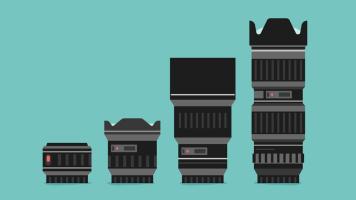
Whether you’re assembling a personal lens kit or compiling the equipment-rental list for your next film, selecting a lens package is an important decision. It can also be a daunting one, especially if you’re new to the game. So what lenses should you get? A complete set of primes? A couple of zooms? Both? The answers aren’t always clear. Ask ten DPs what their favorite lenses and focal lengths are, and you’ll likely get about as many answers.
The fact is that everyone has his or her own preferences, from focal length to build quality, to a