Whether you’re speaking at a small gathering or DJing for a huge crowd, there are seemingly an endless number of considerations with respect to the size, design and functionality of the speakers available on today’s market.
Today we’re going to focus on active speakers, meaning none of the speakers on this list need an external an amplifier to work. Furthermore, the models in the larger PA speaker category have all the speaker drivers necessary to produce a wide frequency range of sound so you won’t need to buy an external subwoofer. Many of the models in this article also have onboard mixers, which we’ll talk about below. So, let’s start super small and then transition into bigger PA speakers and speaker systems.
Public Speaking and Musical Performance in Small Spaces
If you’re public speaking in a modest space or a solo artist performing at an intimate gathering, a compact and portable PA speaker is probably the best way to go. In addition to sound quality, basic factors to consider when investing in a speaker in this category include:
Audience and Room Size: This is an obvious one. Are you speaking in a classroom or conference room? If so, an ultra-compact speaker will do. But if you plan on speaking or performing in a bar or small church, for example, you’ll want to get something larger and better performing.
Portability and Battery: Not only do you want to think about the size of the speaker, but you also want to decide whether you need it to be powered without being connected to an outlet. If this is the case, make sure your model has a rechargeable battery.
Mic/Line Inputs: Do you just want a simple microphone setup or are you planning on having more than one public speaker or vocalist? Do you plan on hooking up your speaker to a DJ system as well? If so, you’re going to need more than one mic/line input.
Hi-Z Inputs: Think about whether you plan on using the speaker with instruments. If you’re connecting your guitar, for example, you’ll need a Hi-Z instrument input.
Bluetooth Capability: Are you looking to wirelessly stream music from your phone or computer? Consider a model with Bluetooth functionality.
To give you an idea of the options available, we’ve put together a bunch of small speakers with varying features, from super cute sized ones to higher-performing models that are a little more substantial.
Ultra-Portable Compact PA Speakers
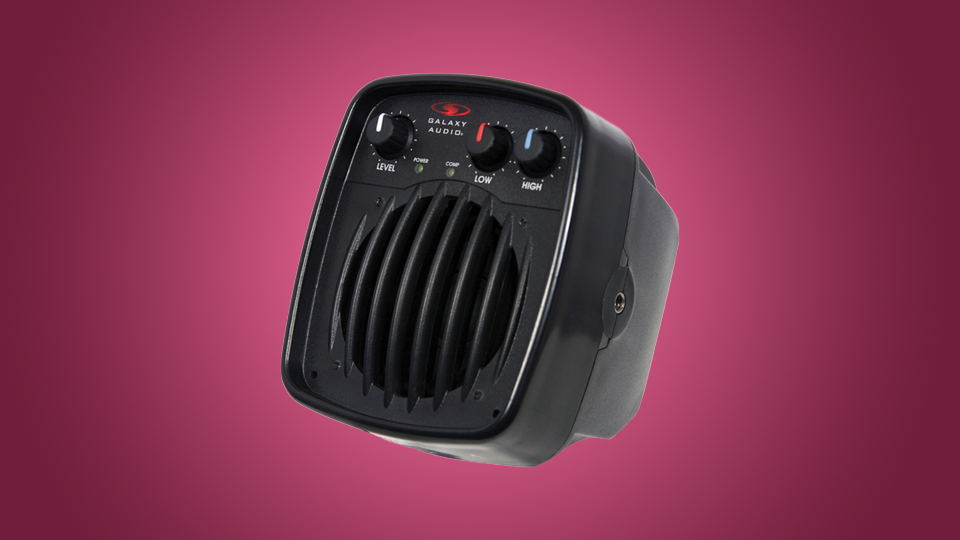
An example of a simple, yet popular model for communication is the uber-compact Galaxy Audio NSPA Powered Nano Spot Compact PA, which has combo XLR ¼” and 3.5mm input connectors, allowing you hook up your microphone directly into the speaker.
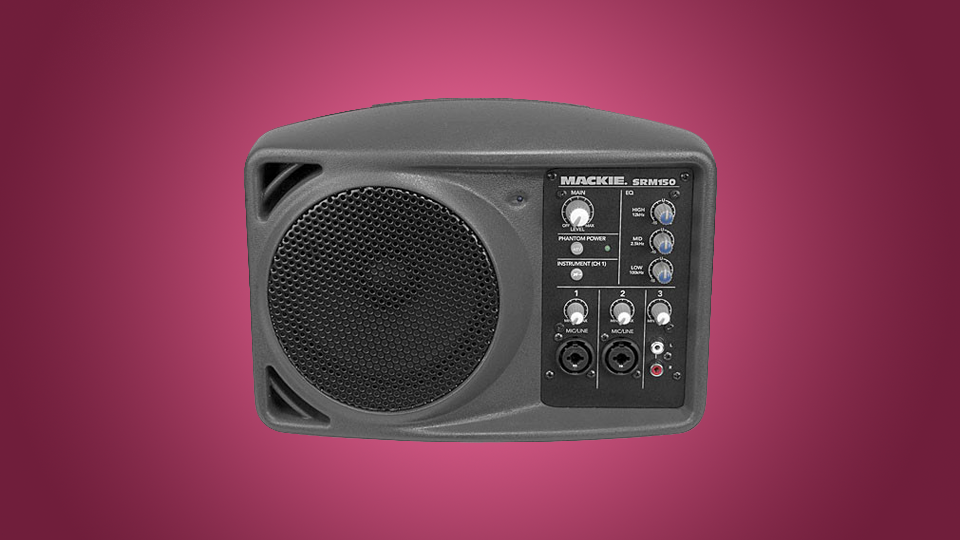
If you’re searching for an ultra-compact PA speaker for musical performance, consider the Mackie SRM150 5.25” Compact Active PA System. It has some decent power, putting out 120 dB SPL at one meter. With two mic/line preamps and a Hi-Z input for instruments, the SRM150 is perfect for performing in small spaces or even practicing. It can also be mounted to your mic stand for personal monitoring; if you want to hear your instrument but also need to get your sound to a front house mixer, just plug in your guitar or keyboard and then connect the thru output to your other destination. And if you want to tweak your lows, mids and highs, you can make use of the onboard equalizer.
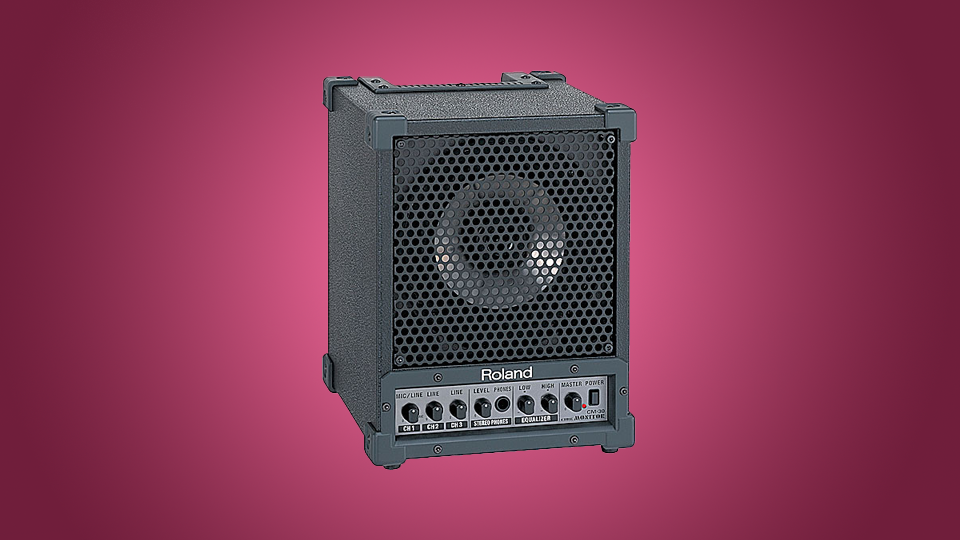
The compact Roland CM-30 Cube is also worth a mention here. It’s equipped with an onboard mixer, three input channels and two additional auxiliary inputs for connecting external music sources. It even accommodates stereo connection should you choose to get two speakers. It may not be enough to fill a large space, but it will probably do the trick in an intimate performance environment.
Portable Compact PA Speakers with Bluetooth
In addition to using your PA to amplify speech, you may also be looking to wirelessly stream audio from your phone or computer. Whether you’re performing music for some friends, or want to play some tunes at a party, the Samson Expedition XP106wDE is an example of a compact model that can pretty much do it all. The built-in rechargeable battery will give you 20 hours of juice, and it even comes with a wireless headset system.
But if you’re a musician looking for something that’s a little more powerful and higher quality, check out the Yamaha STAGEPAS 200BTR. Although it’s small and battery powered, don’t be fooled—it packs a punch. The sound reproduction is clean and the onboard mixer even includes reverb, chorus and delay effects in addition to a feedback suppressor. And like the Samson example above, it has a Bluetooth receiver, allowing you to control the speaker remotely. Use the speaker’s angled stand to make it a floor monitor or mount it on a pole to project into the audience.
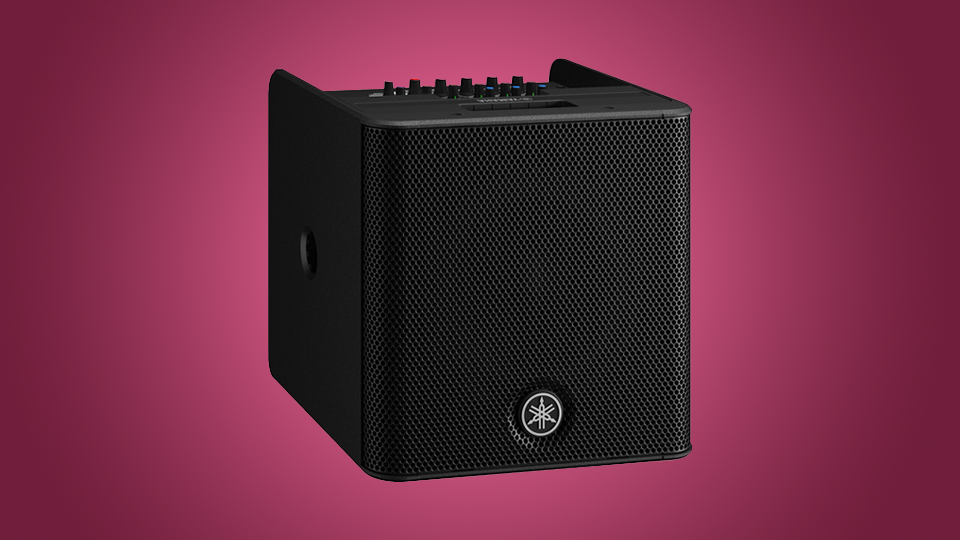
An even bigger seller in this category is the Bose S1 Pro+ Multi-Position PA System, which will cover an event for about 50 people. Not only is it a great sounding speaker that’s easy to use, but it also has some pretty advanced tech packed in like built-in sensors that detect multiple aiming positions—optimizing the sound depending on whether you’re positioning the speaker on a table, the floor or mounting it on a speaker stand.
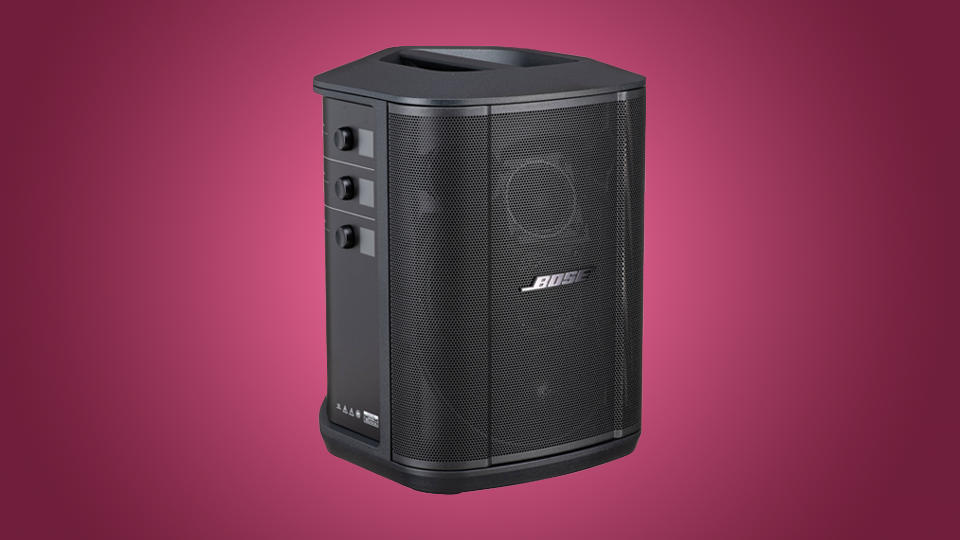
If you’re looking to create a complete PA setup for a medium-sized outdoor party or just need something simple yet great sounding for guitar practice, you can expect this Bose model to give you the precision and clarity that the brand is famous for. You’ll find two channels for mics and instruments, as well as a third channel for Bluetooth streaming or wired auxiliary music sources. The S1 Pro+ also accommodates Bose Wireless Transmitters, which you can store and charge in the speaker enclosure. You’ll get about 11 hours of playtime on one charge, and the speaker is also controllable via the Bose Music app.
Performance for Larger Venues and Events
If you’re playing in bigger spaces for 100 guests or more, you’ll want to start using a pair of larger speakers. Here, you want to start thinking about factors and features such as:
Event Space and Number of Guests
Again, room size and shape might be your main consideration. But equally important is the size of your crowd; even if you’re outside, when you’re playing in a highly populated space, all those people are going to absorb sound. So, the more packed the room is, the more volume you’ll need.
All that said, you shouldn’t just base your purchase on the wattage of a speaker because it doesn’t always dictate volume. Rather, you should pay as much attention to the sensitivity (dB) or efficiency of your PA speaker. A 1500W speaker may output the same volume as a 1000W speaker, if the latter has a higher sensitivity.
Dispersion Patterns
This is basically the direction in which the sound leaves the speaker. Some speakers have broad dispersion patterns in terms of width and height, while others offer narrower coverage. Depending on the positioning of your crowd and the way your PA system is set up you’ll want to think about how wide your sound projection should be. Dispersion patterns are specified in degrees. So, a 90° H x 60° V would mean that sound is 90 degrees wide and 60 degrees high.
The broader the dispersion the more room acoustics might matter, since sound is reflected off walls. Furthermore, if you’re performing in particularly large spaces, you want to ensure you have wide enough coverage to avoid any dead spots or areas with too little volume. These factors probably won’t make or break your performance at a wedding or other casual venue. And we don’t have the space to dig deep into this subject here. But if you’re uncompromising with respect to the quality of your live performance, it’s a good idea to research the topic more in depth.
Ducking Function
This function is especially useful if you plan on MCing at an event that involves both music and speaking. A ducker reduces the volume of one signal when another signal is detected on a certain channel. So, if you’re playing music and then suddenly want to chime in on your mic to say a few words, the volume of the music will decrease to make room for speech.
DSP Processing
DSP stands for “Digital Signal Processing”. In terms of its most practical uses, it can help reduce noise and distortion as well as enhance the dynamic range. It serves a wide variety of functions such as compression, equalization, reverb, delay, limiting and more. So, especially if you’re using your PA speaker for musical performance, a model with built-in DSP can be a helpful tool.
Feedback Elimination
If you’re worried about getting that pesky feedback during your performance, you can opt for a speaker that has the technology to suppress feedback.
Bluetooth, Wi-Fi and Portability
Just as in the compact PA speaker category, these features are available on larger PA systems as well. Many can even be battery powered.
With all these elements in mind, let’s look at a few examples of larger PA speaker examples. We’ve included a column array speaker example in addition to the more classic point source speakers, since column speakers have become increasingly popular for live performance.
Point Source PA Speakers
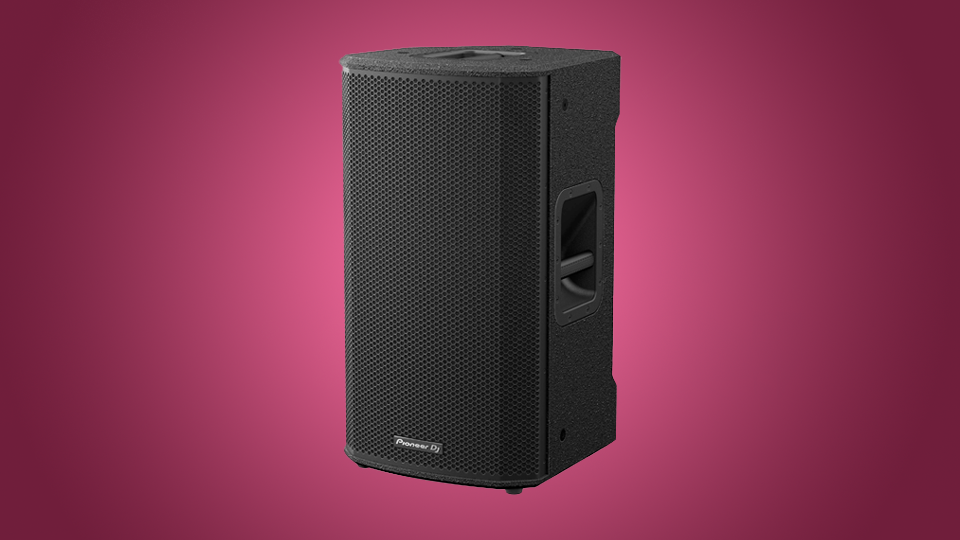
The Pioneer DJ XPRS122 is an example of a 12-inch PA speaker that can deliver more oomph than many larger speakers in its price range. And given its relatively portable size, it’s an especially popular choice for mobile DJs and club performers. It offers three channels with a three-input mixer. One channel features a combo XLR-1/4" connector and gain control for microphone and line levels, while the second channel offers a combo XLR-1/4" Hi-Z and line inputs with level gain control. Channel 3 has a 3.5mm line input and an XLR output sums all channels together for adding extra speakers for broader coverage. You’ll also find various EQ DSP modes including, Live, Music, Speech, and Monitor. The only drawback is that it doesn’t include Bluetooth connectivity.
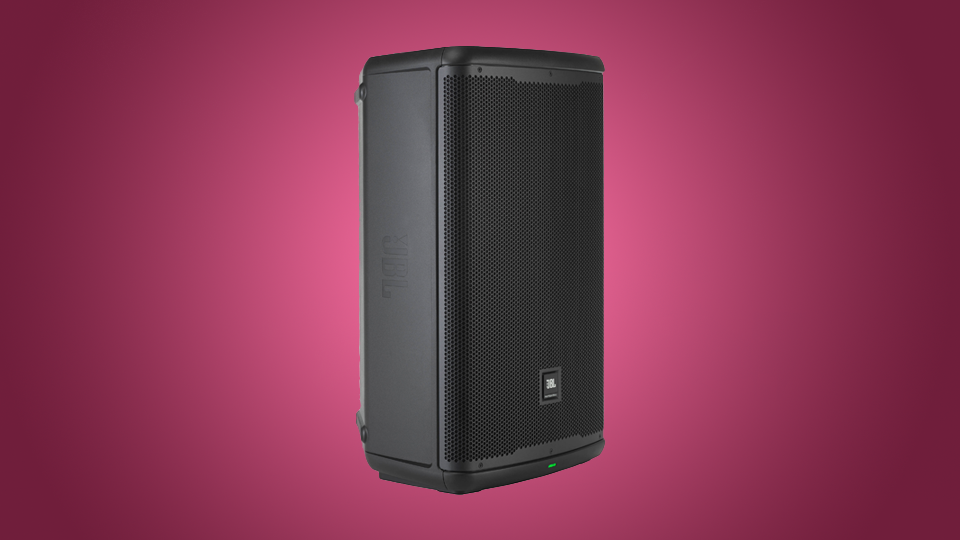
JBL always offers a solid product for reasonable prices and the JBL EON715 is a perfect example. It’s a 15-inch model delivering 1300W of power with a 128 dB Max SPL output, making it equipped to cover an audience of 300. It has DSP with switchable use-case presets. And it features a three-channel mixer as well as Automatic Feedback Suppression. You’ll have two combo XLR-1/4” inputs with gain controls and signal/clip indicators. And the third channel is the Bluetooth input for wireless audio streaming. It also offers an XLR Thru-Output for linking (daisy-chaining) additional speakers or other audio equipment.
Column Array PA Speakers
Column array speakers have the advantage of being able to project sound over a wide area while maintaining a consistent volume level throughout the entire acoustic space. They also minimize the amount of sound hitting the floor and ceiling, making for a more efficient delivery. These types of speakers have been increasingly popular over the last few years, especially amongst DJ’s, not only for their sleek look but for their clean sound and great bass response. But while column array speakers generally sound fantastic, the good ones can be a little pricier.
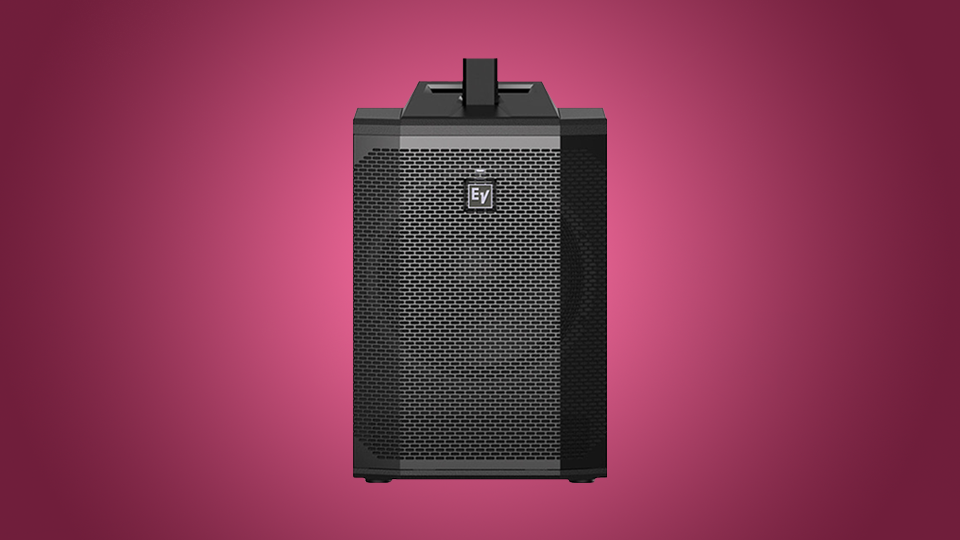
The Electro-Voice EVOLVE 50 is a top-class example of what a column PA speaker can deliver. The kit includes the powered subwoofer, magnetic speaker pole, column array speaker, power cord, and carry bag for the speaker pole and column array. This system features a 1000W amplifier with a maximum SPL output of 127 dB. You’ll find mic and line XLR-1/4" combo inputs, stereo RCA, and 3.5mm aux input jacks, as well as an XLR thru and mix outputs. It also offers DSP functions, including mode presets, a three-band EQ, sub level, and more. In addition, it has Bluetooth functionality for wireless streaming, which can be used for background music or musical accompaniment. Another neat feature is the EV QuickSmart Molbile app, which allows you to wireless control and configure up to six EVOLVE 50 systems at the same time.
The above examples are just a fraction of the plethora of options out there. But once you know what you’re looking for in terms of power, features and functionality, you’ll be well on your way to making the right choice.
For more information about products listed, including additional features, specs, and highlights, be sure to check out our detailed product page for more information. Or drop us a line below, and we’ll do our best to answer all your comments and questions.
