Pro Audio
- Recently Added
- Popularity
- Name
About 245 filtered results

Posted
Recording horns doesn't have to be hard or expensive. Join Andrew in his living room as he demonstrates the basics of recording solo horns and a 3-piece horn section at home. Starting with the humble Shure SM57 all the way up to top-shelf condenser microphones, you'll hear how all these mic types sound on a selection of woodwind and brass instruments.
0:00 - Intro
0:28 - What makes live horns so special?
1:07 - Mic Placement & Gain Levels
2:37 - Shure SM57
3:44 - Other Dynamic Mics
5:26 - Ribbon Mics
7:14 - Condenser Mics
8:44 - Tube

by Freddy Gerngross · Posted
When it comes to converting and amplifying audio, these three terms are often used interchangeably, and to make things more confusing, audio interfaces and headphone amps can have DACs built into them.
But fear not dear reader, we’ve got the info you need to make the right choice! Here’s the rundown of these categories and when to consider them:
DAC (Digital-to-Analog-Converter)
What is a DAC?
A DAC is an audio component that takes the 1s and 0s of a digital audio signal and converts it into an audible analog signal that is coherent to the

Posted
Take the guesswork out of at-home recording. Musician and B&H Social Media Video team member Andrew Swift walks you through the essential techniques for micing both acoustic and electric guitars live.
0:00 - Intro
1:03 - Recording acoustic guitar sound
12:20 - Recording with a dynamic mic
23:32 - Recording with a condenser mic
31:23 - Recording with both a large and small condenser mic
51:52 - Recording electric guitar sound
1:07:06 - Recording with a ribbon mic
1:15:21 - Recording with large condenser & ribbon mic
1:28:48 - Plugins
1

Posted
Andrew takes us through ways to record both electric and acoustic upright bass at home. You'll hear how different DI boxes can subtly change the sound of the electric bass and how to mic a bass amp. For Upright bass, Andrew will share some considerations when using a DI box as well as a nifty trick to mic an upright with a Shure SM57. You'll also hear how both ribbon and condenser mics can make the upright bass sound full.
0:00 - What We're Covering Today
0:29 - How Electric Basses Work
1:03 - Using the Hi-Z/Intrument Input
2:03 - DI Boxes

by Freddy Gerngross · Posted
Perhaps more than in any other creative field, the line between professional and prosumer is the blurriest in pro audio. Just within the last 15 years, the quality of gear that has become financially obtainable by hobbyists and enthusiasts has increased exponentially, from interfaces to

by Freddy Gerngross · Posted
As miraculous as audio recording and reproduction technology must have been for those who witnessed its proliferation during the early 20th century, it remained a broadly rudimentary process until the late 1940s when the adoption of magnetic tape became standard.
Unfortunately, magnetic tape was invented in an extremely tumultuous time and place: German engineer Fritz Pfleumer’s 1927 invention was sequestered away from the world at large for nearly twenty years. When Germany was liberated in 1945, Allied forces were ordered to seize all German

Posted
In this video, Kevin breaks down the dos and don'ts of planning your first recording session at a commercial studio. He'll break down budgets, logistics, and everything you'll need to have the best experience possible.
0:00 - Intro
0:35 - How to Choose the Right Studio for You
2:11 - Pre-Production
3:34 - Understanding Roles
6:03 - Studio Etiquette
6:53 - Budgeting & Pricing Estimates
10:46 - Most Importantly
by Freddy Gerngross · Posted
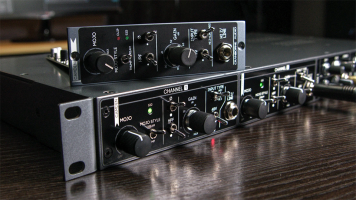
If you're new to the world of audio and are wondering what a mic preamp does and whether you need one for your home studio, you're in luck. We've put this guide together to answer all of your questions.
What Is a Mic Preamp?
The mic preamplifier, or preamp, is a device that increases the voltage of a mic’s outgoing signal so it can be strong enough to be processed by other audio equipment—it takes signal from mic level to line level (often boosting between 30-70 dB). It can also add a user-specified amount of gain to the signal which in turn
Posted
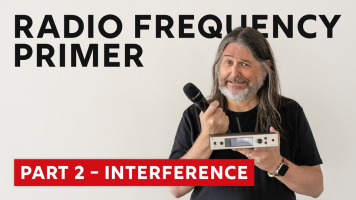
Did you know that wireless units eat their young? Well, not literally but put too many of them in a room together without proper configuration, and it won't sound pretty. In this video, Andrew breaks down what leads to interference and looks at how a spectrum analyzer can help you manage your system to avoid any hiccups during that important show.
0:00 - In This Video
0:31 - Intermodulation Distortion (IMD)
3:11 - How to Troubleshoot
4:31 - How to Use a Spectrum Analyzer
6:23 - Frequency Coordination Demo
Sponsored by

by Steven Esposito · Posted
From understanding sound mixers to advanced audio techniques, Professor Freddy is here to teach you the ins and outs of audio production!

by Freddy Gerngross · Posted
As the democratization of music production continues to propagate, many people have been innovating new production techniques, creating entirely new genres of music, and recording literal chart-topping hits—all from the comfort of their bedrooms. But if you’re just getting started, you might soon realize that the vocal recordings you capture in your bedroom are … less than ideal.
Getting a tight and professional sound from a small bedroom is possible—but it takes planning, preparation, constant rearrangements, and maybe a few bucks here and
Posted
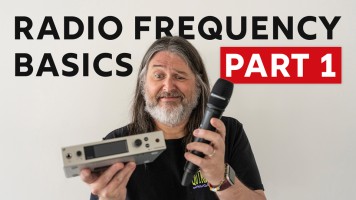
Ever wondered how a wireless microphone can transmit sound without a cable? In this video, Andrew investigates the electromagnetic spectrum and gets to the bottom of how the process of wireless transmission works in Pro Audio applications.
0:00 - What We're Covering
1:16 - The Radio Spectrum
3:33 - Channels
4:12 - Wireless Transmission Systems
5:02 - Radio Transmission Pipeline
7:04 - Modulation
9:38 - Radio Transmission Pipeline Part II
10:19 - Atmospheric Interference
12:11 - Antennas
14:40 - Conclusion

Posted
Welcome to the ABC's of ADSR. Have you ever wondered what these four letters on your synthesizer mean? In this in-depth tutorial, Gabe shows you what envelope generators are and how you can apply them to virtually any module of your synth to shape its sound. No more excuses, it's time to gain ADSR literacy and master the envelope!
0:00 - Intro
1:27 - How ADSR Traditionally Works
3:00 - More Complex Sound Design
4:27 - Demo

by Freddy Gerngross · Posted
Mixing is a polarizing issue. For some, it’s the most exciting part of the music-making process. Others lament it is a necessary evil they wish to avoid at all costs (and often do, at the cost of paying someone else to mix for them).
Regardless of how you feel about mixing, it’s inarguably an important and demanding process, one that requires you skillfully balance science and art—both of which are key components to a great-sounding mix.
In this article, we’ll be focusing more on the science side of things, specifically how to set up your room

by Zach Kornhauser · Posted
With the ever-increasing mobility of music-production equipment, the subject of mixing and mastering on headphones becomes increasingly relevant. While there is no real substitute for mixing and mastering on tuned near- or mid-field monitors in an acoustically treated room, headphones certainly have a role to play in production. Whether for convenience, portability, noise considerations, or other reasons, here are a few ideas to keep in mind when mixing with headphones.
1. Protect your ears
When wearing headphones, recognize that because the