Search results for: photography tips solutions using a shutter release cable
About 19 filtered results
by Todd Vorenkamp · Posted
Do you want to preserve the memory of that awesome neighborhood fireworks show? Let's discuss the best ways to try to make a memorable photograph commemorating the event.
Before we get started, let me say that there are many ways to accomplish fireworks photography and no technique is usually worse or better than others. The only thing that really matters as you head home after the show is:
You enjoyed the photographic process.
You are left with a photograph or photographs that you personally enjoy.
You enjoyed the fireworks show!

by Todd Vorenkamp · Posted
Before you venture out to photograph your first lunar eclipse, you should get some practice taking photos of the moon. If lunar photography is varsity-level stuff, lunar eclipse photography is all-pro. There are some unique challenges to the art, and great ways to get creative results, but the basics of lunar photography apply. Unlike

by Rachel Leathe · Posted
What makes a camera good for landscape photography? In this article, we’ll dive into factors such as megapixel count, sensor size, usability, weather readiness, and design—helping you develop your own personal metric for finding the ideal camera. We’ll help you wade through all the technical mumbo jumbo to figure out what specs really matter, whether you want to capture stunning mountain ranges or shoot star-strewn night skies.
Megapixels
It doesn't get much more basic than megapixels. They're like the atoms of photography. But just how many

by Todd Vorenkamp · Posted
When the moon passes directly between Earth and the sun, those on Earth are treated to one of nature’s greatest spectacles—a total solar eclipse. It is a phenomenon that almost every observer would like to capture in a photograph.
Due to the rarity of the event, the short duration in which to capture it, and the dynamic nature of the subject, it is one of those photographic opportunities that requires the proper gear, setup, planning, and practice.
Eclipse and solar

by Todd Vorenkamp · Posted
For the night photographer, having the right gear can be crucial to a successful photographic outing after dark. When it comes to night photography, there is a list of essential tools that you really cannot live without. Leaving something in the car, or suffering a malfunction of some sort, can ruin your whole night and cause you to miss that amazing shot!
Here is a short list of tools that all night photographers should have at their disposal.
1. Tripod

by Jill Waterman · Posted
Making pictures by night is a curious practice. While specialists of this subject embrace it as a deep-seated passion and have a never-ending quest for technical and creative advancement, those more familiar with daytime photography are often unaware that tried and true photography rules often need to be adapted or even overlooked at night. With this in mind, consider the following tips the next time you venture out in the darkness, to help you to adapt.
1. Take a Chance and Explore the Unknown
What’s my exposure time? This is the number one

by Todd Vorenkamp · Posted
Imagine seeing an incredibly rare bird at a great distance through a spotting scope. Those birding next to you cannot see the same bird. You need to prove to them, and to your own life list, that you have spotted this rare species. It is way too far away for your camera to capture. What can you do? This is a job for… digiscoping!
Digiscoping with a spotting scope, telescope

by Todd Vorenkamp · Posted
So, you just bought a shiny, new, and maybe expensive, lens for your camera, and being the savvy consumer, you did your homework. You pored over customer reviews on the B&H Photo website, read online reviews splattered all over the Internet, grabbed a copy of every photo magazine that reviewed the lens, bookmarked dozens of websites, and now have the lens’s MTF curve charts burned into your retinas.
Now, your lens is here and it is time to go out shooting.

by John-Paul Pale… · Posted
First created in the early 1940s, the Kodak Medalist is a medium-format rangefinder that captures eight 6 x 9 cm exposures using 620 film. Weighing slightly more than 3 pounds, its rugged and durable tank-like build made it an attractive option for the US and British armed forces, and it saw extensive use during World War II. This version was the Medalist I and, in 1947, an improved version, the Medalist II, was released and aimed at the home market. Both versions were highly regarded upon release, and while the Medalist II was discontinued in

by Cory Rice · Posted
Over the past few years, pixel-shift image capture has transformed from a luxury reserved for deep-pocketed specialists to an increasingly common feature on new, resolution-oriented cameras. Today, in addition to Hasselblad’s behemoth Hasselblad H6D-400c, Olympus, Pentax, Sony, and Panasonic offer versions of the technology at much more accessible prices.
While it is advertised under several names (High Resolution Mode,

by Allan Weitz · Posted
As a working photographer, the center of the universe is your camera bag and its contents. Your cameras and lenses are the tools of your trade. As you may have noted, both are mentioned in plural because just as you wouldn’t jump out of an airplane without a backup parachute, you shouldn’t attempt to photograph an emotionally spiked, non-repeatable event armed with only one camera. The same applies to lenses, too. The many aspects that comprise shooting weddings—portraits, the ceremony, dimly lit environs, tight, crowded quarters and bright

by Allan Weitz · Posted
I picked up my first camera in September, 1966. In the five decades since then, I’ve come to understand a number of truisms about the art and craft of picture taking.
The following are 50 tips I’ve compiled, based on my professional and personal experiences shooting with film and digital cameras, ranging from 8mm Minox spy cameras to 20 x 24" studio salon cameras.
My list is broken down into two sections: Basic and Advanced. Some of these tips are obvious, others less so, but they all hold true as guides for better picture-taking habits.
Basic
by Thomas Simms · Posted
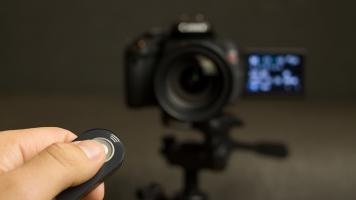
Let’s say you are at an event like a birthday party, a family reunion, or a holiday get-together, and you want a group photo that includes everyone. No one should be left out just because they have to operate the camera and be the acting photographer. So, what are the options for including the photographer in the shot?
Self-Timers
The first option has played out in so many comedic scenes in movies that it seems like a forgone conclusion that it will end in a botched photo.
Setting the self-timer, which comes standard on nearly every camera,

by Allan Weitz · Posted
Sometimes, the phrases, acronyms and strings of numbers or number-letter combinations used to identify photographic hardware or techniques can be daunting to the uninitiated neophyte photographer.
We've prepared a list of the basic terms. Have we left any out that you think should be added? Please let us know!
0-9 | A | B | C | D | E | F | G | H | I |
by Todd Vorenkamp · Posted
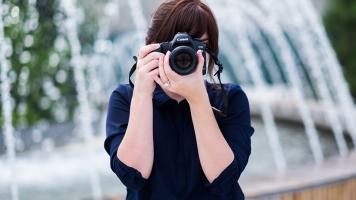
The difference between a sharp photograph and a blurry one might just be in the way you hold the camera, or how you breathe when you depress the shutter release—true statement. Let us talk about proper photographic technique and go over some tips that will help you physically make better photographs.
It is no coincidence that the term “shooting” is often synonymous with making photographs and the sports of shooting firearms or archery. In these disciplines, technique can mean the difference between success and failure. And, because the