Search results for: video history history of motion picture cameras
About 9 filtered results
by Josh Taylor · Posted
Many experienced photographers think of fast moderate telephoto lenses, as “portrait lenses” because so many professional portrait photographers rely on them. Lenses in the 85-105mm focal length range with maximum apertures between f/1.4 and f/2.8 can capture frame-filling headshots and head-and-shoulders portraits at moderate shooting distances, thus minimizing apparent perspective distortion—the dreaded “big-nose effect”—in close-ups. And they deliver very shallow depth of field at their widest apertures, creating compelling pictorial

by Christopher Witt · Posted
Humans’ fascination with the stars is as old as our ability to think and ask questions. For millennia we, as a species, were limited to observing the heavens with just our eyes. Of course, back then we were able to see more because light pollution didn’t exist, but making detailed observations was impossible. The invention of the microscope led to the development of the telescope, which allowed people to finally start exploring the larger universe. As technological advances were made and telescopes got bigger and better, their reach and the

by Jill Waterman · Posted
Typing #food into Instagram's search bar returns more than 450 million posts, making the search for food photographers on this social platform somewhat akin to "shooting fish in a barrel." Yet, while the number of followers to the most popular feeds surpasses the million mark, when it comes to the topic of food, it's a common occurrence for cookbook authors, recipe creators, food stylists, and celebrity chefs to add the term "photographer" to their skill set, thereby magnifying the popularity of this flavorful subject.
To assemble this current

by Steven Gladstone · Posted
Filmmakers, take heed: the Leitz Cine Primes and Zooms are sharp, with natural-looking bokeh and round, out-of-focus highlights, and they cover VistaVision. Lenses, not diamonds—it is lenses that are forever, or at least a long time—provided you get the right one. Even in this digital age, with new sensors and new cameras coming fast and furious, your lens investment can outlast the most recent camera. The lens that
by Shawn C. Steiner · Posted

by Jill Waterman · Posted
Great customer service reigns supreme at B&H as our knowledgeable product specialists help you navigate a vast sea of available options to pick the right gear for your needs. Their product knowledge and passion for practical solutions shine through in every interaction, whether it’s via online chat, by phone, or in person, at our midtown Manhattan store. We recently asked some of our photo, video, lighting, mobile, and surveillance experts for top product suggestions. Here are a few of their favorites.
Above Photograph: Portraits of B

by Allan Weitz · Posted
In the 78 years that Kodak Tri-X has been in existence, there have been finer-grained or faster films available, as well as films with more exposure latitude, better contrast, and even better tonality—but none of them have the signature look and the history of Tri-X.
Tri-X was originally released in 1940 as a 4 x 5" sheet film, followed by 35mm and 120 roll film versions, in 1954. It wasn’t long before the name Tri-X became synonymous with black-and-white
by Allan Weitz · Posted
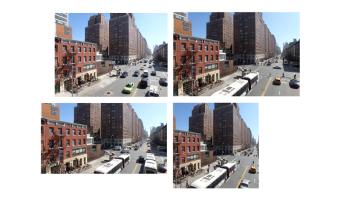
If you ask photographers what they consider important when choosing a camera, the aspect ratio of the sensor seldom enters the conversation. Megapixels? Yes. Sensor size? Yes. Burst rates? Yes. Aspect ratio? Seldom.
Aspect ratios are determined by the form factor of the camera’s imaging sensor, which among consumer cameras are typically 3:2 or 4:3 rectangles. And while photographers weigh the pluses and minuses of MFT, APS-C, and full-frame sensor formats, few photographers care about the actual shape of their camera sensors.
"Aspect ratios

by Shawn C. Steiner · Posted
Point-and-shoots are under attack from every direction. Smartphones are replacing the pocket cameras of old and mirrorless cameras are filling the compact needs of more demanding users. Fortunately, manufacturers are introducing some powerful options that are defending the point-and-shoots’ honor. Many of these all-in-one designs offer capabilities and features that no smartphone or mirrorless can currently deliver. So, right here we rounded up seven of the best that are certain to hold their own in a fight to defend the good name and