Search results for: video lighting video lighting basics how to light your subject
About 18 filtered results
by Rebecca Melville · Posted
When you're a videographer on the move, portability is everything. Whether it's an outdoor action shoot, a multi-location shoot with interviews and b-roll, or a car video that requires riding around a track a few times, the key to building up your videographer kit is a combination of quality, portability, and preparedness. We are going to outline the basics for building your own on-the-go videography kit and suggest some useful products to help you get started.
Choosing a Primary Camera
Depending on your production requirements, the camera you

by Todd Vorenkamp · Posted
Often, we need to add extra light to a scene to ensure we have enough light to create an image, freeze movement, or simply enhance the scene for the sake of the photograph. The primary way photographers do this is by using a flash.
The electronic flash has been around since 1931 and, today, there are several variations—all with different potential uses for the photographer. Here, we will take a quick look at the types, compare them, and discuss the benefits of each type.
Terminology Basics
Before we dive into flash types, let’s get familiar

by Shawn C. Steiner · Posted
Time lapses feel a lot like photography during capture stages and a lot like video during the editing process. Creating them is a common progression for photographers looking to dip their toes into video and motion because you can start making high-quality time lapses with your current still photo equipment. If you are starting to tackle time-lapse projects, applying some video tricks can help smooth out your final product.
The Absolute Basics
I’m hoping that by the time you make it to this article you already have a basic understanding of how

by Cory Rice · Posted
Collecting studio lights can become an addictive vice for the adventurous portrait photographer. Once you realize all that can be done with one light, you will soon want to add another, and another, and another. With each additional light come new techniques and creative possibilities. For portrait photographers, one of the most commonly used multi-light setups is three-point lighting. This tried-and-true approach to

by Jill Waterman · Posted
As described in our companion article that makes up Part 1 of this story, both teachers and students scrambled to face unique challenges and solve unforeseen problems with the sudden shift from face-to-face classes to remote learning in March 2020. Since a new school year is now upon us, we asked a diverse group of educators for updated tips, as well as insights about the online teaching/learning process.
In Remote

by Jennifer Hahn · Posted
In times of transition, such as adding an extension to your business, creating a personal brand, or, especially now, mandatory social distancing during a pandemic, it becomes necessary to connect with friends, clients, or an audience in different ways. Livestreaming video seems fairly easy at its most basic if you're talking to your Mom or a friend on your smartphone, but when, for example, a yoga teacher needs to suddenly transition their classes online or a house of worship needs to reach their congregation, a higher-quality approach may be

by Jennifer Hahn · Posted
ISO can be a sticky subject when it comes to video. It is used in photography when you have a great amount of control over your aperture, shutter, and exposure, and when you understand the lighting of your environment. But when used in video, if used too often, it can be more of an enemy than a friend to your footage. The most controversial setting is auto ISO, causing you to lose control over your ISO setting—and it can have mixed results. However, there are times when auto ISO can be your friend.
What ISO Is and What It Is Not
Technically,

by Cory Rice · Posted
If you are a photographer who shoots on the go and prefers to travel light, artificial lighting is probably not a part of your daily carry. However, there are countless situations where a shot requires more than available light—whether as a primary source or to add fill. Luckily, there are many compact lighting solutions to keep you prepared for these scenarios without weighing you down.
Nikon SB-700 AF Speedlight
On

by tom kirkman · Posted
After posing for a few gigabytes of formals in a hall, you can sense the wedding party’s palpable relief when, weather permitting, it’s time to take it outside. If you’re lucky enough to have nicely landscaped grounds, it’s a great opportunity to stop fighting with the tungsten light sources inside and take advantage of that flash-friendly sunlight.
Whether you’re just starting out as a wedding photographer or a friend asked you to shoot his or her wedding or you’re a seasoned professional, you’ll need some kind of help to maximize your

by Shawn C. Steiner · Posted
Simply put, the DJI Mavic 2 is the best drone in its class. From top to tail, it excels in nearly every category of performance and design. In fact, the closest the Mavic comes to a true rivalry is between its two subclasses, the Pro and the Zoom. This

by Jill Waterman · Posted
Here’s a hot tip: In addition to photo, video, and audio gear, as well as other tech products, B&H carries thousands of books and tutorials covering the fields of photography, video, audio and computers, plus inspirational titles to get your creative juices flowing. For all you bibliophiles out there, we’ve compiled this shortlist of must-have publications spanning photography basics, photo careers, marketing and promotion, business practices, teaching photography, lighting technique, specialty photo subjects, creative inspiration,

by BH Event Space… · Posted
In this B&H Photo Event Space video, photographer, Manfrotto Ambassador, and Sony Artisan Tony Gale explains and demonstrates the basics of “Studio Lighting 101” using Bowens lighting equipment. Gale explains how to use multi-flash lighting setups, how to use reflectors to fill shadows, how (and why) you should light your subject and background separately, and other lighting tricks for beginners and advanced enthusiasts.
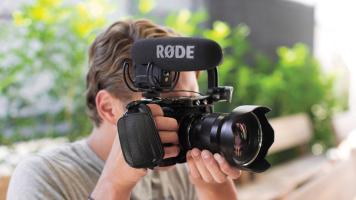
by Shawn C. Steiner · Posted
While you can definitely get by with the same kit you use for your still photography, video adds some additional concerns that require extra equipment. Now that you know a few basics about shooting video, or you should if you read the first part of this series, Getting Started, you will definitely want some of these helpful tools to step up your game.
The essentials
An

by Justin Dise · Posted
Vlogging—or video blogging—is becoming more popular by the day, with seemingly everyone seeking to become the next YouTube sensation. You may be thinking that with the right subject matter and your winning personality, stardom is right around the corner. And who knows—maybe it is! But if you’re really going to give it a go, then you’re going to need a few essential pieces of gear to get your vlogging career up and running, and looking good. I mean, let’s face it: viewers are brutal. Bad audio? Dislike! Lousy video quality? Double dislike! So

by Allan Weitz · Posted
Sometimes, the phrases, acronyms and strings of numbers or number-letter combinations used to identify photographic hardware or techniques can be daunting to the uninitiated neophyte photographer.
We've prepared a list of the basic terms. Have we left any out that you think should be added? Please let us know!
0-9 | A | B | C | D | E | F | G | H | I |