Monopods

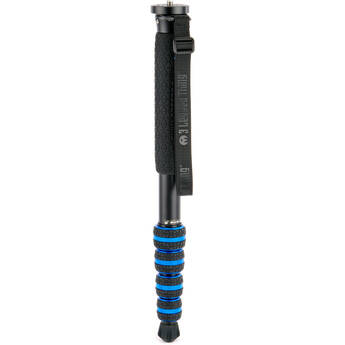
3 Legged Thing Taylor 2.0 5-Section Magnesium Alloy Monopod (Blue)
- Load Capacity: 66 lb
- Maximum Height: 62.2"
- Minimum Height: 17.4"
- Weight: 1.5 lb
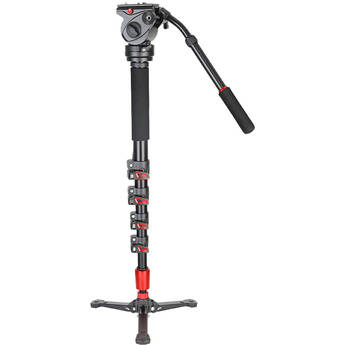
GVM D190 Aluminum 5-Section Monopod with Fluid Head
- Load Capacity: 11 lb
- Working Height Range: 2.4 to 6.2'
- Hydraulic Pan/Tilt Fluid Head
- 5-Section Aluminum Build, Flip Locks
Explorer Photo & Video EX-EXPMONO Expedition Carbon Fiber Monopod
- Load Capacity: 15.4 lb
- Maximum Height: 65"
- Minimum Height: 17.7"
- Sections: 5
iFootage Cobra 3 Aluminum Monopod with Mini Tripod Base
- Load Capacity: 17.6 lb
- Maximum Height: 71.7"
- Folded Length: 27.2"
- 5-Section Aluminum Monopod
Leofoto MP-326C 6-Section Carbon Fiber Monopod
- Load Capacity: 33.1 lb
- Maximum Height: 61.2"
- Minimum Height: 16.3"
- Closed Length: 16.3"
miliboo MTT705BWH Carbon Fiber Monopod Leg
- Load Capacity: 22 lb
- Maximum Height: 65.4"
- Closed Length: 27.6"
- Sections: 4
Vidpro MP-66 VentureMaxx Professional 70" Monopod
- Load Capacity: 45 lb
- Maximum Height: 70"
- Closed Length: 20"
- Sections: 5
MOGOPOD MK III Monopod (Small)
- Maximum Height: 41"
- Collapses to 20"
- Easy Setup
- Detachable Rubber Foot
Benro A48FD Series 4 Aluminum Monopod with 3-Leg Locking Base
- Load Capacity: 44.1 lb
- Max Height: 64.6"
- Closed Length: 22"
- Sections:4
miliboo MQA Aluminum Monopod with MUF Fluid Head Kit
- Load Capacity: 8.8 lb
- Working Height Range: 29.5 to 56.6"
- Closed Length: 29.5"
- 4-Section Flip-Lock Legs
miliboo MTT705A Aluminum Portable Monopod with MYT801 Fluid Head
- Load Capacity: 22 lb
- Maximum Height: 72.6"
- Closed Length: 30.3"
- Sections: 4
Benro MSD36C SupaDupa Carbon Fiber Monopod (64.9")
- Load Capacity: 88.2 lb
- Working Height Range: 16.6 to 64.9"
- Closed Length: 16.6"
- 3/8"-16 to 1/4"-20 Spring-Loaded Mount
Manfrotto 290 Carbon Fiber Monopod
- Load Capacity: 22 lb
- Max Height: 59.4"
- Closed Length: 19.3"
- Sections: 4
miliboo MQB Carbon Fiber Monopod with MUF Fluid Head Kit
- Load Capacity: 8.8 lb
- Working Height Range: 29.5 to 56.6"
- Closed Length: 29.5"
- 4-Section Flip-Lock Legs
Leofoto MPQ-325C Premium Carbon Fiber Monopod with Case (Red)
- Load Capacity: 33 lb
- Working Height Range: 18.6 to 65"
- 5 Leg Sections
- Waterproof Twist Leg Locks
Leofoto MPQ-325C Premium Carbon Fiber Monopod with Case (Olive Green)
- Load Capacity: 33 lb
- Working Height Range: 18.6 to 65"
- 5 Leg Sections
- Waterproof Twist Leg Locks
Leofoto MP-364C 4-Section Carbon Fiber Monopod
- Load Capacity: 44.1 lb
- Maximum Height: 66.9"
- Minimum Height: 21.5"
- Closed Length: 21.5"
Leofoto MPQ-325C Premium Carbon Fiber Monopod with Case (Black)
- Load Capacity: 33 lb
- Working Height Range: 18.6 to 65"
- 5 Leg Sections
- Waterproof Twist Leg Locks
Sunwayfoto M3650C 5-Section Carbon Fiber Monopod
- Load Capacity: 22 lb
- Working Height Range: 19.7 to 67.7"
- Folded Length: 19.7"
- 5-Section Carbon Fiber Legs, Twist Locks
Benro MAD38C Adventure Series 3 Carbon Fiber Monopod
- Load Capacity: 35.3 lb
- Maximum Height: 62.4"
- Closed Length: 20.7"
- Sections: 4
Tiltall Tripod MP-284C 4-Section Tubular Monopod (Carbon Fiber)
Neewer TP71 Pro Carbon Fiber Camera Monopod (71.6")
- Load Capacity: 13.2 lb
- Working Height Range: 24.8 to 71.6"
- Folded Length: 28.3"
- 4-Sections with Flip-Lock Joints
CAME-TV TP-MQB Carbon Fiber Monopod with Pivoting Foot Stand and Fluid Head
- Load Capacity: 11 lb
- Maximum Height: 57"
- Closed Length: 24.4"
- Sections: 4
iFootage Cobra 2 A180-II Aluminum Monopod with Low-Profile Tripod
- Load Capacity: 17.6 lb
- Maximum Height: 70.9"
- Closed Length: 27.8"
- Sections: 4
MOGOPOD MK III Monopod (Medium)
- Maximum Height: 62"
- Collapses to 27"
- Easy Setup
- Detachable Rubber Foot
Vanguard Aluminum Monopod with Tri-Feet and VEO BP-50T Ball Head
- 24 to 65" Height Adjustment
- Arca-Type Quick Release Plate
- QR Plate Converts into Smartphone Holder
- 17.6 lb Payload
Acebil MP-60V(T) Monopod with Fluid Head and Floor Stand Kit
- Load Capacity: 8.8
- Maximum Height: 70.9"
- Folded Length: 28"
- Weight: 3.9 lb
Acebil MP-285C Professional Photo Carbon Fiber Monopod
- Load Capacity: 18 lb
- Max Height: 68.2"
- Closed Length: 18.5"
- Sections: 5
Learning About Monopods
Monopods provide support for cameras and help photographers steady their shots. They also help take the weight off heavy cameras and long lenses. This benefit reduces fatigue after long shooting sessions. While similar to selfie sticks and extension shooting poles, they’re usually sturdier, and meant to rest on the ground.
What's a Camera Monopod?
Also known as a unipod, this one-legged support is also a collapsible pole. This photography accessory steadies a mounted camera by eliminating vertical motion. Leaning it against solid objects, such as a wall, turns the single-leg pole into a makeshift bipod that also dampens shakiness in the horizontal axis. Stabilizing cameras in this way eliminates blurry shots. The best monopods for video capture also reduce jerkiness in footage. By serving as a stable platform, a unipod makes it easier to shoot sharp images and videos at slow shutter speeds and with long-focus lenses.
How Do Monopods Compare to Tripods?
They’re lighter and more compact than tripods, and better suited for on-the-go photography. They’re also easier to pack when traveling, and ideal for outdoor photography. Sports and wildlife photographers who spend a lot of time shooting in one place choose unipods for these reasons. Some of the best monopods also double as walking and hiking sticks. These trekking poles have capped and threaded tops that fit monopod heads.
A monopod is easier to deploy than a tripod. With three legs to spread out, setting up a tripod takes longer. Therefore, unipods are better for quick action shots. However, having three legs make tripods more stable. This design locks cameras firmly in one position and makes tripods better for studio and time-lapse photography.
How to Choose a Monopod
The three key features to consider are weight capacity, height, and construction. The most common materials used for camera monopods are aluminum and carbon fiber. Aluminum is the more affordable option. It’s a strong, lightweight metal. Carbon fiber is a tough material that’s also strong, lightweight, and durable. A monopod’s weight rating is the maximum weight it can bear without buckling. Choose one with a higher rating than the combined weights of your biggest camera, lens, and battery grip. Consider those with the highest weight capacities when looking for monopods for DSLR cameras.
Look for a unit with a maximum height that puts its top at your eye level. You may also consider the pole’s folded length to determine whether it’s short enough to go in your camera bag. The monopod head is another feature to consider. Besides flat heads, the most common ones are ball, fluid, and pan-and-tilt. Ball heads add flexibility and allow you to point your camera wherever you'd like. Pan-and-tilt heads allow multi-axis movements. Fluid heads are perfect for video monopods, as they enable smooth moving shots by providing fine control over pan and tilt.
Get a monopod to keep your camera steady, and to support heavy photography equipment. Check the wide selection at B&H Photo and Video to find the perfect monopod for your cameras and lenses.