Wireless Access Points

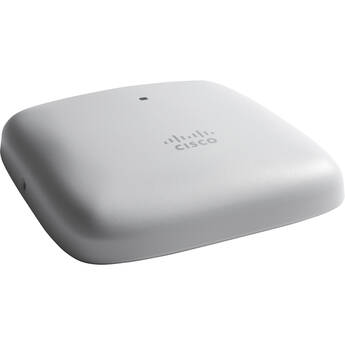
Cisco Business 240AC Dual-Band Wireless Access Point
- Wi-Fi 5 (802.11ac) Wave 2
- Up to 2333 Mb/s Throughput
- 2.4 GHz / 5 GHz (Dual-Band)
- Internal Omnidirectional Antennas
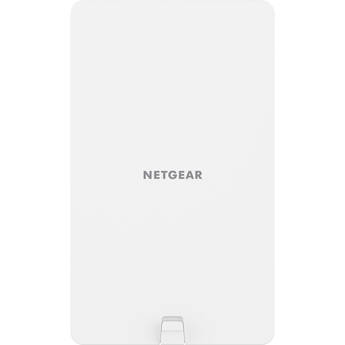
NETGEAR WAX610Y AX1800 Dual-Band PoE-Compliant Cloud Managed Outdoor Access Point
- Wi-Fi 6 (802.11ax)
- 1 x 2.5 Gigabit Ethernet Port
- PoE-Compliant
- IP55 Rated for Outdoor Use
HPE Networking Instant On AP25 Dual-Band Access Point with 12V Power Adapter
- Wi-Fi 6 (802.11ax) Standard
- Supports 2.4 GHz & 5 GHz (Dual-Band)
- Up to 5374 Mb/s Throughput
- Includes 12V / 18W Power Adapter
eero PoE 6 Dual-Band Wi-Fi 6 Access Point
- Wi-Fi 6 (802.11ax)
- Up to 1.6 Gb/s Throughput
- 2.4 GHz / 5 GHz (Dual-Band)
- 1 x Auto-Sensing 2.5G Ethernet PoE Port
HPE Networking Instant On AP21 Dual-Band Wi-Fi 6 Access Point (3-Pack)
- Wi-Fi 6 (802.11ax)
- 2.4 GHz / 5 GHz (Dual-Band)
- Up to 1500 Mb/s Throughput
- Gigabit Ethernet PoE+ Uplink Port
Ubiquiti UAP-AC-HD-US Wave 2 Enterprise Wi-Fi Access Point
- 802.11ac Wave 2 Wi-Fi Standards
- 2 x 10/100/1000 Ethernet Ports
- 4x4 Spatial Streams
- UniFi Controller Software
TP-Link Dual EAP773 BE11000 Tri-Band Wi-Fi 7 Access Point Kit
- Wi-Fi 7 (802.11be)
- Up to 10,654 Mb/s Throughput
- 2.4 GHz / 5 GHz / 6 GHz (Tri-Band)
- 1 x 10G Ethernet PoE+ Port
Cambium XV2-2X Dual-Band Wi-Fi 6 Access Point
- Wi-Fi 6 (802.11ax)
- Up to 1774 Mb/s Throughput
- 2.4 GHz / 5 GHz (Dual-Band)
- 6 dBi Internal Antennas
HPE Networking Instant On AP21 Dual-Band Wi-Fi 6 Access Point (5-Pack)
- Wi-Fi 6 (802.11ax)
- 2.4 GHz / 5 GHz (Dual-Band)
- Up to 1500 Mb/s Throughput
- Gigabit Ethernet PoE+ Uplink Port
HPE Aruba Networking AP-505 2x2 MU-MIMO 802.11ax Wireless Dual-Band Access Point
- Wi-Fi 6 (802.11ax)
- Up to 1874 Mb/s Throughput
- 2.4 GHz / 5 GHz (Dual-Band)
- 2 x 5.7 dBi Internal Antennas
Ubiquiti UAP-AC-PRO-5 UniFi Access Point Enterprise Wi-Fi System (5-Pack)
- 802.11 a/b/g/n/ac Wi-Fi Standards
- Range of up to 400'
- 2 x 10/100/1000 Ethernet Ports
- UniFi Controller Software
HPE Networking Instant On AP22 Dual-Band Access Point with 12V Power Adapter (5-Pack)
- Wi-Fi 6 (802.11ax) Wi-Fi Standard
- Supports 2.4 GHz & 5 GHz (Dual-Band)
- Includes 12V / 18W Power Adapter
- Up to 1774 Mb/s Throughput
RUCKUS Networks R650 AX2580 Dual-Band Wi-Fi 6 Access Point
- Wi-Fi 6 (802.11ax)
- Up to 2574 Mb/s Total Throughput
- 2.4 GHz & 5 GHz (Dual-Band)
- 2.5G & 1G PoE+ Ethernet Ports
NETGEAR WBE758 BE18400 Tri-Band Wi-Fi 7 Access Point
- Wi-Fi 7 (802.11be)
- Up to 18.4 Gb/s Throughput
- 2.4 / 5 / 6 GHz (Tri-Band)
- 1 x 10G Ethernet PoE++ Port
RUCKUS Networks R670 BE9340 Tri-Band Wi-Fi 7 Access Point
- Wi-Fi 7 (802.11be)
- Up to 9.34 Gb/s Total Throughput
- 2.4 GHz / 5 GHz / 6 GHz (Tri-Band)
- 5G & 1G PoE++ Ethernet Ports
TRENDnet TEW-832MDR AC1200 Dual-Band Wi-Fi EasyMesh Remote Node
- Wi-Fi 5 (802.11ac)
- 1 x Gigabit Ethernet LAN/WAN Port
- 1 x Gigabit Ethernet LAN Port
- Up to 1167 Mb/s Throughput
EDIMAX Technology N300 Mini Wi-Fi Extender
- 802.11b/g/n Wi-Fi Network Standards
- Up to 300 Mbps
- 2.4 GHz Operating Frequency
- 2 x Internal Antennas
Ubiquiti airCube Wireless-N300 Wi-Fi Access Point
- 802.11n Wi-Fi Network Standard
- Up to 300 Mbps Wi-Fi Data Throughput
- 2.4 GHz Operating Frequency
- Internal High-Gain Antennas
Grandstream GWN7603 Wave-2 Wi-Fi 5 Access Point
- Wave-2 Wi-Fi 5 IEEE 802.11
- 1.27 Gb/s Throughput
- Up to 328 Foot Coverage
- Supports 100+ Concurrent Wi-Fi Devices
TP-Link Festa F41-Outdoor N300 Single-Band Wi-Fi 4 Access Point
- Wi-Fi 4 (802.11n)
- Up to 300 Mb/s Throughput
- 2.4 GHz (Single-Band)
- 2 x Detachable Antennas
MikroTik mAP Single-Band Wi-Fi Access Point
- Wi-Fi 4 (802.11n)
- Up to 300 Mb/s Throughput
- 2.4 GHz (Single-Band)
- 2 x 10/100 Mb/s RJ45 Passive PoE Ports
MikroTik hAP ac lite TC AC750 Dual-Band Wi-Fi 5 Access Point
- Wi-Fi 5 (802.11ac)
- Up to 733 Mb/s Total Throughput
- 2.4 GHz / 5 GHz (Dual-Band)
- 5 x 10/100 Mb/s Ethernet Ports
TRENDnet TEW-755AP N300 PoE Access Point
- 802.11b/g/n Wi-Fi Network Standards
- 2.4 GHz Operating Frequency
- 1 x Gigabit LAN Port
- PoE Compliant
Ubiquiti airMAX NanoStationlocoM 2.4 GHz Indoor / Outdoor CPE Access Point
- 2.4 GHz Operating Frequency
- 1 x 10/100 Ethernet Port
- 8.5 dBi Antenna Gain
- Supports Point-to-Multipoint Setup
Selecting Wireless Access Points (Wireless AP)
Wireless access points are available in different styles, multiple functions, and for a variety of devices. Access points work in combination with your devices to give them the best wireless network speeds and connections. For instance, computers and gaming systems use wireless network adapters and cards to connect to LANs, but benefit from the faster speeds that Wi-Fi access points create.
What Are Wireless Access Points?
Wireless access points (WAPs) allow Wi-Fi- and Bluetooth-enabled devices to connect to local area networks (LANs). WAPs come in three main forms: embedded nodes, cards and adapters, and stand-alone hardware. WAPs are also available with built-in wireless bridges, so users can switch bridging capabilities on or off as needed. Bridges allow you to connect your wireless network to any device attached to the bridge. While wireless bridges and WAPs are similar, WAPs create usable wireless signals from wired LANs and bridges only connect separate networks.
What's the Difference Between a WAP and a Router?
Routers once required separate access point hardware to support wireless connections. A wireless router has Wi-Fi access point technology built into the device, which allows a wireless connection to your LAN. A Wi-Fi router performs AP functions, but a WAP alone doesn't have the capability to transmit data packages to LANs or wide-area networks (WANs), so it can't function like a wireless router.
Options for Wi-Fi Access Point Hardware
Wi-Fi access points are available in indoor and outdoor, standard and dual band, and in several shapes and sizes. Outdoor wireless access points stand up to the harshest weather conditions and have strong antennas that offer gigabyte speeds at various distances. The reach of WAP signals depends on the device you choose. In general, a dual-band access point offers farther coverage than single-band. Another option for boosting wireless signals is a wireless range extender which creates a separate SSID to expand a wireless router's signal coverage.