Search results for: audio tips solutions how to connect audio gear
About 12 filtered results
by Todd Vorenkamp · Posted
Imagine seeing an incredibly rare bird at a great distance through a spotting scope. Those birding next to you cannot see the same bird. You need to prove to them, and to your own life list, that you have spotted this rare species. It is way too far away for your camera to capture. What can you do? This is a job for… digiscoping!
Digiscoping with a spotting scope, telescope

by Shawn C. Steiner · Posted
Whether you want a professional look for your livestreams or simply to look better on your next video chat, one of the best options is to use a dedicated camera with excellent video specs—such as your Sony Alpha mirrorless or Cyber-shot point-and-shoot camera. You will need a few key accessories to make it happen, but the benefit is well worth it.
Why Use a Sony Camera Instead of a Webcam?
The main reason you want to use a Sony camera over a webcam is for the

by Jill Waterman · Posted
Immersive content is the next wave in visual storytelling. Interest in 360° Video has grown by leaps and bounds in the past few years, particularly given technological advances that have made the process more available to consumers than ever. Yet, this rapid growth and the proliferation of new tools can make it difficult to keep up with the best approach to creating quality content, especially for those lacking a media background. Therefore, we were eager to attend the inaugural NY VR Expo 2017, held at New York’s Jacob Javits Center from
by Phillip Nichol… · Posted
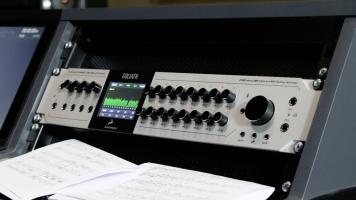
So, you want a new audio interface, eh? It’s not like the old days when there were only a few options. Now, there are a bunch of brands such as Apogee Electronics, Antelope, Audient, Focusrite, MOTU, PreSonus, Universal Audio, and Waves, and each manufacturer normally has several interfaces in its product line. You don’t want to buy something that will be insufficient for the work you do, nor do you want to spend too much money on something that is far more than you need. So, how do you pick one? It all starts with asking yourself the right
by Andrew Eisele · Posted
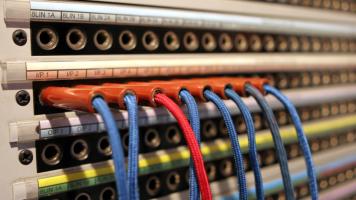
There are so many items deemed a necessity in setting up and operating a studio. From high-quality audio interfaces to dynamic and time-based signal processing, your studio is an ever-evolving eco-system. The patchbay is a ubiquitous piece of hardware that many project studio owners don’t think they need, but then discover how incredibly helpful it can be. The carefully designed implementation of a patchbay can save you time and frustration when adding gear or changing the signal flow of your equipment. If you’ve ever had to crawl around the

by Phillip Nichol… · Posted
In Part 1 of the Upgrade Now or Later series, we looked at some potential problems and rewards when upgrading software. In Part 2, the focus will be on changing and upgrading hardware, which could be analog, digital, or both. There is something uniquely satisfying about getting new hardware. The excitement tied to unboxing a glorious new THING seems to be encoded in our DNA. It doesn’t matter if that thing is a gift or a

by Nicholas Messitte · Posted
When I first started mixing, I had an interface and a pair of monitors, but something didn’t sound right. The audio wasn’t as loud, full, and rounded as I knew it could be. I did some research, and it seemed my connections were mismatched: My interface sported unbalanced outputs, while the monitors boasted balanced inputs. Herein lay the problem, right?
Right—but also wrong. As it was explained to me by the pro-audio dealer, the primary problem turned out to be a matter of signal level (-10 dBV versus +4 dBu). Balanced versus Unbalanced

by Andrew Eisele · Posted
I’ve spent the past decade producing events and DJ’ing in a variety of environments. From boat parties to the high desert, I’ve learned some valuable lessons along the way. It doesn’t matter what type of equipment you use, or how experienced you are. If you are heading out to play a gig, make sure you have everything you need. There’s nothing worse than showing up to an event only to find that the promoter didn’t follow through on the technical rider, or the sound engineer has only one RCA cable that’s being held together by electrical tape.
by Steven Gladstone · Posted
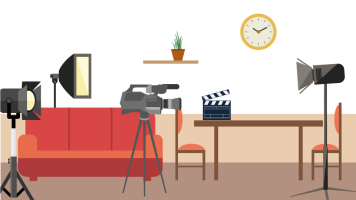
Whether you are working on a narrative, webisode, documentary, or commercial, at some point you are going to end up shooting in an unfamiliar location. Being prepared will improve your shoot and the chances that you will be allowed to return. There are many things to consider when shooting on location, and they will vary depending on the kind of location, so consider these few suggestions a starting point. If you’ve got some of your own to add, please share them in the Comments section—we are all in this together, after all. For the purposes
/explora/tag/17486
/explora/tag/17491

by Allan Weitz · Posted
Sometimes, the phrases, acronyms and strings of numbers or number-letter combinations used to identify photographic hardware or techniques can be daunting to the uninitiated neophyte photographer.
We've prepared a list of the basic terms. Have we left any out that you think should be added? Please let us know!
0-9 | A | B | C | D | E | F | G | H | I |

by jaime traba · Posted
Poor audio! While many tout the mantra that sound is half your film or broadcast, budgetary constraints can relegate sound to an afterthought—unfortunately, often to the peril of your project’s quality. While getting your sound captured correctly can be a daunting task, especially to the audio-uninitiated, you fortunately already have a powerful tool right in your pocket. No, not your wallet—your other pocket.
The iPhone has evolved from a straightforward portable communication device to a powerful, portable computer, capable of much more than

by Sam Mallery and Nicholas Messitte · Posted
Nowadays, many people are using portable digital recorders like the Zoom H4n, Zoom H6, or Tascam DR-40X to record the audio during video shoots with DSLR/mirrorless cameras. Now you need some real-world advice about using this