Search results for: how to guides
About 102 filtered results
by Mathew Malwitz · Posted
Recording work and data in the form of thousands of pictures or hours of video is made possible by compact memory cards. These devices are the standard for photo and movie storage, saving and protecting your files until you can transfer them safely to a more permanent home on your computer or external hard drive. They are available in an array of different types, with a broad range of capacities and data-transfer

by Todd Vorenkamp · Posted
If you are stranded on a desert island and can only have one camera lens with you, which lens would you choose? That may depend on your specific area of expertise, but for the average photographer, the 50mm focal length is an essential tool to have in your kit. The 50mm prime lens, or “Nifty Fifty,” features a field of view close to that of the human eye, and delivers exceptional image quality, subject isolation, and background rendering, all in a compact package.
The Origin of the “Nifty Fifty”
In the bygone era of film SLR photography, many

by Mathew Malwitz · Posted
Wildlife photography is one of the most therapeutic and rewarding genres of photography and it’s also one of the most popular. There’s just something so special about being able to witness the magic, and with new camera tech, wildlife photography is easier than ever. That said, the thrill of the shot can overshadow good decision-making, leading to unethical practices. But what are ethical practices?
Take nothing but photographs, leave nothing but footprints—an adage well-known by nature enthusiasts of all levels, but not all that practical.
by Mathew Malwitz · Posted
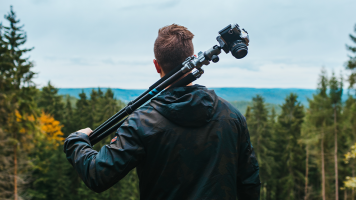
As complementary as peanut butter is to jelly, the camera and tripod are an age-old pairing that still manages to maintain relevance and unmatched functionality in a world dominated by image stabilization and Photoshop tricks. While the form and function of a tripod is far simpler to understand than the scrolling menus of today’s feature-packed cameras, it can still be a chore to choose the right setup for your needs from among a sea of manufacturers and seemingly comparable models.
Now, what’s the big deal with tripods? Most photographers

by Mathew Malwitz · Posted
Traveling with camera gear can be a daunting experience, especially as we start expanding our arsenal of lenses. Picking the right lens for the job is a challenge in itself, and now we’re finding the space to pack it among our clothes, and other essentials. Wouldn’t it be nice if we had one lens to do it all?
Luckily, such lenses do exist, and these travel-ready all-in-one zooms come in a variety of mounts, some brand specific, and others available for many different cameras. In today’s guide, we’re covering the best travel zooms for APS-C or

by Freddy Gerngross · Posted
As the democratization of music production continues to propagate, many people have been innovating new production techniques, creating entirely new genres of music, and recording literal chart-topping hits—all from the comfort of their bedrooms. But if you’re just getting started, you might soon realize that the vocal recordings you capture in your bedroom are … less than ideal.
Getting a tight and professional sound from a small bedroom is possible—but it takes planning, preparation, constant rearrangements, and maybe a few bucks here and

by Mathew Malwitz · Posted
For a beginner, few things seem more intimidating than photographing a wedding. A sense of anxiety is perfectly normal if you haven't yet spent much time in this field. It's important to remember that we all begin somewhere, and even the most experienced pros were also novices at one point. With practice and education, nerves begin to morph into confidence.
No two weddings are the same, but whether traditional or unconventional, the goal is to be properly equipped to document the key moments of the day. A

by Mathew Malwitz · Posted
Printing your work can be a very satisfying experience. The level of control you have when you do it yourself is unmatched and can be extremely rewarding. There's also the feeling of holding one of your photographs in your hand, which just can't be beat. Especially when compared to looking at them on a small smartphone screen.
Many choose to stick with classic glossy or matte photo papers, which are the perfect solution for most of your images. That said, there are unique, textured papers more reminiscent of the thicker papers of old. These
by Mathew Malwitz · Posted
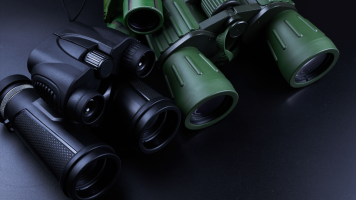
You see a flutter of color outside of your kitchen window. You rush over, only to see this mystery critter as a distant speck working its way through the dense shrubs of your yard—it's just too far and too obscure to make it out. What do you do? Do you shrug it off and go about your day, or do you grab a pair of binoculars to get a closer view?
We know what our answer would be, and we feel that nearly every household could use a trusty pair of binoculars, also called "bins" for short. Whether it's for bird watching, sporting events, the opera,

by Mathew Malwitz · Posted
Who doesn’t love a close-up shot of a flower or bumble bee? Some of the most beautiful aspects of nature are quite small and require special tools to capture them in a meaningful way. Whether it be of a cute little insect visiting our garden, or miniature figurines you paint and sell, we need a camera that can focus close and deliver good, quality results.
Before you panic, hear us out. We don’t need to get carried away with complicated lenses and accessories, and can just enjoy yourself with a simple compact,

by John Harris · Posted
It would be foolish to claim that there is only one way to take a portrait, but there are some accepted norms and basic camera settings that you should understand if portraiture is to become your area of photographic interest. Remember though, as you walk down your creative path, that a portrait is more than a headshot, more than a beautiful photo of your subject; it is an opportunity to get to know someone, to have a visual conversation with a person, and to use your photographic skills to pass that understanding of the person on to the

by Bjorn Petersen · Posted
When assembling a kit of lenses for photographing a wedding, one should take into consideration the location in which the wedding is taking place, the number of guests and, of course, the type of imagery you are seeking to create. To best represent a wedding in a dynamic manner, it is often preferable to have a range of lenses to achieve different perspectives of the event, rather than maintaining a constant perspective of your subject matter. A wide-angle lens, specifically, is a highly effective tool for capturing many of the scenes that

by Shawn C. Steiner · Posted
Pop on a pair of (decent) sunglasses and not only are your eyes less strained, things just look better. The reason for this is likely the polarization effect. Colors may appear more saturated, bright blue skies can take on a deeper hue, and some pesky reflections just vanish. All of these can benefit certain photographs and make the circular polarizer filter one of the best—and most difficult—filters to use.
Exactly What Does a Polarizer Do?
It’s

by Todd Vorenkamp · Posted
There is nothing that can replace the extreme close-up view of a rare bird in the wild. Binoculars can get you close but, if you want to look the bird in the eye or confirm that identification for your life list, you need a spotting scope. Spotting scopes pack incredible magnification in a generally simple and lightweight package that is

by Todd Vorenkamp · Posted
Taking a look at any modern mirrorless or DSLR camera, you’ll notice a slew of controls, buttons, and dials. Atop nearly all cameras sits a large dial labeled with many letters and icons. This is our mode dial. It is how we control the level of power we give to our camera or take for ourselves.
One of the wonderful things that modern electronic digital and film cameras give you is many high-tech options for your image making. One of the horrible things that modern electronic digital and film cameras give you is many high-tech options for your