Search results for: lighting buying guides video lighting buying guide
About 163 filtered results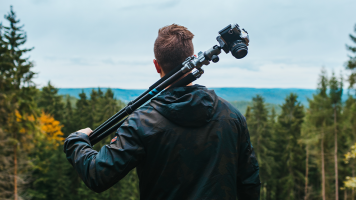
by Mathew Malwitz · Posted
As complementary as peanut butter is to jelly, the camera and tripod are an age-old pairing that still manages to maintain relevance and unmatched functionality in a world dominated by image stabilization and Photoshop tricks. While the form and function of a tripod is far simpler to understand than the scrolling menus of today’s feature-packed cameras, it can still be a chore to choose the right setup for your needs from among a sea of manufacturers and seemingly comparable models.
Now, what’s the big deal with tripods? Most photographers

by Roberto Bayde · Posted
Projectors have skyrocketed in popularity in recent years, including among college students—many of whom have ditched traditional TVs for the portability and pristine picture quality projectors better afford. Here are some of our favorite projectors for college students.
NEBULA BY ANKER P1 Portable Projector
If you’re rooming outside of campus and have access to much more space than the

by Mathew Malwitz · Posted
Let's face it: smartphone cameras are not the vibe anymore. What we want is a dedicated point-and-shoot camera, whether it be a classic hand-me-down model from the early 2000s or a more current spec'd out model with modern bells and whistles. These small point-and-shoot cameras may be made for travel but they excel in some scenarios more than others.
In today's guide, we're covering just a few of the best travel-friendly

by Mathew Malwitz · Posted
Dental photography is a unique genre of photography that requires a specialized set of tools to deliver the clarity, brightness, and color accuracy dentists rely upon to accurately record their patients’ progress.
In this guide, we’re going to cover the essential tools dental professionals need to capture the best quality images of their work, from the camera itself to the lighting tools required to accurately capture the color and detail of those pearly whites.
The Camera
Of course, one could use almost any camera, so long as it produces

by Jennifer Hahn · Posted
In a recent Explora article, we went over the basics of media servers for in-camera virtual effects (ICVFX) and virtual production (VP), describing these beefy machines for media playback and distribution to LED processors for LED walls and volumes. A VP media server can be a custom hardware solution or software installed on an off-the-shelf machine, but either type needs to have a

by Zack Young · Posted
Many budding filmmakers have toiled away on the color correction and grading of their first masterpiece, watched it over countless times, hit the export button, pulled it up on a TV, and been shocked. "This looks nothing like I was expecting. The colors! The contrast! The saturation!" Although there's no universal fix for differences in how devices display an image, the most common culprit of these headaches is

by Mathew Malwitz · Posted
The new school year is nearly upon us, which means it’s time to start stocking up on necessary gear and supplies. For film and photo students, that means finding the camera and gear that’s right for you.
Generally, schools require a DSLR or mirrorless camera with detachable lenses and full manual controls. Far from the smartphone or point-and-shoot pocket camera many of us are used to. To help you get the perfect tool, we’ve put together a list of some of our favorite cameras broken down into four categories:
Best Overall Cameras
Best Mid
by Mathew Malwitz · Posted
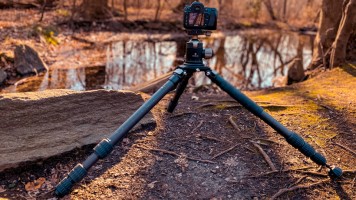
Love them or hate them, tripods are an essential piece of the photography puzzle. They allow us to capture images that would otherwise be impossible to create, whether it be due to low light or long exposures where keeping our camera motionless is essential. Even in bright daylight, tripods aid us in producing sharper images, all while freeing our hands to do other tasks.
Choosing a tripod is a highly personal choice, and there are many considerations we should take

by M. Brett Smith · Posted
The best home theater setup for watching sports offers premium image quality (even in bright viewing areas), excellent motion handling (for keeping up with all the fast-paced action), and killer sound quality for a truly immersive viewing experience.
Seating Capacity
When shopping home theater equipment, one of the most important things to keep in mind is the size of your viewing space and the

by Mathew Malwitz · Posted
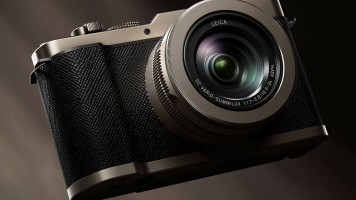
When it comes to choosing the right camera, there’s often a gap between the small, pocketable point-and-shoot cameras and larger mirrorless ones. While interchangeable lens mirrorless cameras have much to offer, their higher price points and larger form factor often make them unfeasible for the average photo enthusiast. It often leads to the question of how a photographer can bridge that gap.
Enter the aptly named
by Mathew Malwitz · Posted
After the smartphone revolution, it appeared that the days of the compact camera were done. How wrong we were. It’s true that a few years back, point-and-shoot options were few and far between. There were just a handful of options on the market, and some industry titans even left the market entirely. Despite the long-rumored demise of the compact camera, it seems that photo enthusiasts still desire a dedicated device without the distractions that come with a smartphone.
What is a compact or “point-and-shoot” camera? Just because a camera is
by Mary Latvis · Posted
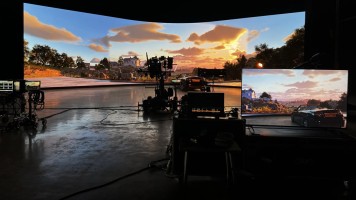
LED panels are a key component of the LED volume walls that form the backdrop for virtual production, an increasingly popular technique used in feature film and television production. This emerging technology enables productions to recreate the look of fictional worlds, far-flung or difficult-to-access locations, or multiple real-world sites in the controlled, safer, and more comfortable environs of a soundstage. Crucial specs to look for in an LED panel include a low pixel pitch of <3mm (high-density pixel count), high brightness levels,

by Mary Latvis · Posted
XR (Extended Reality) and VP (Virtual Production) are two terms you’ll hear used to describe professional video capture on special stages equipped with LED volume wall backgrounds. In consultation with the experts in The Studio B&H, here we review the components needed to set up an XR stage and break down some of the specifics of this VP capture technique.
Extended Reality vs. Virtual Production
XR and VP stages both use
by Luke Rollins · Posted
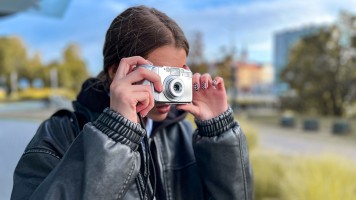
The market for point-and-shoot cameras is in an interesting place at the moment, with some of the most affordable options available new instead of used. As vintage Y2K-era imagery circulates social media, demand for these old digicams surges, all but erasing the value proposition that caused these old cameras to go viral in the first place. If you're in search of a fun, casual, and budget-friendly digital point-and-shot camera that still brings those retro vibes, B&H carries a range of available new options catering to different needs.
It

by Mary Latvis · Posted
Optimal imaging for virtual production (VP) requires certain camera functions that are not integral to all video cameras. A global shutter (or fast readout speeds), genlock capability, and timecode input are key factors to look for when selecting a camera for your VP video capture. Let’s review these specifications and highlight several cameras that incorporate these key specs.
Global Shutter Sensor
Most video cameras are designed with a “rolling” shutter that successively scans each row of photosites (the physical embodiments of pixels) on