
There’s a paradox lying at the heart of astrophotography: nighttime exposures demand long shutter speeds, but their extended duration turns star points into light trails. The entire genre is downstream from this problem, making it one of the most accessory-intense endeavors a photographer can undertake. Whether you’re looking to build a cutting-edge setup from scratch or just need a few final pieces to take it to the next level, here’s a look at the best gear for painting the heavens.
Cameras & Lenses
The truth is that you can capture astrophotography with any camera and any lens. But, as the saying goes, your mileage may vary. With the knowledge that focal-length-based shutter speed is limited by the rotation of the earth, we need our cameras and lenses to maximize light gathering in other ways.
The Exposure Triangle teaches us that aperture and ISO are our only other options for increasing the amount of light, which points astrophotographers towards cameras that minimize noise at high ISOs and wider-angle lenses with larger maximum apertures.
Recommendations
When it comes to light-gathering and camera sensors, size is your friend. That doesn’t mean you won’t see any small-sensor cameras on our list; however, when every photon counts, it’s no surprise that full-frame cameras predominate.
Sony
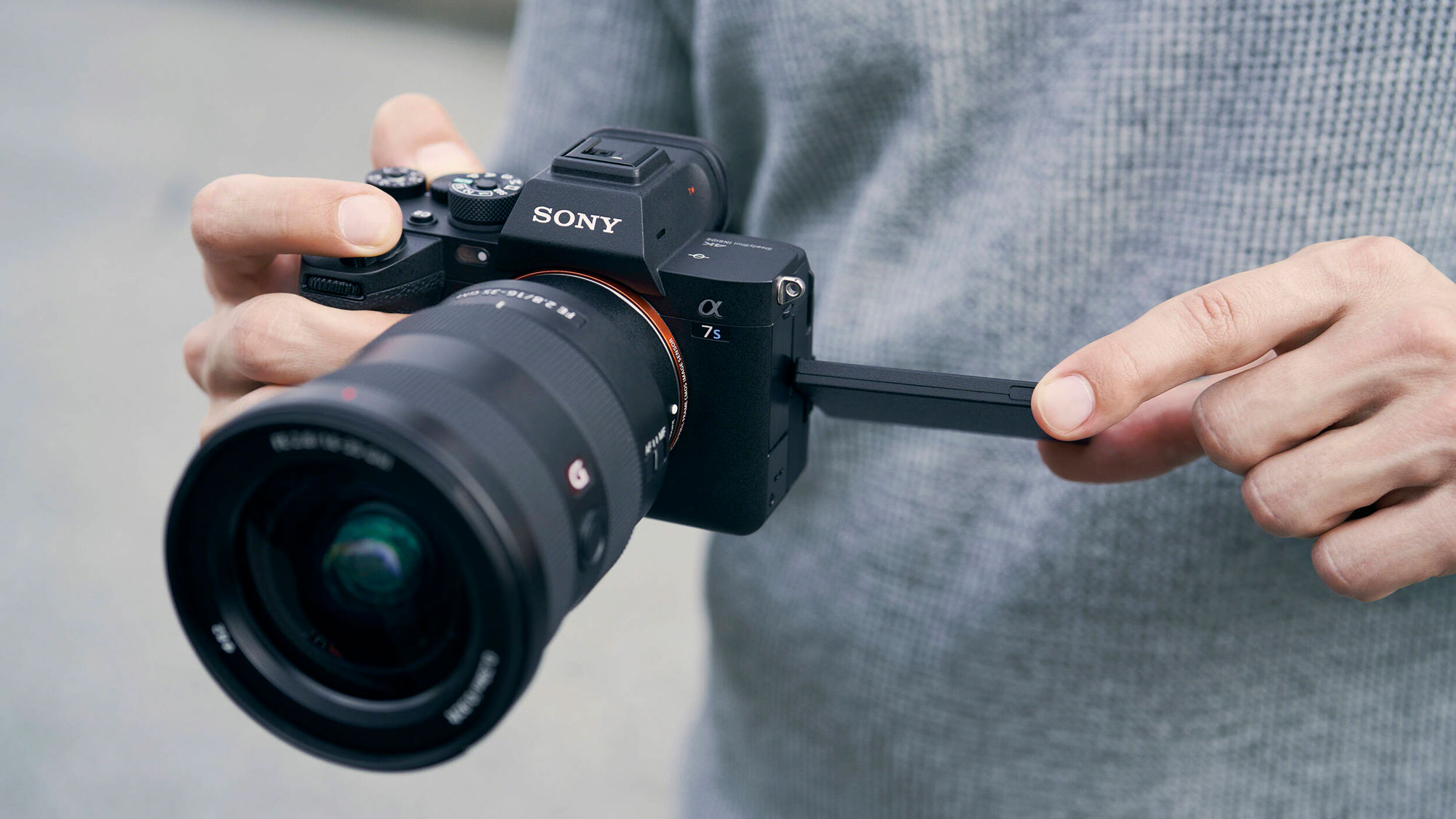
Touted highly across the board is the Sony a7S III, a full-frame 12.1MP camera optimized for low-light excellence and featuring a native ISO sensitivity that stretches to 102400. Other Sony bodies that excel in astrophotography are the Sony a7 IV, a7R V, and for APS-C shooters, the a6700.
Strong full-frame lens options for Sony on the high end are the Sigma 14mm f/1.4 and 15mm f/1.4 Fisheye lenses, both of which are optimized for astrophotography with bright maximum apertures, along with the Sony’s renowned G Master series lenses in 14mm f/1.8 and 24mm f/1.4 options. Alternately, you can get a lot out of a lens like the Sony FE 20mm f/1.8 G. A benefit of the Sony ecosystem is the breadth of inexpensive third-party options, with lenses like the Viltrox AF 16mm f/1.8 FE or the Rokinon 20mm f/1.8 giving you the comparable light-gathering with a few trade-offs in autofocus capabilities or sharpness at the edges.
For APS-C shooters, pair the a6700 with a homegrown lens like the E 11mm f/1.8, a third-party beast like the Sigma 12mm f/1.4 or the Viltrox AF 13mm f/1.4, or a well-regarded, wallet-friendly option like the Rokinon 12mm f/2.
Nikon
Several Nikon bodies come with an astro-friendly software feature: Starlight View, which brightens the viewfinder in low-light scenes to aid with focus and composition. Other features like “warm display colors” and “extended shutter speeds” also make night shooting easier. Any of the bodies will work well for astrophotography, with the Z6 III in particular receiving accolades. The Z5 II is the budget-friendly option and my personal suggestion, as it keeps all of the Z6 III’s stills image quality, sensitivity, and stabilization. For a Nikon APS-C option, try the Z50 II.
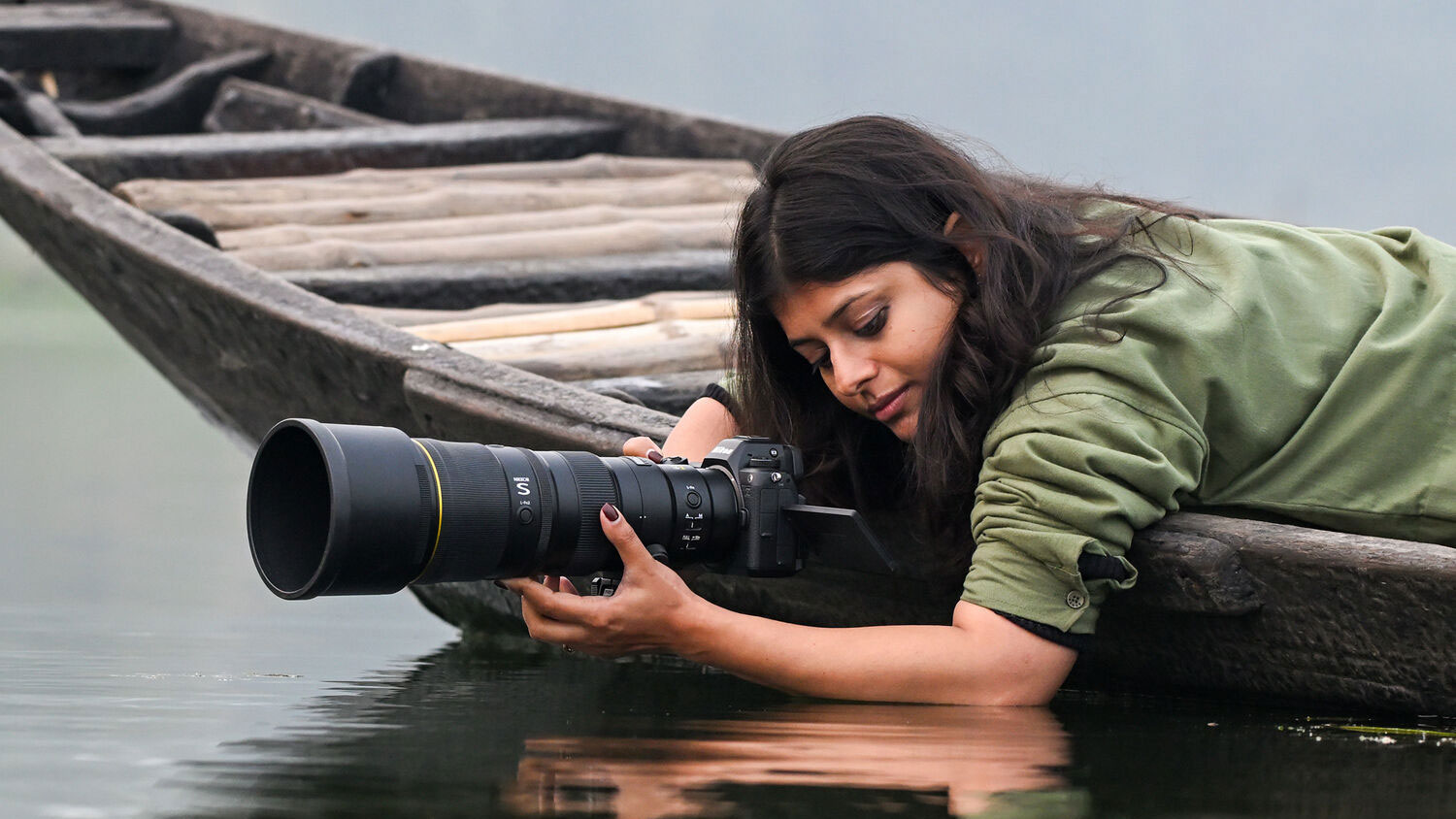
Nikon’s premium S lenses have f/1.8 options in 20mm and 24mm lengths, with reviewers lauding their performance in astrophotography applications. The Z-mount does have a few third-party options too, including the aforementioned Viltrox AF 16mm f/1.8. Sigma also makes a popular 16mm f/1.4 lens for APS-C format cameras.
Canon
For Canon shooters, the R8 is the best bang for your buck, delivering excellent low-light performance at an affordable price. If you want to add stabilization, consider opting for the R6 Mark II, while both the R5 and R5 Mark II will give you all of the above with high-resolution sensors if you want to print big. And if you’re going the APS-C route, we suggest the R50. Another great feature all these cameras share is an intuitive and easily navigable menu system.

Canon’s lens ecosystem is the most closed, making the options more limited than other manufacturers. Their premium L lenses come in 20mm and 24mm options at a f/1.4 maximum aperture, with a wider and more affordable 16mm f/2.8 lens available as well. There are more options at the APS-C level, with Sigma offering 12mm and 16mm lenses at f/1.4.
OM SYSTEM
OM SYSTEM cameras aren’t full-frame; they aren’t even APS-C. They’re Micro Four Thirds sensors, smallest of the bunch, but the company has leveraged gains in computational photography to introduce processing features that benefit astrophotography. Their unique Starry Sky AF algorithm offers accurate “ultra-high-precision” autofocusing, while the Live Composite function unlocks striking creative possibilities when shooting star trails by stacking multiple images at different exposure values in-camera. The OM-1 Mark II, OM-3, OM-5, and OM-5 Mark II cameras all carry both features, with the OM-5 Mark II also sporting Night Vision and Hand Held Assist modes to aid low-light compositions. All these cameras further benefit from robust image stabilization capabilities.
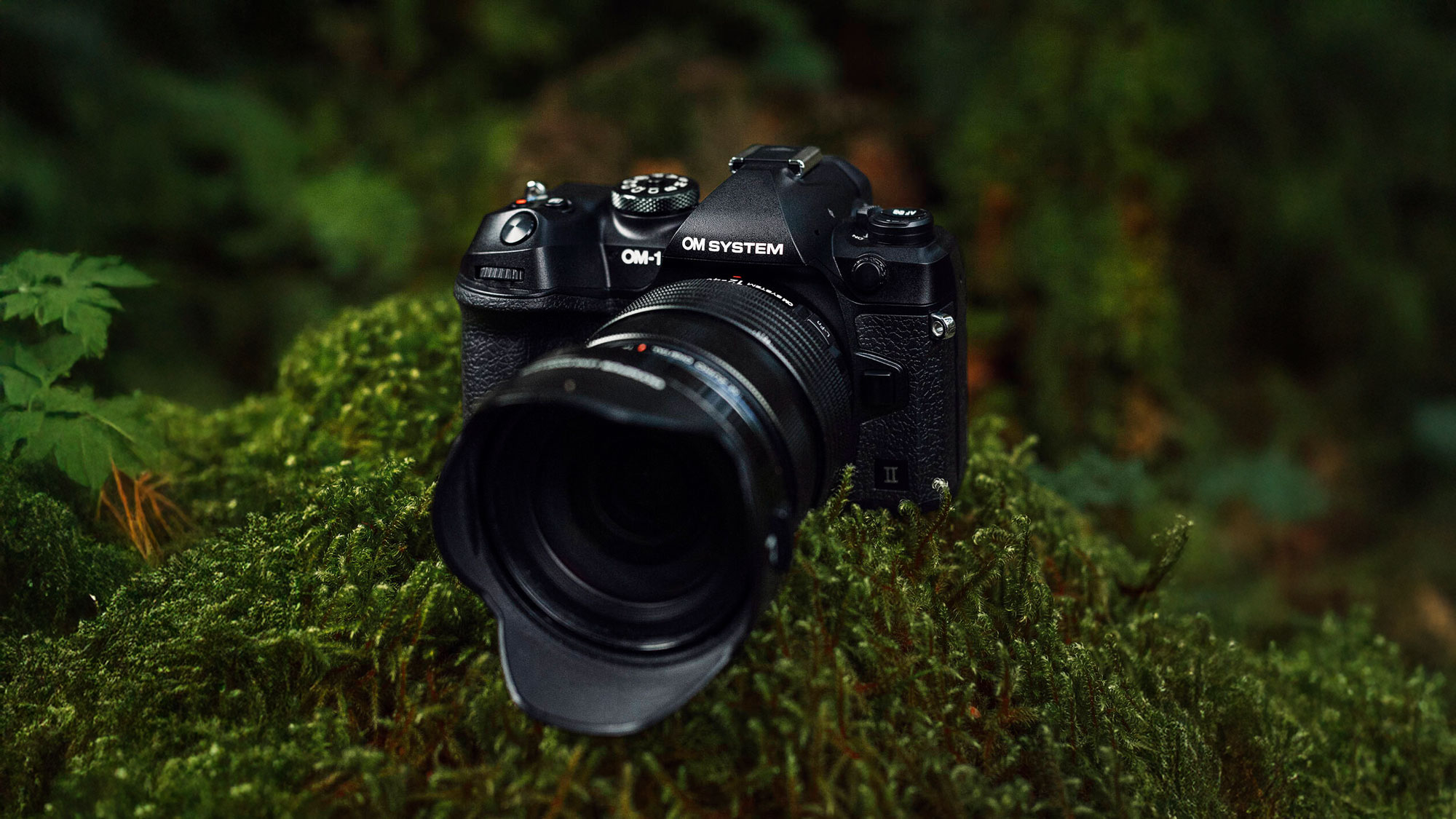
The Micro Four Thirds format reduces the size of both bodies and lenses, with the upshot being that the latter tend to be less expensive than their larger counterparts. Strong options for astrophotography include the Panasonic Leica DG Summilux 12mm f/1.4 ASPH. lens and the Rokinon 12mm f/2.
Other bodies include the APS-C format FUJIFILM XT-5, which pairs well with the XF 16mm f/1.4 R WR lens, and the full-frame Panasonic Lumix S5 II and S5 IIX cameras, which have in-camera composite modes and are compatible with a wide swath of L-Mount lenses.
Accessories
In addition to cameras and lenses, there’s a wide range of astrophotography accessories that can greatly buoy your chances of photographic success, including tripods, star trackers, and more. Here are some of our favorite astrophotography accessories:

Tripods
The tripod is a must-have astrophotography accessory. If you’ve dabbled in astrophotography with a travel tripod and want to up your star photography game, consider investing in a larger and more stable support for your gear.
Star Tracker
While it is possible to capture stunning celestial shots without a star tracker, adding tracking capability to your rig is a total game changer. A star tracker lets you take longer exposures of the night sky without experiencing trailing stars. This allows for longer nighttime exposures that reveal dimmer stars and deep sky objects like nebulae.
Camera and Tripod Leveler
Once you have a star tracker on board, it’s important to make sure your kit is level. While you can adjust the legs of a tripod individually to achieve level, a tripod leveler makes the task much easier. You can set up your tripod rapidly and use the leveler to fine-tune your tracker to the horizon. Be sure to note that these levelers have different payload limitations, so pay attention to the weight of your tracker, lens, camera, and accessories.
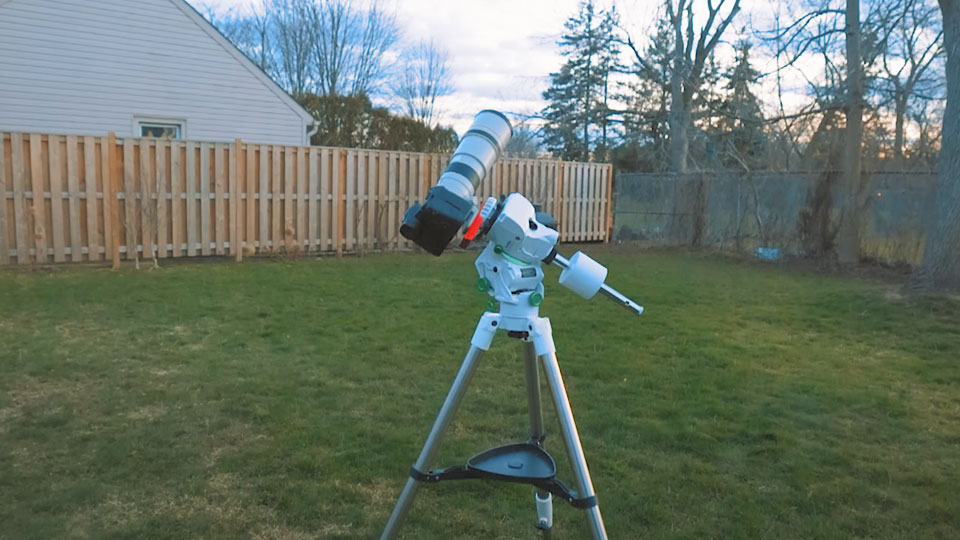
Tripod Hammock / Utility Apron
One way to add stability to any tripod is to add weight to the rig. One of the most utilitarian and effective methods of doing that is with a tripod hammock or utility apron. On top of the added stability, this weighted accessory can also serve as a handy spot to put other accessories.
Light Pollution Filters
We live on a very bright planet. While the electric lantern revolutionized the world, it also crushed our views of the night sky by eliminating dark skies for many of us. Although they won’t make a city sky dark, light pollution filters can clean up the night skies a bit. Years ago, we put nine different LiPo filters to the test and many more have made it to market since then.

Flashlights
The best astrophotography is done in the dark of night (except solar photography), but you’ll need a way to see where you are going and to make sure you don’t accidentally kick your tripod. This is where a good flashlight comes in. For astrophotography, you will want one that has either a red lens or a red LED/light so you can preserve your night vision when working in the dark.
Oscar Wilde said it best: “We are all in the gutter, but some of us are looking at the stars.” If you’re a stargazer looking for some astrophotography guidance or gear recommendations, be sure to check out B&H Explora.
