Search results for: photography buying guide guide to wildlife photography lenses
About 44 filtered results
by Mathew Malwitz · Posted
When it comes to choosing the best camera for sports and action photography, there are three factors to focus on. Speed, autofocus performance, and reliability are all essential to tracking, freezing, and nailing the shot time and time again. Speed and performance have become increasingly affordable with mid-tier cameras and even some entry-level ones can keep up with sporting events. In this guide, we’ve narrowed things down to the very best cameras in each class, from the pro-level flagships to everyday cameras that are right at home on your

by Mathew Malwitz · Posted
If you've ever gone camera shopping, you've likely run into the term "mirrorless" more than a couple of times. After all, mirrorless cameras account for up to 90% of new interchangeable-lens cameras (according to Canon executives anyhow). But what does "mirrorless" actually mean? In this guide, we're going to explore what a mirrorless camera is, what makes it different from other cameras (hint: it's in the name), and how it can benefit
by Mathew Malwitz · Posted
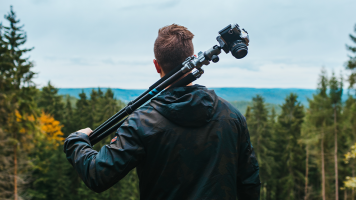
As complementary as peanut butter is to jelly, the camera and tripod are an age-old pairing that still manages to maintain relevance and unmatched functionality in a world dominated by image stabilization and Photoshop tricks. While the form and function of a tripod is far simpler to understand than the scrolling menus of today’s feature-packed cameras, it can still be a chore to choose the right setup for your needs from among a sea of manufacturers and seemingly comparable models.
Now, what’s the big deal with tripods? Most photographers

by Mathew Malwitz · Posted
Traveling with camera gear can be a daunting experience, especially as we start expanding our arsenal of lenses. Picking the right lens for the job is a challenge in itself, and now we’re finding the space to pack it among our clothes, and other essentials. Wouldn’t it be nice if we had one lens to do it all?
Luckily, such lenses do exist, and these travel-ready all-in-one zooms come in a variety of mounts, some brand specific, and others available for many different cameras. In today’s guide, we’re covering the best travel zooms for APS-C or
by Mathew Malwitz · Posted
The new school year is nearly upon us, which means it’s time to start stocking up on necessary gear and supplies. For film and photo students, that means finding the camera and gear that’s right for you.
Generally, schools require a DSLR or mirrorless camera with detachable lenses and full manual controls. Far from the smartphone or point-and-shoot pocket camera many of us are used to. To help you get the perfect tool, we’ve put together a list of some of our favorite cameras broken down into four categories:
Best Overall Cameras
Best Mid

by Todd Vorenkamp · Posted
There is nothing that can replace the extreme close-up view of a rare bird in the wild. Binoculars can get you close but, if you want to look the bird in the eye or confirm that identification for your life list, you need a spotting scope. Spotting scopes pack incredible magnification in a generally simple and lightweight package that is
by Mathew Malwitz · Posted
We’ve all tried to photograph something up close. This small-scale world fascinates us all, whether it be a stunning flower or a bumble bee crawling about, but our cameras can’t seem to focus as close as we want. So, what is a struggling photographer to do?
There are several ways to do close-up, or "macro" photography, but the

by Bjorn Petersen · Posted
Photographers are a tricky bunch to shop for, especially those avid shooters who seemingly already have all the gear they need. Cameras, lenses, bags, tripods, and so on—it’s a tough task to find a photo-related gift for the photographer who already has it all. Since the Pope’s Leica is no longer on the market, here are some ideas for not-so-common gift options sure to please all types of photographers.
Lensbaby Special Effects Lens
Sure, your

by Mathew Malwitz · Posted
Landscapes and wildlife are among the most challenging subject matter to capture well with a camera. Wildlife is unpredictable and despite your best efforts, will not respond to posing instructions. Landscapes are stationary but at the mercy of available light and weather conditions. All that being said, it is the unpredictable nature of landscape and wildlife photography that has earned these genres a very large, very dedicated, and very passionate following. The dedication of these photographers can make finding the right gift all the more

by Bjorn Petersen · Posted
Not all fathers are photographers, but for those who are, I’d argue that a point-and-shoot camera is essential tech for the dads in the world. Even for those with the latest smartphone, point-and-shoots are dedicated, purpose-built tools that excel in areas where phones can’t quite keep up. And, besides, dads love tools, right?
OM SYSTEM TG-7 Digital Camera
If Indiana Jones had a point-and-shoot digital camera, it would be the

by John Harris · Posted
When speaking with wildlife and bird photographers, the subject of camouflage always sparks conversation. Some are surprisingly dismissive, others are all-in and, of course, there are those of us in the middle, who understand the benefits, but are not quite ready to order a complete ghillie suit. In fact, camouflage gear is not a panacea, and all photographers should agree that your location, movements, techniques, scent, and even breathing have more impact on getting that great animal photograph than what you are wearing or under what you are

by Jill Waterman · Posted
Bristling along the sidelines of practically every professional sporting event, super-telephoto lenses are known for their ability to reach out and capture distant subjects with exceptional clarity and speed. They feel incredible in the hand, with top-of-the-line build quality and a heft that gives shooters confidence in their equipment. Many feature a variety of switches and buttons that allow users to set up the lens for optimal performance in any situation.
In addition to length, these lenses feature all of the latest technology, such as
by Todd Vorenkamp · Posted
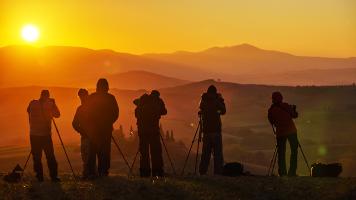
The tripod: a three-legged camera support. Why is the tripod market so flooded with options when they all look pretty much the same and are designed to do the same thing? Isn’t one tripod as good as any other? Why are some so expensive? Why are others comparatively inexpensive? Do some hold cameras more steadily than others? And, why in the world is that one pink?
In this article, we will be emphasizing the use of a tripod for photography.

by Todd Vorenkamp · Posted
What is the best lens focal length for photographing the total solar eclipse? Well, there really isn’t a correct answer to that question. There are many factors involved, so let’s outline some options for different types of cameras and budgets.
Above: The Hinode satellite X-ray telescope mission captures the January 6, 2011 solar eclipse. © JAXA/NASA.
Expedition 43 Flight Engineer Samantha Cristoforetti took a series of photographs
by Todd Vorenkamp · Posted
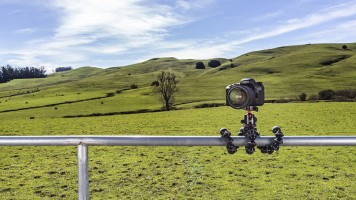
When the phrase “camera support” is mentioned, most of us think of the tried-and-trusty tripod, and for good reason—the tripod is the single best way to steady your camera for long shutter-speed exposures, group photos including the photographer, or just for minimizing camera movement to maximize image sharpness.
However, the tripod has definite shortcomings, and it is not always practical or permitted to bring a tripod with you to every location. Because of this, creative inventors in the world have developed alternatives to the three-legged