Search results for: photography buying guide best lenses for portrait photography
About 39 filtered results
by Mathew Malwitz · Posted
The camera bag starts as an afterthought—something you get after you buy a camera and/or lenses, and for many, just about any camera bag will do the trick for them. But, when you get deeper into photography and expand your kit, the camera bag becomes an essential part of your everyday carry. There are many parallels between shopping for a camera bag and shopping for something like a pair of shoes

by Luke Rollins · Posted
It’s 2026, and we no longer have to pretend that film is dead; film is very much alive, with a robust number of film stocks available to try out, ranging from the classics to new and creative films from up-and-coming, smaller brands.
Here’s an overview of the current black and white films available right now.
Kodak
It’s hard not to start with mother Kodak in an article like this, and with all the history—the ups and

by Bjorn Petersen · Posted
When assembling a kit of lenses for photographing a wedding, one should take into consideration the location in which the wedding is taking place, the number of guests and, of course, the type of imagery you are seeking to create. To best represent a wedding in a dynamic manner, it is often preferable to have a range of lenses to achieve different perspectives of the event, rather than maintaining a constant perspective of your subject matter. A wide-angle lens, specifically, is a highly effective tool for capturing many of the scenes that
by Mathew Malwitz · Posted
We’ve all tried to photograph something up close. This small-scale world fascinates us all, whether it be a stunning flower or a bumble bee crawling about, but our cameras can’t seem to focus as close as we want. So, what is a struggling photographer to do?
There are several ways to do close-up, or "macro" photography, but the
by Luke Rollins · Posted
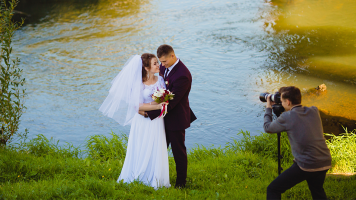
Many hobbyists reach a turning point in their craft when they decide to pursue wedding photography seriously. With the transition to pro comes the task of updating your lens kit accordingly, and most photographers would agree that investing in quality glass is essential. Unlike the rapid turnover of camera bodies, lenses will last for years and can make all the difference in creating quality images. Understanding what some of the best available options are will help you invest appropriately.
What to Consider
Weddings are long affairs, often

by Shawn C. Steiner · Posted
After you pick up your first speedlight, strobe, or LED panel, the best investment you can make is in some modifiers. These are tools that shape and alter the intensity of our light source. Modifiers come in all shapes and sizes based on the type of light you plan to use them on, which can make it difficult to pick one out if you are new to photography. Since each modifier comes with its own distinct look and ideal use, here is a

by Mathew Malwitz · Posted
Getting great pictures of your newborn or infant is certainly no easy task. Indeed, the window of opportunity for coaxing a perfect expression and a picturesque pose from your little bundle of joy is fleeting, at best. For parents (and others) who aspire to capture such moments, user-friendly gear, highly functional accessories, and photogenic props can make all the difference. With this in mind, here are our best recommendations to help make photo sessions with your unpredictable little darlings a success.
Pick the Right Camera for the Job

by Mathew Malwitz · Posted
While much of what makes a great family portrait photographer comes with practice, there are ways you can improve your workflow with the right gear. Today, we’re going to look at accessories that will make your life as an at-home or even aspiring professional portrait photographer easier.Family portraits can be one of the most challenging yet rewarding genres of photography. On top of technical expertise and a familiarity with your gear, it also requires personability and the ability to (sometimes) wrangle up large groups. Even after you get a

by Mathew Malwitz · Posted
Wedding and portrait photographers looking for a lightweight, compact system with exceptional performance need look no further than the FUJIFILM X cameras and lenses. While the size and weight advantage of mirrorless cameras spans from Micro Four Thirds to full frame, the APS-C sensors in the FUJIFILM X system allow the cameras and lenses to be relatively small and light. Full-frame mirrorless is attractive to many, but the portability advantage of APS-C sized lenses is not to be understated.
For those looking to one-up the full-frame shooters

by Mathew Malwitz · Posted
Lens selection is a highly personal choice for the professional photographer. Your shooting style, client needs, and cost all factor into how you choose to build your kit. Wedding photographers require a greater variety of lenses as they must cover a diverse assortment of compositions in various environments and lighting conditions. As working professionals, it’s only natural to begin investing in high-quality professional glass. For Canon users, this is the L series.
Easily identified by a thin red line circling the lens barrel, L glass is

by Bjorn Petersen · Posted
With medium format shedding many of its niche associations and becoming a more viable and mainstream format, now might just be the time to begin incorporating this larger format into your working repertoire. When film was still king among working photographers, medium format cameras, particularly 645, was seen as an ideal balance between image quality, weight, speed, and number of frames per roll. Once the shift to digital occurred, weight and speed became the primary differentiators in which cameras and systems were being considered for the

by Rebecca Melville · Posted
If you ask most consumer-camera owners why they keep a filter on their lens, a majority will most likely reply, “For protection.” While filters do protect the surface of your lens against dust, moisture, and the occasional thumb print, the primary function of lens filters is really to improve the image quality of the pictures you take. There are many kinds of filters with obvious and lesser-known benefits, so if you’re looking for a lens

by Bjorn Petersen · Posted
Just like any other genre of photography, portraiture is a creative field that knows no bounds. There are no rules dictating how a portrait needs to be made, how it needs to look, or more specifically, how it was shot. On the other hand, photographers love to categorize and label things based on “best” and “typical” usage situations (and I’m certainly guilty of doing this). One of the labels that bothers me is the term, “portrait lens.” I think most photographers would have a decent sense of what kind of lens I’d be referring to if I wrote

by Todd Vorenkamp · Posted
Do you always want your selfies to be captured on tiny, tiny sensors through tiny, tiny lenses? You might, at first, say, “Yes, that is fine.” But think about it for a few minutes and realize that you want your beloved friends, adoring family members, and admiring fans to enjoy your self-portraits in the highest possible quality—captured by a capable camera that is practical and versatile. Right?
The popularity of the selfie has revolutionized photography and the self-portrait. The selfie has changed how we interact—or rather, don’t interact

by Mos Khan · Posted
As each year goes by, smartphone cameras keep getting better, and this also means more and more people have access right at their fingertips to a powerful camera. Social media platforms such as TikTok, Instagram, and Facebook wouldn’t be as big as they are without the proliferation of smartphone photography. Still, even with the impressive improvements that have put these mobile cameras in competition with traditional camera systems, there are times that they show their limitations. This is why many companies have been developing mobile photo