Search results for: photography buying guide tripod center columns
About 15 filtered results
by Mathew Malwitz · Posted
There’s an old adage that gear doesn’t make the picture, it’s the photographer. This is partly true. A super-telephoto prime with a fast aperture will make quick work of busy backgrounds, and the faster focusing systems of high-end full-frame cameras will more easily track a bird’s eye in some of the most challenging lighting conditions. But there’s another factor to consider. At the heart of the image is a creative eye and technical proficiency. High-end camera gear only serves a purpose once you know what you’re doing.
In this guide, we’re
by Mathew Malwitz · Posted
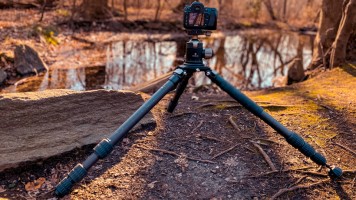
Love them or hate them, tripods are an essential piece of the photography puzzle. They allow us to capture images that would otherwise be impossible to create, whether it be due to low light or long exposures where keeping our camera motionless is essential. Even in bright daylight, tripods aid us in producing sharper images, all while freeing our hands to do other tasks.
Choosing a tripod is a highly personal choice, and there are many considerations we should take

by Mathew Malwitz · Posted
Fall is one of the most exciting times to be a photographer. Whether the changing foliage is the subject itself or the dramatic backdrop, there's something about the warm, cozy colors that get many photographers amped up. We at B&H are right there with you and are already preparing for the creative season ahead and making sure we have the right gear.
I have experienced four fall seasons as a photographer, and through trial and error have accumulated an assortment of tools to better my images. Some of my gear predates my time as a landscape

by Mathew Malwitz · Posted
Whether you’re interested in photography or a semi-experienced beginner looking to upgrade your gear, this is a guide to the essentials you need to build a complete camera kit for any budget. But what do we need in a basic kit? Of course, you can’t take photos without a camera and lens, but we’re looking to help you take your photography to the next level. To do this, we’ll need other staples like a tripod, flash, and select filters to enhance our image taking abilities.
The Basics
When building a kit, there’s more to consider than just the

by Mathew Malwitz · Posted
Food photography is an undeniably popular artistic medium, involving all kinds of people and gear to make those mouthwatering shots possible. If you’re an aspiring food photographer or someone looking to take their existing work to the next level, we’ve put together a special, themed gift guide that’s perfect for any skill level.
1. A 50mm Lens
Whether you are far into your photography career or just starting out, whenever you complete a dish in your kitchen or have a plate placed in front of you at a restaurant, there’s no better starting

by Zack Young · Posted
Cameras and lenses can be stowed away in a backpack, a sling, or even a fanny pack. But what about tripods and monopods? Those get a bit more complicated to haul around. Yet even the most steady-handed among us can attest to their usefulness in a ton of shooting situations, especially when using a long lens. Sure, a tripod

by John-Paul Pale… · Posted
The holidays are nearly upon us, which means it's time to start thinking about what gifts to give to your friends and family. For the photographers on your list, we've put together a guide of the best photo gifts available, including options for every skill level, application, and budget.
Peak Design Capture Camera Clip v3
If you need a quick and secure way to carry your camera on the go, the Capture Camera Clip v3

by Zack Young · Posted
We all love capturing beautiful images of our amazing planet, but we all hate carrying around heavy bags full of camera gear, sweating out of every pore, desperately trying to avoid back spasms, cursing the day we learned about telephoto lenses. One surefire way to improve your wildlife photography game is to be more discerning about every piece of equipment in your kit, not just the camera and lens. A
by Todd Vorenkamp · Posted
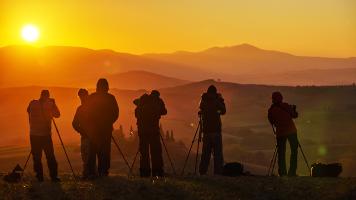
The tripod: a three-legged camera support. Why is the tripod market so flooded with options when they all look pretty much the same and are designed to do the same thing? Isn’t one tripod as good as any other? Why are some so expensive? Why are others comparatively inexpensive? Do some hold cameras more steadily than others? And, why in the world is that one pink?
In this article, we will be emphasizing the use of a tripod for photography.

by Allan Weitz · Posted
Before heading out on assignment, I make a mental checklist of the gear I will be needing, and camera supports are always on that list. Depending on where and what I plan to photograph, I might take a mid- or full-size tripod and be done with it. If I anticipate taking low-angle photographs, I will also pack along a tabletop-size tripod and, for ground-level shooting, one of my Platypods. Truth is, if I have the space, I take all three options, because if I leave any of these options behind, I know I will need it when I get where I’m going.

by Cory Rice · Posted
Looking for a light stand? Seems like a simple task, until you head to the category and find that there are hundreds of options, each with its own set of features and specifications, which can make the whole experience a little overwhelming. We are here to help. Whether you are a beginner or experienced photographer, choosing the right light stand comes down to answering the same set of questions. This guide will take you through them one at a time.
How Heavy Is Your Light?
The most important job of any light stand is to provide a solid,

by Todd Vorenkamp · Posted
Most tripods on the market are simple three-legged supports for your camera and lens, and that is usually all that photographers need a tripod to do. But, there are some tripods on the market that, while serving to support photographic gear, have some funky and, oftentimes, unique features that set themselves apart from the classic traditional tripod.
Before we look at

by Bjorn Petersen · Posted
Although photographing a wedding usually conjures the image of primarily working in a handheld fashion, there are often moments in the course of events that can truly benefit from the use of additional camera support by using a tripod. When it's possible to plan your shots in advance, a tripod will add increased stability to ensure sharper imagery and greater control and refinement possibilities for your compositions. Handheld shooting will often be your main method, but a tripod is an ideal accessory for accomplishing a wider array of imagery
by Allan Weitz · Posted
The “Green Movement” has influenced manufacturers in the photographic community for quite some time. Lead and arsenic, a pair of heavy metals that contribute to the “character” and performance of optical glass, have been collectively called industrial poisons for decades. Beginning in the late 1990s, lead and arsenic were slowly phased out of formulas for lens elements and replaced by environmentally friendlier formulas that maintain the “look and feel” of the formulas they replaced.
The Green Movement has also had an impact on many of the

by Allan Weitz · Posted
Architectural photography is both an art and an exacting craft. Unlike most genres of photography, in which level horizon lines and correction for keystone and parallax distortions are secondary issues, architectural photography requires a disciplined workflow and a keen sense of design.
The following eight items are tools I find extremely valuable for photographing the exteriors and interiors of homes and commercial buildings. This list is by no means complete, but it does cover a range of essentials. As for camera format, bigger is always