Search results for: photography buying guide understanding color temperature lighting
About 9 filtered results
by Mathew Malwitz · Posted
You don’t have to go far to capture fun and engaging images of wildlife. In fact, you may not have to go anywhere at all. A carefully landscaped yard and the right tools can attract an impressive variety of animal life to observe and photograph. Pair that with a little patience and soon you’ll be capturing stunning images from the comfort of your own home.
Attracting Birds
Birds are part of nearly every environment, from the densest cities to rural areas. While they are common, we’ll need to offer three essentials—water, shelter, and food—to

by Mathew Malwitz · Posted
There’s an old adage that claims in order to be a wildlife photographer, you need a lot of time and a lot of money. This is only partly true. Many great wildlife photo opportunities can occur in urban parks and even in your own backyard, as long as we know what we’re doing. In this article, we’re going to cover a number of essential tips that will help you become a better wildlife photographer.
If you’ve read our introduction

by Mathew Malwitz · Posted
Most photos consist of a balance between bright and dark tones, creating what we typically consider to be “proper exposure.” In proper exposure, there should be ample detail in all areas of the image, no matter how dark or how bright. At least, that’s what we should do when trying to capture a balanced exposure.
Balance, while important to most photographic situations, is not always best for a scene. There are

by Rebecca Melville · Posted
An on-camera flash is an indispensable accessory for many photographers. While it provides light to supplement dark conditions, an on-camera flash also allows you to achieve more balanced exposures in daylight conditions, permits freezing of fast-moving subjects, and can even be used to control other flash light sources. With so much to offer, an on-camera flash can become an integral part of your workflow, but where do you start? We are going to give you the on-camera flash rundown with everything you need to know to make the most of this

by Mathew Malwitz · Posted
What better place to spend a Saturday morning than the zoo. You can enjoy some time outside, all while seeing a variety of both local and exotic animals you'd otherwise never dream of encountering. Zoos also are great place to try your hand at photographing wildlife! In this guide, we're talking about taking our camera to the zoo to capture natural looking images of animals in their element! We'll be covering what you need as well as tips and tricks that'll help you capture stunning, natural looking images of animals.
Above photograph © Mathew

by Mathew Malwitz · Posted
Getting great pictures of your newborn or infant is certainly no easy task. Indeed, the window of opportunity for coaxing a perfect expression and a picturesque pose from your little bundle of joy is fleeting, at best. For parents (and others) who aspire to capture such moments, user-friendly gear, highly functional accessories, and photogenic props can make all the difference. With this in mind, here are our best recommendations to help make photo sessions with your unpredictable little darlings a success.
Pick the Right Camera for the Job

by Bjorn Petersen · Posted
While film photography tends to take a back seat to digital photography nowadays, many photography programs still teach film photography to help you gain a better understanding of how the basic photographic process works. Without computers and an LCD screen to fall back on, shooting with film helps to reinforce technique and make you learn, understand, and trust yourself while shooting.
Film
The most obvious thing someone needs to begin his or her education in film photography is
by Shawn C. Steiner · Posted
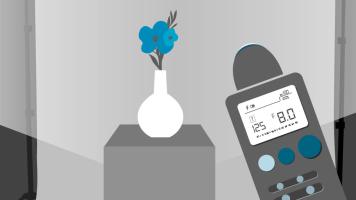
A light meter provides crucial information to photographers and cinematographers for their work; it provides a measurement of the exposure, tells users exactly what shutter speed/aperture combination to use based on the 18% gray standard, and can even provide detailed charts and graphs on the quality and color of the lights one is using. Generally, it will be seen as a tool to check exposure settings for perfectly balanced images. Additionally, some models can provide other exceptionally useful capabilities, such as flash metering, color

by Shawn C. Steiner · Posted
An on-camera flash, also known brand-wise as a “speedlight” or “speedlite,” is an indispensible accessory for many photographers; it provides additional light when conditions become too dark to handhold your camera comfortably, allows you to achieve more balanced exposures in daylight, permits freezing of fast-moving subjects, and can also be used to control or trigger other flash light sources. Additionally, a flash can be used as a highly effective creative tool to establish an aesthetic that elevates your imagery when lighting conditions