Search results for: photography buying guide understanding tripod heads
About 5 filtered results
by Mathew Malwitz · Posted
You don’t have to go far to capture fun and engaging images of wildlife. In fact, you may not have to go anywhere at all. A carefully landscaped yard and the right tools can attract an impressive variety of animal life to observe and photograph. Pair that with a little patience and soon you’ll be capturing stunning images from the comfort of your own home.
Attracting Birds
Birds are part of nearly every environment, from the densest cities to rural areas. While they are common, we’ll need to offer three essentials—water, shelter, and food—to
by Mathew Malwitz · Posted
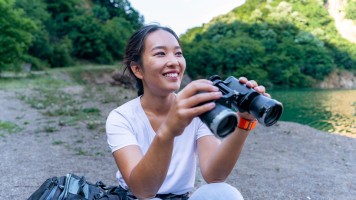
Optic size is measured by what it can do, but when you’re new to the hobby, this can be confusing. Pick up a spotting scope or any pair of binoculars and you’ll see them adorned with a set of numbers like 8x42, 7x32, or 20-60x80. What exactly do those numbers mean and what do they tell us about an optic?
At the most

by Mathew Malwitz · Posted
What better place to spend a Saturday morning than the zoo. You can enjoy some time outside, all while seeing a variety of both local and exotic animals you'd otherwise never dream of encountering. Zoos also are great place to try your hand at photographing wildlife! In this guide, we're talking about taking our camera to the zoo to capture natural looking images of animals in their element! We'll be covering what you need as well as tips and tricks that'll help you capture stunning, natural looking images of animals.
Above photograph © Mathew

by Mathew Malwitz · Posted
For macro photographers, having the right gear is essential. Magnification and lighting are key, but you don’t necessarily need the biggest, priciest macro lenses out there to get close-up shots. If you’re a macro photographer yourself or buying a gift for one, we have some excellent recommendations for every budget.
Gifts Under $50
1. Close-up macro filters (like this Macro Lens

by Shawn C. Steiner · Posted
An on-camera flash, also known brand-wise as a “speedlight” or “speedlite,” is an indispensible accessory for many photographers; it provides additional light when conditions become too dark to handhold your camera comfortably, allows you to achieve more balanced exposures in daylight, permits freezing of fast-moving subjects, and can also be used to control or trigger other flash light sources. Additionally, a flash can be used as a highly effective creative tool to establish an aesthetic that elevates your imagery when lighting conditions